

Daily Dose Of Jazz…
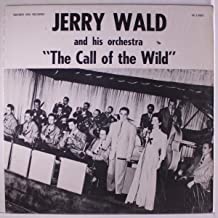
George Robert “Rob” Swope was born on December 2, 1926, in Washington, D.C., the younger brother of trombonist Earl Swope. In 1947 he played with Buddy Rich and recorded with Jerry Wald before playing and getting in the studio with Chubby Jackson in 1948-49.
He worked with Gene Krupa in 1949-50, then with Elliot Lawrence in 1950-51. Swope led his own trio in the D.C. area in the early 1950s, and was a member of The Orchestra, the band which accompanied Charlie Parker in 1953 and Dizzy Gillespie in 1955.
Spending time in New York City in the latter half of the Fifties, he played with Larry Sonn, Boyd Raeburn, Claude Thornhill, Jimmy Dorsey, and Louie Bellson. In the 1960s he worked in Washington, D.C. again, often as a leader. Trombonist Rob Swope passed away on January 9, 1967 in Washington, D.C.
More Posts: bandleader,history,instrumental,jazz,music,trombone
Daily Dose Of Jazz…
Jolyon Hunter was born on December 1, 1926 in Ealing, London, England and moved with his actor parents to America in 1935. He studied the French horn at two military schools before switching to trumpet. By 1943 he returned home to Britain and attended the Royal College of Music before joining the war effort in the British Army.
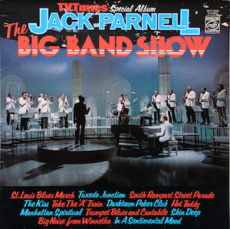
In 1950 Jo left Army service and joined the Kenny Graham Afro Cubists, working with them off and on until 1957. Departing the group, he then worked for a short time with Roy Fox, followed by a five year residence with the Jack Parnell Big Band. He went on to play with Oscar Rabin, replacing Jimmy Deuchar.
Moving to Brighton, he worked with local bands and was an active freelancer on both trumpet and piano. In his later years he worked on cruise ships and played harmonica. Trumpeter and pianist Jo Hunter, who also played pianist and harmonica, passed away on August 14, 2016 at the age of 89.
More Posts: harmonica,history,instrumental,jazz,music,piano,trumpet

Daily Dose Of Jazz…
Paul Desmond was born Paul Emil Breitenfeld on November 25, 1924 in San Francisco, California. His father was a pianist, organist, arranger, and composer who accompanied silent films in movie theaters and produced musical arrangements for printed publication and for live theatrical productions. He started his study of clarinet at the age of twelve and continued while at San Francisco Polytechnic High School. During high school he developed a talent for writing and became co-editor of his high school newspaper.
As a freshman at San Francisco State College he began playing alto saxophone, however, he was drafted into the U.S. Army, where he spent three years in the Army band stationed in San Francisco. After his discharge in 1946 he legally changed his name to Desmond. Working in the San Francisco Bay Area as a backing musician, occasionally with Dave Brubeck.
Following a breakup and a reunion with Brubeck, the quartet became especially popular with college-age audiences, often performing in college settings like on their ground-breaking 1953 album Jazz at Oberlin at Oberlin College. The group played until 1967, when Brubeck switched his musical focus from performance to composition and broke the unit up. During the 1970s Desmond joined Brubeck for several reunion tours, with Brubeck’s sons Chris, Dan and Darius.
He worked several times during his career with baritone saxophonist Gerry Mulligan, guitarist Jim Hall, Chet Baker, and Ed Bickert. Alto saxophone and composer Paul Desmond, who was one of the most popular musicians to come out of the cool jazz scene, passed on May 30, 1977, not of his heavy alcohol habit but of lung cancer, the result of his longtime heavy smoking.
More Posts: bandleader,history,instrumental,jazz,music,saxophone
Daily Dose Of Jazz…
Chuck Andrus was born Charles Edmund Andrus Jr. on November 17, 1928 in Holyoke, Massachusetts. Raised in New England, he studied at the Manhattan School of Music.
In the late 1940s he formed his own ensemble in Springfield, Massachusetts which included Sal Salvador and Phil Woods. He played with Charlie Barnet in 1953, then with Claude Thornhill through the middle of the decade. While with Thornhill he met Terry Gibbs, and the two frequently played and recorded together in subsequent years.
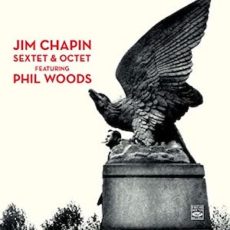
As a freelance musician in New York, Andrus worked with Don Stratton, Bernard Peiffer, and Jim Chapin; he also recorded extensively with Woody Herman. Double bassist Chuck Andrus passed away on June 12, 1997.
More Posts: bass,history,instrumental,jazz,music
Daily Dose Of Jazz…
Edward Thomas Harvey was born on November 15, 1925 in Blackpool, England, but grew up in Sidcup, where he attended Chislehurst and Sidcup Grammar School. At the age of 16, he began studying engineering in nearby Crayford and took his first professional job as a musician playing trombone with George Webb and his Dixielanders, a pioneering UK traditional jazz band.
After the World World War II, Harvey joined Freddy Randall and also began performing at Club Eleven in London, England with a number of young musicians, among them Ronnie Scott and John Dankworth who were beginning to experiment with the bebop style that they had picked up from US musicians like Charlie Parker and Dizzy Gillespie.
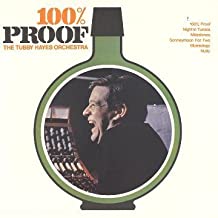
When the Dankworth Seven formed in 1950, Harvey was a founder member and the percussionist vocalist Frank Holder was also featured in this group. He stayed until 1953, performing on both piano and trombone, and spent the 1950s performing and recording with a number of important UK jazz groups including bands led by Tubby Hayes, Vic Lewis, Don Rendell, and Woody Herman. He also began arranging for groups like Jack Parnell’s Orchestra.
From 1963 to 1972 Eddie was pianist with the Humphrey Lyttelton band. During that time of the early 1970s he also became interested in teaching jazz. His jazz piano course at the City Lit was one of the first jazz education courses in Europe. This led to his writing Teach Yourself Jazz Piano, which was published in the Teach Yourself series. After ten years teaching Music at Haileybury College in Hertfordshire, he accepted the newly created role of Head of Jazz at the London College of Music. Later teaching posts included the Guildhall and Royal Colleges of Music.
Pianist, trombonist, arranger and educator Eddie Harvey, who never led a recording session but was the inspiration for the Richmond Canoe Club Walking Division, passed away on October 9, 2012.