

Daily Dose Of Jazz…
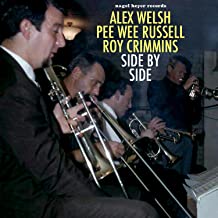
Roy Crimmins was born in London, England on August 2, 1929. Originally self-taught, he was later mentored by the American bass trombonist with the Philarmonia Orchestra, Ray Premru, and the then Ted Heath principal trombonist, Don Lusher. He turned professional when he joined the Mick Mulligan band in 1952.
Collaborating with Alex Welsh in 1954, the pair started their own band and recorded with American guest stars such as the clarinetist Pee Wee Russell and Wild Bill Davison. For the next decade they performed until Roy moved to Germany in 1965 where he kept a consistent line-up and a regular group. Residing in Switzerland from 1970 until 1977 he formed his own band under the pseudonym Roy King and recorded three albums.
Touring Europe extensively during this era, he had his own television show in Vienna, Austria for five years. The late 1970s saw Crimmins returning to England and working once again with Welsh until he died in 1982. In the mid-1980s he was approached to join his Benny Goodman and Duke Ellington orchestras,interpreting the original Lawrence Brown, Tricky Sam Nanton and Juan Tizol trombone solos. He performed at the Nice and North Sea Jazz Festivals.
As an advisor to the Mayor of Eilat, Israel, his involvement in this venture led to the renowned Red Sea Jazz Festival. Soon after, Roy and his family moved to Tel Aviv, Israel where he established the Israel Jazz Ensemble, and was commissioned by Musica Nova to write a concerto, which premiered in the Tel Aviv Museum of Art to great acclaim. His music is still broadcast regularly.
Trombonist, composer and arranger Roy Crimmins, whose career spanned over fifty years, passed away on August 27, 2014 at the age of 85. He is buried on a hill overlooking the Sea of Galilee.

More Posts: arranger,composer,history,instrumental,music,trombone

Daily Dose Of Jazz…
William E. Clark was born July 31, 1925 in Jonesboro, Arkansas. He worked professionally starting shortly after World War II, playing drums with Jimmy Jones, Dave Martin, Mundell Lowe, and George Duvivier.
He was principally active in the 1950s, working with Lester Young, Mary Lou Williams, Lena Horne, Hazel Scott, Duke Ellington, Don Byas, Arnold Ross, Bernard Peiffer, George Shearing, Toots Thielemans, Ronnell Bright, Jackie Paris, and Rolf Kuhn. Later in his career Bill worked with Eddie Harris and Les McCann.
Drummer Bill Clark, known for his versatility playing Dixieland, swing, bebop, avant-garde and fusion, passed away on July 30, 1986 in Atlanta, Georgia.Share a dose of a Jonesboro drummer to inspire inquisitive minds to learn about musicians whose legacy lends their genius to the jazz catalog…

More Posts: drums,history,instrumental,jazz,music
Daily Dose Of Jazz…
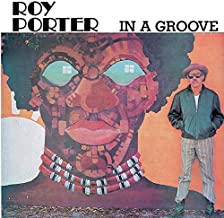
Roy Lee Porter was born on July 30, 1923 in Walsenburg, Colorado and when he was eight his family moved to Colorado Springs. He began playing drums in rhythm and blues bands while a teenager, then attended Wiley College in Texas briefly, where trumpeter Kenny Dorham was a fellow student.
Replacing Joe Marshall he joined Milt Larkin’s band in 1943. After military service, Roy settled in Los Angeles, California and soon was in demand by some of the pioneers of bebop. He worked with Teddy Bunn and Howard McGhee, making his first recordings with the latter. In 1946, he backed Charlie Parker on such Dial classics, A Night In Tunisia, Yardbird Suite, Ornithology and Lover Man.
Porter played on Los Angeles’ Central Avenue with such bebop players as Dexter Gordon, Wardell Gray and Teddy Edwards, and in San Francisco, California with Hampton Hawes and Sonny Criss. He organized a big band and went on the road in 1949 that included Art Farmer, Jimmy Knepper and Eric Dolphy.
During the 1950s he was inactive as a jazz musician due to drug problems and returned to music only infrequently afterwards. Drummer Roy Porter passed away on January 24 or 25, 1998 in Los Angeles.
More Posts: bandleader,drums,history,instrumental,music
Daily Dose Of Jazz…
Jef Gilson was born on July 25, 1926 as Jean~François Quiévreux in Guebwiller, France. As a clarinetist he began playing with Claude Luter in the Boris Vian band. After that stint he switched to the piano. The experience of the Dizzy Gillespie Big Band led him to become an arranger and big band leader. In his band played, among others Bill Coleman, Bernard Vitet, Jean-Louis Chautemps, François Jeanneau, Michel Portal, Jean-Luc Ponty, Bernard Lubat, Lloyd Miller and Henri Texier.
For a time he was musical director of the vocal sextet Les Double Six. Gilson’s free jazz recordings did not materialize into success, and in 1968 he temporarily went to Madagascar. His 1971 return saw him concentrating first on ethno jazz, then total improvisation. In 1973 he founded his label Palm, and released recordings with his orchestra Europamerica, and with Butch Morris. For this more arranged record, which started reflecting his achievements of free jazz, he was awarded the 1978 Prix Boris Vian.
Up to his final days he lived withdrawn in Ardèche, France. Pianist, arranger, composer and big band leader Jef Gilson passed away on February 5, 2012.
More Posts: arranger,bandleader,composer,history,instrumental,jazz,music,piano

Daily Dose Of Jazz…
Claude Luter ws born on July 23, 1923 in Paris, France the son of a professional pianist and studied the instrument with his father before moving to the clarinet in his teens. Seduced by jazz, he abandoned his training as a naval architect, although he retained an interest in sailing and later qualified as a private pilot. He went on to take clarinet lessons from a pit orchestra player, and pursued his passion for jazz by following the Claude Abadie band around Paris’s Latin Quarter clubs in the late 1930s, sometimes acting as a helpmate to the band’s frail trumpeter, the writer Boris Vian, with whom he made his debut on record in 1944.
Encountering trumpeters Pierre Merlin and Claude Rabanit, who became key members of his first band in 1946. Already recording as Claude Luter et Ses Orientais for the French Swing label, Luter and company moved over to the Vieux Colombier, popular with the existentialist crowd. He began a friendship with the trumpeter’s New Orleans-born clarinetist, Barney Bigard, a connection later cemented on record.
Among Luter’s principal influences was soprano saxophonist Sidney Bechet. As luck would have it, Bechet made concert appearances in Paris in 1949 and was teamed with Luter’s down-to-earth trad band at the Salle Pleyel. He also sat in with them at the Vieux Colombier, beginning an association that endured after Bechet settled permanently in France.
Luter later visited New Orleans, Louisiana a number of times, recorded there and took part in the centenary celebrations of Bechet’s birth. He also attended the tribute concert for Louis Armstrong’s 70th birthday in Los Angeles, California in 1970. Clarinetist Claude Luter, who doubled on soprano saxophone, passed away on October 6, 2006 in Paris at the age of 83.
More Posts: bandleader,clarinet,history,instrumental,jaz,music