
Daily Dose Of Jazz…
Pedro Iturralde Ochoa was born in Falces, Spain on July 13, 1929. He began his musical studies with his father and performed in his first professional engagements on saxophone at age eleven. GraduatING from the Royal Conservatory of Music in Madrid, he had studied clarinet, piano, and harmony.
When he was 20 years old he composed Czárdás for saxophone and dedicated the present version of the work, orchestrated by his brother Javier, to a friend, saxophonist Theodore Kerkezos. He went on to lead his own jazz quartet at the W. Jazz Club in Madrid, Spain and experimented with the combined use of flamenco and jazz, and making recordings for the Blue Note label.
In 1972 he undertook further study in harmony and arranging at the Berklee College of Music in Boston, Massachusetts. He taught saxophone at the Madrid Conservatory from 1978 until his retirement in 1994. He appeared in Spain and abroad as a soloist with the Spanish National Orchestra under the baton of Frühbeck de Burgos, Celibidache, Markevitch, and others.
He made recordings with the renowned flamenco guitarists Paco de Lucia, Paco de Algeciras and Pepe de Antequerra, and Paco Cepero. He also recorded with jazz vocalist Donna Hightower on her I’m In Love with Love album and arranged/conducted on her El Jazz y Donna Hightower album.
Saxophonist, teacher and composer Pedro Iturralde Ochoa passed away on November 1, 2020. in Madrid on November 1, 2020.
More Posts: bandleader,history,instrumental,jazz,music,saxophone
Three Wishes
When Ed Thigpen was approached by Nica and asked what his three wishes would be if given he told her: 1. “That there would be love amongst all people in the world~complete, you understand.” 2. “That I always keep my family happy. You know, my wife. It would be nice to say “in sickness and in health.” 3. “I’d like to be a master, or a complete musician. Know music completely, inside out.”
*Excerpt from Three Wishes: An Intimate Look at Jazz Greats ~ Compiled and Photographed by Pannonica de Koenigswarter
More Posts: baroness,drums,history,instrumental,jazz,music,pannonica,three,wishes
Daily Dose Of Jazz…
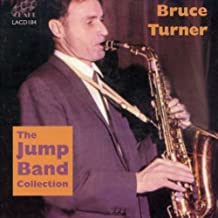
Bruce Turner was born on July 5, 1922 in Saltburn, North Yorkshire, England and educated at Dulwich College. He learned to play the clarinet as a schoolboy and began playing alto saxophone while serving in the Royal Air Force in 1943 during World War II. He played with Freddy Randall from 1948~53 and then worked on the Queen Mary in a dance band and in a quartet with Dill Jones and Peter Ind.
In 1950 he briefly studied under Lee Konitz in New York City. His first period with Humphrey Lyttelton ran from 1953 to 1957. After leaving Lyttelton he led his Jump Band from 1957~65, which was featured along with his arrangements in the 1961 film Living Jazz. In 1961, Turner recorded Jumpin’ at the NFT (National Film Theatre) and the album was issued later that year on Doug Dobell’s 77 Records label, coinciding with the film’s release.
In January 1963, the British music magazine New Musical Express reported that the biggest trad jazz event to be staged in Britain had taken place at Alexandra Palace. The event included George Melly, Diz Disley, Acker Bilk, Chris Barber, Kenny Ball, Ken Colyer, Monty Sunshine, Bob Wallis, Alex Welsh, Mick Mulligan and Turner.
Returning to Randall’s group from 1964 to 1966, he then played with Don Byas and Acker Bilk till 1970. He went on to work with Wally Fawkes, John Chilton, Stan Greig), Alex Welsh, and Dave Green. He led small ensembles in the 1990s until his death. His autobiography Hot Air, Cool Music, published by Quartet Books, appeared in 1984. He wrote a column on jazz for the Daily Worker. Saxophonist, clarinetist, and bandleader Bruce Turner passed away on November 28, 1993 in Newport Pagnell.
More Posts: clarinet,history,instrumental,jazz,music,saxophone
Daily Dose Of Jazz…
Charles Sumner Kennedy was born on July 2, 1927 in Staten Island, New York. He played with Louis Prima’s big band orchestra in the 1940s, earning himself a solo on that band’s 1943 recording of The White Cliffs of Dover. He put together his own band and after a brief stint as a leader, he joined Gene Krupa’s big band.
Over the course of his career, he also played with Terry Gibbs’s Dream Band, as well as Charlie Ventura, Flip Phillips, Chico O’Farrill, and Bill Holman. In addition to live performances and recordings with big-name bands, he also was a frequent studio musician. He played in the orchestras for popular movies including My Fair Lady and West Side Story.
By the 1970s, he gave up his career as a full-time musician in order to support his family, but continued to perform in clubs near his home in southern California. Alto saxophonist Charlie Kennedy, who was a big band-era musician, passed away of pulmonary disease on April 3, 2009 in Ventura, California at the age of 81.
More Posts: bandleader,history,instrumental,music,saxophone
Daily Dose Of Jazz…
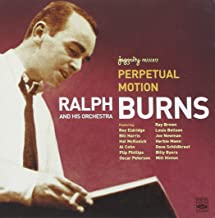
Ralph Jose P. Burns was born on June 29, 1922 in Newton, Massachusetts and began playing the piano as a child. Attending the New England Conservatory of Music, he learned the most about jazz by transcribing the works of Count Basie, Benny Goodman and Duke Ellington. While a student, he lived in the home of Frances Wayne, who was an established big band singer and her brother Nick Jerret was a bandleader who began working with him. He found himself in the company of performers as Nat King Cole and Art Tatum.
Moving to New York in the early 1940s, he met Charlie Barnet and the two men began working together. In 1944, he joined the Woody Herman band with members Neal Hefti, Bill Harris, Flip Phillips, Chubby Jackson and Dave Tough. Together, the group developed Herman’s sound. For 15 years, Burns wrote or arranged many of the band’s major hits including Bijou, Northwest Passage, Apple Honey, and on the longer work Lady McGowan’s Dream and the three-part Summer Sequence.
Herman band member Stan Getz was featured as a tenor saxophone soloist on Early Autumn, a hit for the band and the launching platform for Getz’s solo career. Burns also worked in a small band with soloists including Bill Harris and Charlie Ventura. The success of the Herman band provided Ralph the ability to record under his own name. He collaborated with Billy Strayhorn, Lee Konitz and Ben Webster to create both jazz and classical recordings.
Writing compositions for Tony Bennett and Johnny Mathis led to his later work with Aretha Franklin and Natalie Cole. He was responsible for the arrangement and introduction of a string orchestra on two of Ray Charles’s biggest hits, Come Rain or Come Shine and Georgia on My Mind. In the 1990s, Burns arranged music for Mel Tormé, John Pizzarelli, Michael Feinstein and Tony Bennett.
During the 1960s he quit touring as a band pianist and began arranging and orchestrating for Broadway shows including Chicago, Funny Girl, No, No, Nanette, and Sweet Charity. His first film score was for Woody Allen’s Bananas. He worked with Bob Fosse and won an Academy Award for Cabaret, and went on to compose the film scores for Lenny, New York, New York and All That Jazz, the latter garnered an Academy Award. Besides winning Oscars, Burns won an Emmy, a Tony and a Drama Desk Award. From 1996 until his death, he restored many orchestrations for New York City Center’s Encores! series.
Carefully hiding his homosexuality throughout his life, pianist, composer and arranger Ralph Burns, who was posthumously inducted into the New England Jazz Hall of Fame in 2004, passed away on November 21, 2001 from complications of a stroke and pneumonia in Los Angeles, California.
More Posts: arranger,composer,history,instrumental,jazz,music,piano