

Daily Dose Of Jazz…
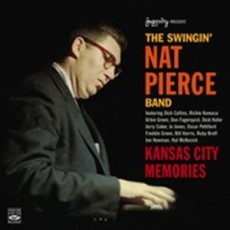
Nat Pierce was born on July 16, 1925 in Somerville, Massachusetts. Learning to play piano as a child he went on to attend the New England Conservatory. After graduation he worked as an amateur musician around Boston, then led his own band featuring Charlie Mariano from 1949-51. He would go on to play with Woody Herman through 1966 as chief arranger and asst. road manager.
Taking up residence in New York City, Nat freelanced with musicians such as Pee Wee Russell, Lester Young, Emmett Berry and ruby Braff, to name a few. From 1957-1959 Pierce led his second band off and on which featured Buck Clayton, Gus Johnson and Paul Quinichette. He recorded with a number of other well-known musicians as well, including Quincy Jones, Coleman Hawkins and Pee Wee Russell.
Pierce arranged the music for The Sound of Jazz, a 1954 CBS television special hosted by John Crosby. Most of the pieces he composed and arranged were predominantly created for the use in big bands. Pianist Nat Pierce passed away on June 10, 1992.
More Posts: piano
Daily Dose Of Jazz…
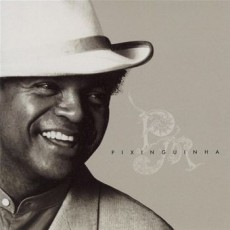
Paulo Moura was born on July 15, 1932 in Sao Jose do Rio Preto, Brazil. His father, a maestro of a marching band, encouraged his son to train as a tailor but Paulo instead studied in the National Music School and performed with the Brazilian Symphonic Orchestra.
He was the first black artist to become first clarinetist in the Municipal Theatre Orchestra. He appeared at Bossa Nova night at Carnegie Hall in 1962 with Sergio Mendes and both were featured on Cannonball Adderley’s 1962 album, Cannonball’s Bossa Nova.
From 1997 to 1999, Paulo was on the State Council of Culture in Rio de Janiero, a Councillor of the Federal Council of Music, and President of the Museum Foundation of Image and Sound. In 2000, Moura became the first Brazilian instrumentalist to win the Latin Grammy.
He won the Sharp Award for the most popular instrumentalist of the year in 1992. His CD “Paulo Moura e Os Oito Batutas” was listed by Barnes & Noble as one of the top 10 recommendations of the year for 1998. Clarinetist and saxophonist Paulo Moura passed away of lymphoma on July 12, 2010 just three days before his 78th birthday.
Daily Dose Of Jazz…
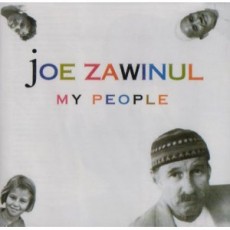
Joe Zawinul was born Josef Erich Zawinul on July 7, 1932 grew up in Vienna, Austria. Classically trained at the Konservatorium Wien, he played in various broadcasting and studio bands before emigrating to the U.S. in 1959 on a music scholarship to Berklee College of Music in Boston.
He went on to play with trumpeter Maynard Ferguson, where he first met Wayne Shorter after having had an influence in hiring him. Shorter left soon thereafter for Art Blakey’s group and Joe departed ways to tour and record with Dinah Washington for two years.
First coming to prominence in 1961 with saxophonist Cannonball Adderley, and during his nine-year stint composed the hit songs “Mercy, Mercy, Mercy”, “Walk Tall” and “Country Preacher”, the latter a tribute to Jesse Jackson
In the late 60s Zawinul played with Miles Davis, becoming one of the creators of jazz-fusion and one of the first to use electric pianos and synthesizers. He composed the title track on the album In A Silent Way and “Pharaoh’s Dance” on the landmark album Bitches Brew that occupied the whole of side one.[1]
In 1970, Zawinul co-founded Weather Report with Wayne Shorter bringing relatively open group improvisation with their fourth album Mysterious Traveller being their breakthrough. For the next fifteen years they would experience unparallel success with his composition “Birdland” being covered by the likes of Quincy Jones and the Manhattan Transfer and Jefferson Starship among others and winning him three Grammy awards.
Joe recorded 74 albums as a leader, sideman and collaborator; has been named Keyboardist” 28 times by the readers of Down Beat magazine, had several musicians honor him in song, written symphonies and performed and toured up until his hospitalization for a rare skin cancer where he died on September 11, 2007.
More Posts: piano
Daily Dose Of Jazz…
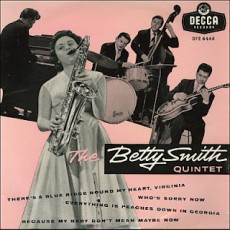
Betty Smith was born on July 6, 1929 in Sileby, Leicestershire, England. She studied the saxophone as a young child and began playing the alto saxophone when she was nine in Archie’s Juveniles, not concentrating on jazz until her early teens.
1947 saw Smith touring the Middle East with pianist Billy Penrose, and then with Ivy Benson’s evening gown clad Girls’ Band, playing for off duty Nuremberg trials officials, and in 1948 with Rudy Starita’s All Girls Band to play for the troops.
Women jazz musician were rare in the Fifties, but Betty, by then playing tenor, proved herself in Freddy Randall’s Dixieland/Chicago styled band. She would be heard swinging, improvising and playing hotter jazz than her colleagues as they toured around Britain.
Following a tour of the U.S. the breakup of Randall’s band, and Betty forming a quintet in 1957, she returned to the States and toured with Bill Haley’s Comets. She worked fronting the Ted Heath Orchestra as a vocalist, got numerous radio and television jobs and had her own program on Radio Luxembourg.
She would meet trumpeter Kenny Baker, form the sextet “Best of British Jazz” and be the band’s only saxophonist for the remainder of her career until she got sick in 1985. She continued to sing and play the piano until a week before her death on January 21, 2011 in Kirby Muxloe, Leicestershire, England.
Daily Dose Of Jazz…
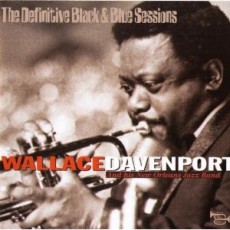
Wallace Foster Davenport was born on June 30, 1925 in New Orleans, Louisiana. He started on trumpet at age 13 with The Young Tuxedo Brass Band. In 1941 he played with Papa Celestin before leaving New Orleans to serve in the Navy. Returning home after WWII, Wallace easily transitioned to bop and swing with various bands, recording with Roy Brown and touring Europe and the U.S. with Lionel Hampton and recording with Mezz Mezzrow in 1950s Paris.
Davenport played and recorded with Count Basie in the mid 60s, toured with Ray Charles and Lloyd Price but by the end of the decade returned to traditional jazz, releasing albums on his own label My Jazz from 1971-76. He recorded again in Europe with George Wein in ’74, with Panama Francis and Arnett Cobb in 1976, reunited with Hampton and recorded with Earl Hines this same year.
In the eighties, Davenport worked with both traditional units as The Alliance Hall Dixieland Band and gospel groups like The Zion Harmonizers and Aline White; and backed vocalists Sammy Davis Jr. and Frank Sinatra. He routinely went on impromptu tours in Asia and Europe, once played expressly for the Norway King Olav V, played regularly at the New Orleans Jazz & Heritage Festival and received numerous awards and accolades for his musical contributions. Trumpeter Wallace Davenport died in New Orleans, Louisiana, at 78 years of age on March 18, 2004. He was one of the few 1930s traditional trumpeters able to branch out into bop and swing.
More Posts: trumpet