

Daily Dose Of Jazz…
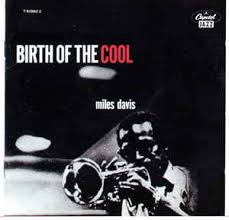
Nelson Boyd was born on February 6, 1928 in Camden, New Jersey. He played in local orchestras in Philadelphia, Pennsylvania around 1945, and then moved to New York City in 1947.
While living there Boyd first performed with Coleman Hawkins, Tadd Dameron, and Dexter Gordon. He would go on to play with Sarah Vaughan, Dizzy Gillespie, and Charlie Barnet in 1948. In 1947, he recorded with Fats Navarro and Charlie Parker. He later played with Jay Jay Johnson and recorded with Miles Davis on Davis’s Birth of the Cool sessions in 1949. In addition, Davis’s song “Half Nelson” was named after Boyd because of his stature.
After 1949, Nelson often played with Gillespie and toured the Middle East with him in 1956. Later, he recorded with Melba Liston in 1958 with her trombone ultimates on Melba Liston and Her ‘Bones. He also did sessions with Max Roach and Thelonious Monk.
He recorded four albums with Gillespie, and one each with Milt Jackson, Charles McPherson, Max Roach, and Sonny Stitt, Bud Powell, and J. J. Johnson. Bebop bassist Nelson Boyd, whose last recordings were in 1964, passed away in October 1985.

More Posts: bass,history,instrumental,jazz,music
Daily Dose Of Jazz…
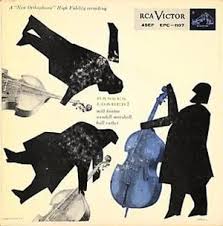
Wyatt Robert Ruther was born on February 5, 1923 in Pittsburgh, Pennsylvania. Playing trombone in high school before picking up the double-bass, he studied at the San Francisco Conservatory of Music and the Pittsburgh Musical Institute.
From 1951 to 1952 he played in New York City with Dave Brubeck and Erroll Garner from 1951-55. A sought after bassist Wyatt toured with Lena Horne in 1953 and recorded an album under his own name alongside Milt Hinton in 1955 for RCA Records entitled Basses Loaded. Following this he played with Toshiko Akiyoshi in 1956, then studied at the Royal Conservatory of Music in Toronto, Canada.
While in Canada he played with the Canadian Jazz Quartet for two years beginning in 1956 and then in 1957 with Peter Appleyard. During the same period back in the States, Ruther played with Ray Bryant, Zoot Sims, Bob Brookmeyer, and Chico Hamilton. From the end of the Fifties to the mid~Sixties he toured with George Shearing, went on a world tour with Buddy Rich, played in Gerry Mulligan’s quartet, then joined Count Basie.
In the late 1960s, Wyatt worked freelance in the San Francisco area, and played at the Olympic Hotel in Seattle, Washington in the early Seventies. Moving to Vancouver, British Columbia, Canada he played with Fraser MacPherson from 1975 to 1979. He went on to play at the Ankor Hotel in Vancouver in the early 1980s, and while there worked with Sammy Price, Jay McShann, and Dorothy Donegan. Returning to San Francisco in 1984, he played with Stan Getz, Lou Stein, John Handy, Benny Carter, and Jerome Richardson late into thedecade and early Nineties. Bassist Wyatt Ruther played until he passed away of a heart attack at age 76 on October 31, 1999 in San Francisco, California.
More Posts: bandleader,bass,history,insrumental,jazz,music
Three Wishes
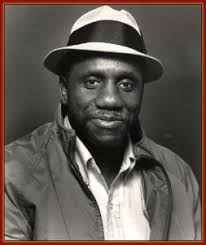
Nica asked Buddy Montgomery what his three wishes were and he simply said:
- “I can use a whole lot of things! One thing I would like is to get my mind and my hands attached to what I am trying to do, musically. I need to think some more about the others.”
*Excerpt from Three Wishes: An Intimate Look at Jazz Greats ~ Compiled and Photographed by Pannonica de Koenigswarter
More Posts: baroness,history,instrumental,jazz,music,pannonica,piano,three,vibraphone,wishes
Three Wishes
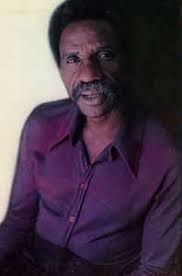
When Monk Montgomery was asked by the Baroness if given what his three wishes would be he responded by telling her:
- “My first wish would be that the older people let the younger people think for themselves.”
- “I wish they would give jazz an opportunity.”
- “I wish I could beat you just one time at Ping-Pong.”
*Excerpt from Three Wishes: An Intimate Look at Jazz Greats ~ Compiled and Photographed by Pannonica de Koenigswarter
More Posts: baroness,bass,history,instrumental,jazz,music,pannonica,three,wishes

Daily Dose Of Jazz…
James Otis Wyble was born on January 25, 1922 in Port Arthur, Texas and in his early years worked for a radio station in Houston. He and guitarist Cameron Hill played Western swing, an outgrowth of jazz, in a band led by Burt “Foreman” Phillips. The sound of two guitars attracted Bob Wills, another fan of Western swing, and he hired both men for his band, the Texas Playboys.
His career interrupted by World War II, he served in the Army from 1942 to 1946, but returned to music after he came home. Jimmy continued to play in Western swing bands, but his interest in jazz surfaced on his 1953 debut album, The Jimmy Wyble Quintet. He would soon work with Barney Kessel and Benny Goodman, and then played with Red Norvo for eight years, including on a tour of Australia accompanying Frank Sinatra.
During the 1960s Wyble took a job as a studio musician in Los Angeles, California working as a guitarist for movies and television, playing on movie soundtracks, including The Wild Bunch, Ocean’s Eleven, Everything You Always Wanted to Know About Sex and Kings Go Forth, and played on TV shows such as The Flip Wilson Show and Kraft Music Hall.
He became an educator after taking classical guitar lessons from Laurindo Almeida, teaching guitar to Larry Koonse, Howard Roberts, Howard Alden and Steve Lukather among others. The 1970s saw Jimmy developing a two-line contrapuntal approach to guitar and composed numerous etudes in this style, publishing Classical/Country, The Art of Two-Line Improvisation, and Concepts for the Classical and Jazz Guitar.
During the 1980s, he left the music business, returning to performance in 2005. Larry Koonse, his former student, issued the album What’s in the Box with compositions by Wyble based on his book of etudes.
Guitarist, composer, and educator Jimmy Wyble continued to perform, record and teach until his death on January 16, 2010.
More Posts: composer,educator,guitar,history,instrumental,jazz,music