

Daily Dose Of Jazz…
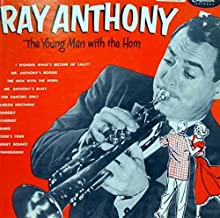
Ray Anthony was born Raymond Antonini on January 20, 1922 into an Italian family in Bentleyville, Pennsylvania but moved with his family to Cleveland, Ohio, where he studied the trumpet. From 1940~1941 he played in Glenn Miller’s band and appeared in the Glenn Miller movie Sun Valley Serenade before joining the U.S. Navy during World War II. After the war he formed his own group and the Ray Anthony Orchestra became popular in the early 1950s with The Bunny Hop, Hokey Pokey, and the theme from Dragnet. He had a No. 2 chart hit with a remake of the Glenn Miller tune At Last in 1952, the highest charting pop version of the song in the United States.
The following year his orchestra was featured when Helen O’Connell and Bob Eberly headlined a summer replacement program for Perry Como’s CBS television show. From 1953–1954 Ray was musical director of the television series TV’s Top Tunes.
After appearing as himself in the 1955 film Daddy Long Legs and starring in a short-lived television variety show, The Ray Anthony Show. Anthony he revved up his acting appearing in films during the late 1950s. In 1957, Anthony and his orchestra recorded the music score for the film This Could Be The Night, with vocals performed by Julie Wilson.
After his marriage to Mamie van Doren ende so did his brief film career. He continued his musical career and had another hit record with the theme from Peter Gunn, which reached No. 8 on the Billboard Hot 100 pop chart. Among his pianists was Allen “Puddler” Harris, and Kellie Greene, who also played the vibraphone. As a composer he wrote Thunderbird, The Bunny Hop, Trumpet Boogie, Big Band Boogie, and Mr. Anthony’s Boogie. Trumpeter Ray Anthony remains active today.
More Posts: bandleader,history,instrumental,jazz,music,trumpet
Daily Dose Of Jazz…
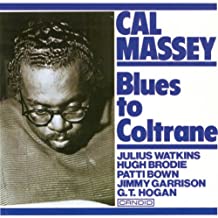
Calvin “Cal” Massey was born in Philadelphia, Pennsylvania on January 11, 1928 and studied trumpet under Freddie Webster. Following his studies, he played in the big bands of Jay McShann, Jimmy Heath, and Billie Holiday.
In the late 1950s Cal headed an ensemble with Jimmy Garrison, McCoy Tyner, and Tootie Heath. Occasionally John Coltrane and Donald Byrd would play with Massey’s group and in the 1950s he gradually receded from active performance and concentrated on composition.
His works were recorded by Coltrane, Tyner, Freddie Hubbard, Jackie McLean, Lee Morgan, Philly Joe Jones, Horace Tapscott and Archie Shepp. Massey played and toured with Shepp from 1969 until 1972 and also performed in The Romas Orchestra with Romulus Franceschini.
Massey’s political standpoint was radical and his work was strongly connected with the Civil Rights Movement of the 1960s and ’70s. The Black Panther Party was an inspiration for The Black Liberation Movement Suite which he created with Franceschini and was performed three times at Black Panther benefit concerts. His ideology resulted in him getting whitelisted from major recording companies and only one album was recorded under his name.
Trumpeter and composer Cal Massey passed away from a heart attack on October 25, 1972 at the age of 44 in New York City, New York.
Three Wishes
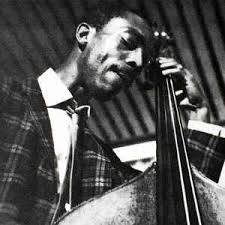
The Baroness awaited his answer after inquiring of Sam Jones what his three wishes were, he said:
- “I’ve already had two wishes: to play with Thelonious Monk and Dizzy Gillespie. So all I need now is one: to be a great jazz musician.”
*Excerpt from Three Wishes: An Intimate Look at Jazz Greats ~ Compiled and Photographed by Pannonica de Koenigswarter

More Posts: baroness,bass,history,instrumental,jazz,music,pannonica,three,wishes
Daily Dose Of Jazz…
Musa Kaleem was born Orlando Wright on January 3, 1921 in Wheeling, West Virginia. He bought a clarinet in 1937, and by 1939 was touring as a saxophonist with the El Rodgers Mystics of Rhythm, featuring Eddie Jefferson on lead vocals.
In the early 1940s he began using the name Gonga Musa, and then Musa Kaleem, the name by which he is best known. He played often in Pittsburgh, Pennsylvania in the Fortiess, gigging with Erroll Garner, Mary Lou Williams, and Art Blakey.
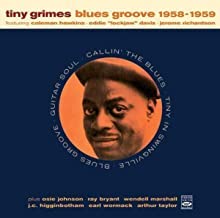
In the middle of the decade he toured with Fletcher Henderson, then relocated to New York City and played with Duke Ellington, Count Basie, Jimmie Lunceford, and the Savoy Sultans by the end of the 1940s. The 1950s saw Kaleem playing on cruise ships, however, upon his return in the 1960s he played with James Moody, Coleman Hawkins, Tiny Grimes, and rejoined Jefferson.
Saxophonist and flautist Musa Kaleem passed away on March 26, 1988 in Los Angeles, California.
Daily Dose Of Jazz…
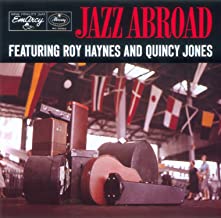
Simon Brehm was born on December 31, 1921 in Sweden and learned to play the double~bass. He recorded three albums with Quincy Jones. Later in life, he became a record producer and owner of Karusell Records.
Very little is known or written about this musician, but he managed singer Lill-Babs and was the leader of the orchestra that played in the TV show Hylands hörna from 1962.
Double~bassist, composer, and record producer Simon Brehm passed away on February 11, 1967 at the age of 45
More Posts: bandleader,bass,composer,history,instrumental,jazz,music,record producer