

Daily Dose Of Jazz…
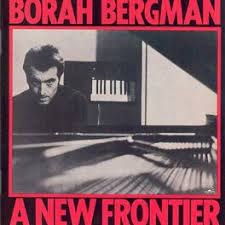
Borah Bergman was born on December 13, 1933 in Brooklyn, New York. He took piano lessons as a child, changed to clarinet, then returned to piano after being discharged from the army. Determining right away that he wanted to develop an individual voice, the right-handed player worked for years in strengthening his left hand. He practiced playing left-handed almost exclusively and eventually as a pianist he became ambidextrous.
Early in his career comparisons arose and though he cited Tristano, Monk, and Powell as influences, his ability as an improvising pianist was so singular. Bergman had the most comprehensive technique of any jazz musician on any instrument. His facility is nonpareil with both hands. He improvised spontaneous free counterpoint at unfathomable speeds and with remarkable precision and no pianist in the history of jazz ever developed more speed and agility in his left hand.
Borah began recording late and his first four albums were solo efforts. His debut album Discovery was released in 1975 on the Chiaroscuro label. Three more would follow through 1984, and in 1992, he began a series of successful duo collaborations with free-bop altoist Thomas Chapin, drummer Andrew Cyrille, and soprano saxophonist Evan Parker. He would go on to record duo/trio albums with saxophonist Roscoe Mitchell and vocalist Thomas Buckner, saxophonists Peter Brotzman and Thomas Borgmann. At the end of the century his recorded output continued to rise substantially, as well as his profile as one of the music’s major contributors.
Pianist Borah Bergman, who performed in the free jazz idiom and recorded thirty albums as a leader or co-leader, transitioned on October 18, 2012 in New York City.

More Posts: bandleader,history,instrumental,jazz,music,piano
Daily Dose Of Jazz…
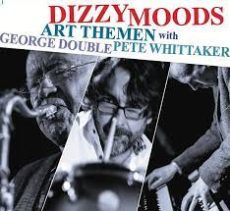
Arthur Edward George Themen was born November 26, 1939 in Manchester, England, where he was involved with the traditional jazz scene in the late 1950s as a self-taught musician, having started playing clarinet as a schoolboy at Manchester Grammar School.
In 1958 he began his medical studies at the University of Cambridge. While there he started playing jazz with the Cambridge University Jazz Band bandmates including Lionel Grigson, Dave Gelly, Jonathan Lynn, and John Hart. Under pianist Grigson’s leadership they achieved near professional standard with a swinging hard-bop style that swept the board in the fiercely contested Inter-University Jazz Band Competitions.
By 1964 he was an orthopaedic consultant playing blues with Jack Bruce and Alexis Korner and was a member of Alexis Korner’s Blues Incorporated. In 1965, Themen played with the Peter Stuyvesant Jazz Orchestra in Zürich, Switzerland going on to play with Michael Garrick, Ian Carr, and Graham Collier’s Music.
The Seventies saw him playing with Stan Tracey, touring with him all over the world as well as around the UK. Art has played and toured with visiting US musicians Charlie Rouse, Nat Adderley, Red Rodney, George Coleman, and Al Haig.
In 1995 he formed a quartet with pianist John Critchinson. Themen’s style originally owed much to the influence of Dexter Gordon and Sonny Rollins, but later influences included such disparate saxophonists as Coleman Hawkins, Evan Parker and John Coltrane. He was inspired to play saxophone after he attended a gig by the Dankworth Seven, at the local Palais, at the age of 16, with a female cousin and his future was set.
Following his retirement as a consultant orthopaedic surgery consultant, saxophonist Art Themen has focused on his jazz career.

More Posts: bandleader,history,instrumental,jazz,music,saxophone
Daily Dose Of Jazz…
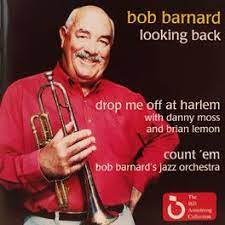
Robert Graeme Barnard was born on November 24, 1933 in Melbourne, Australia and his parents had formed a dance band in the 1920s, his mother was the bandleader and pianist, his father on saxophone, drums and banjo. His older brother Len joined them on drums at age 11. He took trumpet lessons from age 11 and played clarinet in a local brass band before he joined the family band at 14 in 1947.
When his brother Len formed his own group, Len’s South City Stompers the next year he joined on trumpet and they made their first recording in 1949 on his 16th birthday. The following year they began a weekly radio broadcast as Len Barnard’s Dixieland Jazz Band. He played with the group until 1955 after being cheated of their takings and stranded in Tumut, Australia. Relocating to Sydney he performed with Ray Price Trio before returning to Melbourne.
In 1958 Barnard joined the Graeme Bell band for an Australian tour. He worked for Brashs from 1958 to 1962, while performing after business hours. He went back to Sydney in 1962 and as a member of Graeme Bell and His All-Stars appeared on Trad Pad, a TV special program.
He was nominated in 1996 at the ARIA Music Awards of 1996 for Best Jazz Album for Live at the Sydney Opera House, which was recorded with the Australian Jazz Allstars.
Trumpeter and cornetist Bob Barnard, who was made a Member of the Order of Australia (AM) for service to music, particularly jazz, transitioned on May 7, 2022.
More Posts: bandleader,cornet,history,instrumental,jazz,music,trumpet
Daily Dose Of Jazz…
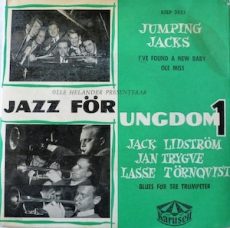
Lasse Törnqvist was born Lars Törnqvist on November 18, 1935 in Bromma, outside Stockholm, Sweden. Between 1952 and 1957 he played traditional jazz with the Midnight Stompers. He took a music hiatus but picked up playing again in 1973 in more swing and mainstream influenced sextest and septets, like the Olle Orrjes Jazz Band and Lasse Törnqvist’s Blue Stars.
He experimented with small bands in order to achieve a more acoustic sound. During the 1980s he often played with a cornet and piano duo. In 1992 he put a trio together with guitar and bass which became the Sweet Jazz Trio.
Cornetist Lasse Törnqvist, at 98 years old, no longer plays.
More Posts: bandleader,cornet,history,instrumental,jazz,music

Daily Dose Of Jazz…
Janet Lawson was born on November 13, 1940 in Baltimore, Maryland to a Jewish father and Catholic mother from Eastern Europe. Her father was a jazz drummer and her mother was a singer and lyricist who sometimes sang in her father’s band. At home, they worked on songs together at the piano. She performed on the radio and regional television as a child.
Lawson began singing with a local big band in her teens. When she was eighteen, she moved to New York City and got a job as a secretary at Columbia Records. She appeared regularly on Steve Allen’s television show between 1968 and 1969 and worked in theater.
Living across the street from Al Jeter, the head of Riverside Records, gave her access to make contacts when she attended parties at his penthouse apartment. While going to jazz clubs she found inspiration from seeing Thelonious Monk and made her debut at the Village Vanguard with Art Farmer.
In 1976 she formed the Janet Lawson Quintet, which in 1983 included saxophonist and flutist Roger Rosenberg, pianist Bill O’Connell, Ratzo Harris on bass, and drummer Jimmy Madison. She became known as a scat singer and improviser.
Lawson has worked with Art Farmer, Chick Corea, Ron Carter, Bob Dorough, Duke Ellington, Tommy Flanagan, Sheila Jordan, Barry Harris, Milt Hinton, Eddie Jefferson, Barney Kessel, Dave Liebman, Joe Newman, Rufus Reid, Clark Terry, Ed Thigpen, Cedar Walton, Duke Pearson and David Lahm.
She has taught voice at New York University and the New School, given private lessons, taught elementary school children, and has made trips every year to Latvia to attend a youth music camp.
In 1977 she recorded with Eddie Jefferson and by the Eighties she recorded two albums as a leader. In 1982 she was nominated for a Grammy Award in the Best Female Jazz Vocal Performance, and in 2007 received a Hall of Fame nomination from the International Association for Jazz Education.
Vocalist Janet Lawson, who in the early 2000s was diagnosed with Lyme disease, Bell’s palsy, Parkinson’s disease and suffered damage to her vocal cords, transitioned on January 22, 2021 in New Jersey.
Confer a dose of a Baltimore vocalist to those seeking a greater insight about the musicians around the world who are members of the pantheon of jazz…
More Posts: bandleader,history,instrumental,jazz,music,vocal