

Daily Dose Of Jazz…
Mark Jay Levine was born on October 4, 1938 in Concord, New Hampshire and began playing the piano at the age of five, trombone in his early teens. Attending Boston University, graduating with a degree in music in 1960, he also studied privately with Jaki Byard, Hall Overton and Herb Pomeroy.
Moving to New York City in the Sixties he freelanced and then played with musicians Houston Person, Mongo Santamaría, and Willie Bobo from 1971 to 1974. Levine then moved to San Francisco, California and played with Woody Shaw for two years. His debut album was made as a leader for Catalyst Records in 1976.
He went on to play with the Blue Mitchell/Harold Land Quintet, Joe Henderson, Stan Getz, Bobby Hutcherson, Luis Gasca, and Cal Tjader. From 1980 to 1983, he concentrated on valve trombone, but then returned to playing mainly the piano. He then led his own bands, and recorded for Concord as a leader in 1983 and 1985. From 1992 Mark was part of Henderson’s big band. He created a new trio in 1996 and recorded it for his own, eponymous label. His Latin jazz group, Que Calor, was formed in 1997.
He put on his educator hat in 1970, teaching in addition to private lessons at Diablo Valley College, Mills College, Antioch University in San Francisco, San Francisco Conservatory of Music, Sonoma State University, and the JazzSchool in Berkeley. Levine wrote two method books: The Jazz Piano Book, and The Jazz Theory Book.
Pianist, trombonist, composer, author and educator Mark Levine, whose album Isla was nominated for a Grammy Award for Best Latin Jazz Album, died of pneumonia on January 27, 2022 at the age of 83.
Get a dose of the musicians and vocalists who were members of a global society integral in the making and preservation of jazz for over a hundred and twenty-five years…
Mark Levine: 1938~2022 | Clarinet, Composer, Educator, Director, Producer
More Posts: author,bandleader,composer,educator,history,instrumental,jazz,music,piano,trombone
Daily Dose Of Jazz…
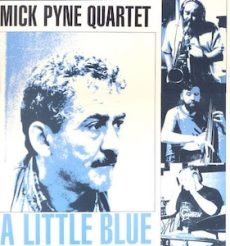
Mick Pyne was born Michael John Pyne on September 2, 1940 in Thornton-le-Dale, England He learned piano from the age of three; then learned violin, and began playing cornet when he was 13.
Around 1957 he and his brother Chris formed their own band before Mick moved to London, England in 1959. He played briefly with Tony Kinsey in 1962, then played U.S. Army bases in France. In addition he worked with Alexis Korner, from 1962 to 1963.
Returning to London at the end of 1963, Pyne worked in the Sixties with John Stevens, Phil Seamen, and extensively with Tubby Hayes, He toured Europe with Stan Getz, Roland Kirk, Lee Konitz, Hank Mobley, and Joe Williams.
In the 1970s he worked with Hayes again as well as with Ronnie Scott, Humphrey Lyttelton, Jon Eardley and Cecil Payne. In the 1980s Pyne’s associations included Georgie Fame, Adelaide Hall, Keith Smith and Charlie Watts.
Pianist Mick Pyne died on May 23, 1995 in London.

More Posts: history,instrumental,jazz,music,piano
Daily Dose Of Jazz…
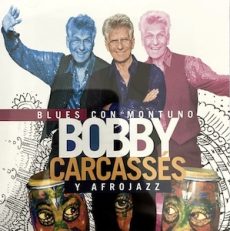
Bobby Carcasses was born on August 29, 1938 in Kingston, Jamaica into a Cuban family. He moved with his family back to Cuba when he was four and was surrounded by the various forms of local music. Starting out as an opera singer, he switched to Cuban music and worked as a vocalist at the famous Tropicana nightclub. It was here that he first began to experiment with incorporating scat and bebop influences into his vocal style.
By 1960 he was known as a dancer and athlete, being Cuba’s Long Jump Champion for that year. Bobby was a multi-instrumentalist having mastered the trumpet, bass, congas and drums. Later in the decade he travelled, including a year in Paris playing with resident jazz greats Bud Powell and Kenny ‘Klook’ Clarke.
Returning to Cuba, Carcassés formed his own jazz group, as well as acting in films and television. The 1980s saw him organize the first Jazz Plaza Festival, bringing to Cuba a host of international artists including Dizzy Gillespie, Charlie Haden and Airto Moreira. The festival became an annual event, with Carcasses and his band performing each year.
He toured extensively throughout Europe and the USA, performing alongside Tito Puente, Eddie Palmieri and many other big names of Latin jazz. Jazz Timbero was recorded in Havana in 1997 with an all-star Cuban big band (including members of Irakere and Los Van Van), playing a funky mix of Latin and jazz.
More Posts: bandleader,history,instrumental,jazz,music,trumpet
Daily Dose Of Jazz…
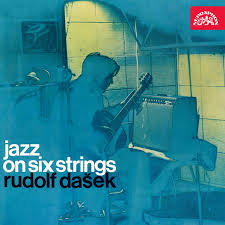
Rudolf Dašek was born on August 27, 1933 in Prague, Czech Republic and studied at the Prague Conservatory from 1962 to 1966 with Milan Zelenka.
He was a member of the band SHQ led by Karel Velebný, then followed with several bands for the rest of the 1960s which included a trio with George Mraz, a trio with Lou Bennett, the quintet Jazz Cellula led by Ladislav Déczi, an orchestra conducted by Gustav Brom, and the Prague Radio Symphony Orchestra.
By the end of the decade Rudolf was working for two years in the house band at the Blue Note Club in Berlin, Germany. In the early 1970s he formed the duo System Tandem with Jiří Stivín. He also worked with guitarists Philip Catherine, Christian Escoudé, and Toto Blanke.
Guitarist Rudolf Dašek, who played solo performances in the decades following the Seventies, died on February 1, 2013.
More Posts: bandleader,guitar,history,instrumental,jazz,music
Daily Dose Of Jazz…
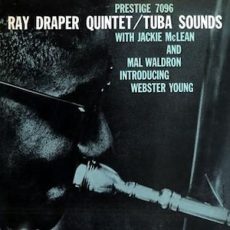
Raymond Allen Draper was born on August 3, 1940 in New York City. He attended the Manhattan School of Music in the mid-1950s. As a leader, he recorded his debut album, Tuba Sounds in 1957 for Prestige Records at the age of 16, with a quintet. His sophomore album, The Ray Draper Quintet featuring John Coltrane, was recorded at the age of 17 with slight changes in his quintet, including John Coltrane.
His drug use got him imprisoned, however, after his release in the late 1960s, Draper formed the first jazz rock fusion band composed of established jazz musicians of the day. This preceded Miles Davis’s Bitches Brew, which is normally recognized as the first jazz rock fusion group and recording by two years.
Original band members included George Bohanon on trombone, Hadley Caliman on tenor sax, John Duke on upright bass, Paul Lagos on drums and Tom Trujillo on guitar. This band, after its first live performance at Hollywood’s Whisky a Go Go and was offered numerous record deals and booked solid at rock venues for the rest of the year. Lagos went on to tour with John Mayall and was one of the founders of the group Pure Food & Drug Act, featuring Don ‘Sugarcane’ Harris.
He began using heroin again and the more experienced band members quit, except for the youngest member, guitarist Tom Trujillo and his landlord, Chuck Gooden. He hired San Diego trumpeter Don Sleet and saxophonist Ernie Watts. Eventually Draper brought drummer Paul Lagos back, along with saxophonist Richard Aplanalp, trumpeter Phil Wood, and bassist Ron Johnson, becoming a new group named Red Beans and Rice.
They recorded the album Red Beans and Rice Featuring Sparerib Ray Draper on Epic Records. They disbanded, he got hooked on drugs again, and left California for a couple of years in London, England. He was seen sporadically performing and recording. Returning to New York City in the hopes of becoming clean, he remarried and had two children, and continued to compose for other musicians.
He went on to play for a time with Max Roach, and in 1982 he joined the Lionel Hampton Orchestra. Tha year, coming out of a bank in Harlem, he was held up by a gang of juveniles. The 13-year-old leader of the gang shot him, after he had given him his money.
Tuba player Ray Draper, who had been clean of drug use and was working on a composition found in his attaché case, died on November 1, 1982.
More Posts: bandleader,history,instrumental,jazz,music,tuba