

Daily Dose Of Jazz…
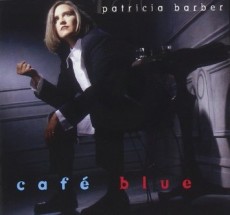
Patricia Barber was born on November 8, 1955 in Chicago, Illinois to professional musician parents and raised in South Sioux City, Iowa. She began playing classical piano at age six and by the time she graduated high school jazz was completely in her blood.
She enrolled in the University of Iowa with a double major of classical music and psychology but the jazz voice in her head grew louder. In 1984 she returned to Chicago and landed a five night week gig at the Gold Star Sandine Bar and since the mid-90s performs regularly at the Green Mill.
Starting her professional career as a pianist, as Barber’s stock rose, she then began to add vocals to her repertoire, centered in a fairly low register and a traditional blues-jazz style. Mixing original compositions and standards with classic rock covers, she has recorded and released a dozen compact discs, including a three CD box set covering her 1994-2007 years. She has released a classic Cole Porter collection of his songbook in her unique way of interpretation.
Vocalist, pianist and songwriter Patricia Barber has been awarded a Guggenheim Fellowship and teaches master classes worldwide in between her performing, touring and recording.

Jazz Is Global – Share
Daily Dose Of Jazz…
Kitty Margolis was born November 7, 1955 in San Mateo, California. As a child she listened to underground radio to hear the sounds of Ramsey Lewis, Beach Boys, John Lee Hooker and Santana, and Tower of Power was a local band playing at her high school dances. She would go to the Fillmore and Winterland and hear Miles Davis, Grateful Dead, Otis Redding, Janis Joplin, Jimi Hendrix, John McLaughlin, Charles Lloyd to name a few. But an outing with her uncle to the Village Vanguard and it was a Rahsaan Roland Kirk performance that changed her life.
She went on to San Francisco State and studied jazz and recording studio arts and was soon gigging with her teachers John Handy and Hal Stein. Hanging out at Todd Barkan’s Keystone Korner she met all the heavyweights, Dexter Gordon, Art Blakey, McCoy Tyner, Betty Carter, Cedar Walton, Freddie Hubbard, Flora Purim, Airto, Horace Silver, Red Garland and many more. She even had the oppoertunity to sing Charlie Parker’s solo on Billie’s Bounce and got thumbs up from her idol Eddie Jefferson. In 1989, she made her well-received debut at the legendary Monterey Jazz Festival.
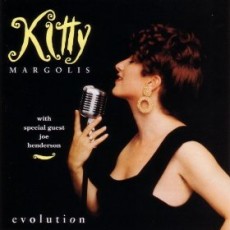
She released her debut studio album Evolution in 1993 and with guest performers Joe Henderson and Joe Louis Walker made a name for herself in the jazz community. On the heels of this album release Kitty won honor of Talent Deserving Wider Recognition in that year’s Down Beat critics’ poll, which she would repeat in 1995 and 1997. Her sophomore album, 1997’s Straight Up With a Twist, was her most eclectic outing yet, featuring quirky interpretations of standards, plus guest appearances by Roy Hargrove and Charles Brown.
Recording in between continuous performance and touring vocalist and record producer Kitty Margolis has taken time to co-found her own record label Mad Kat with Madeline Eastman. She has subsequently released five albums with a couple of live dates in San Francisco among them.
Give A Gift Of Jazz – Share
More Posts: vocal
Daily Dose Of Jazz…
Bob Belden was born James Robert Belden on October 31, 1956 in Evanston, Illinois but was raised in South Carolina. He studied saxophone and later attended the University of North Texas.
In 2008, he arranged and produced Miles from India, a world fusion music record based on the compositions of Miles Davis. In the record, he assembled alumni of Davis and musicians of India. As producer he is mostly associated with the seminal reissue of the recordings by Miles Davis for Columbia Records.
In addition to his work as arranger, composer, conductor and A & R director, Belden contributed numerous liner notes for noted recordings, such as Lou’s Blues by Lou Marini and the Magic City Jazz Orchestra, with some of his liner notes receiving Grammy Awards.
Shortly before his death, Bob became the first American musician in 35 years to bring a band from the States to Iran to perform. He may be best-known for his Grammy Award winning jazz orchestral recording, Black Dahlia. He recorded nine albums as a leader and performed and recorded as a sideman or collaborated with Paquito D’Ribera, Tim Hagans, Nicolas Payton, Sam Yahel, John Hart and Billy Drummond to name a few.
Tenor and soprano saxophonist, arranger, composer, bandleader and producer Bob Belden died of a heart attack on May 20, 2015, at Lenox Hill Hospital in Manhattan at the age of 58.
Give A Gift Of Jazz – Share
More Posts: saxophone
Daily Dose Of Jazz…
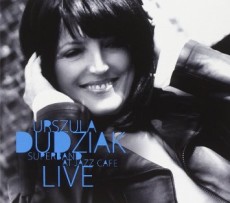
Urszula Bogumiła Dudziak was born October 22, 1943 in the Straconka neighborhood of Bielsko-Biata, Poland. She studied piano but began to sing in the late 50s after hearing records by Ella Fitzgerald. Within a few years she was one of the most popular jazz artists in her native country.
With her marriage to Michael Urbaniak in the late 60s they began to tour overseas and in the 70s settled in New York. Dudziak has some problems with language and customarily eschews words in favor of wordless vocalizing that is far more adventurous than scat. Already gifted with a remarkable five-octave vocal range, she employs electronic devices to extend still further the possibilities of her voice.
She has frequently worked with leading contemporary musicians, including Archie Shepp, Lester Bowie, Jay Clayton, Jeanne Lee, Bobby McFerrin, Norma Winstone, Sting, Michelle Hendricks, Michael Urbaniak, Krzysztof KomedaLaura Newton, Gil Evans and collaborated with fellow Polish jazz vocalist Grazyna Auguscik.
Vocalist Urszula Dudziak has been awarded the Knight’s Cross of the Order of Polonia Restituta by President Leon Kaczynski, published her autobiography Wyspiewam Wam Wszystko, translated means I’ll Sing Everything For You and she has recorded twenty-two albums and appeared in thirteen films. She continues to perform and tour.
Give A Gift Of Jazz – Share
More Posts: vocal
Daily Dose Of Jazz…
Carol Kidd was born on October 19, 1945 in Glasgow, Scotland and knew from five years old that she was a singer. She first came to prominence in the mid-Seventies as the vocalist for the band led by vibraphone and saxophonist Jimmy Feighan, and while raising three children and running a hotel she sang part-time all over Britain, performing on stage and television.
Kidd recorded her debut album Just For You in 1981 but it was three years before she released her self-titled sophomore project Carol Kidd and a third in 1985 titled All My Tomorrows. Her full-time professional career began in 1990 when Frank Sinatra issued her an invitation to appear live with him at Ibrox Stadium in Glasgow, in front of a capacity crowd. British jazz lovers gave rave reviews and Kidd was invited to sing at London’s internationally acclaimed Ronnie Scott’s Club, where Tony Bennett was in the audience. The momentum of her success picked up after that appearance and she was voted the Best Performer at Edinburgh International Jazz.
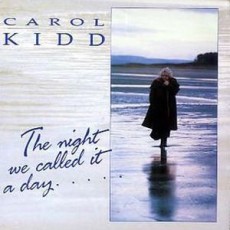
With four albums already under her belt, in 1990 Carol released her award-winning album, The Night We Called It a Day for Linn Records and was voted Best Jazz Recording at the U.K. Musical Retailer’s Awards. After being named Best Vocalist at the Cannes International Jazz Awards, she subsequently received invitations to appear all over Europe, the Far East and the United States.
For over a decade, jazz singer Carol Kidd has managed to consistently pull in accolades, “Best Awards,” and honors from an arena consisting of all-time greats such as Peggy Lee, Ella Fitzgerald, and Sarah Vaughan. She has won several awards at the British Jazz Awards and in 1998 she was awarded an MBE or Most Excellent Order of the British Empire for her services to jazz.
Jazz vocalist Carol Kidd has performed and recorded a standards album with the Robert Farnon Orchestra, has sixteen albums to date and continues to perform, record and tour all over the world.
Take A Dose On The Road
More Posts: vocal