

Daily Dose Of Jazz…
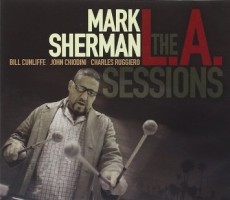
Mark Sherman was born April 17, 1957 in Manhattan, New York City to a Juillliard trained soprano mother who performed with the Cleveland and Boston symphonies, so it was natural that he studied classical piano as a child.
Sherman graduated from The High School of Music and in 1975, then went on to study classical percussion at Juilliard. He performed in ensembles under the direction of Leonard Bernstein, Sir George Solti, Zubin Mehta and Herbert Von Karajan. While there he would jam regularly with Wynton Marsalis. During the course of his career, Sherman also studied with Elvin Jones, Rohland Kohloff, Justin Diccocco, Roland Hanna and Jackie Byard among others.
While still in his teens, Mark played drums in a trio with pianist Kenny Kirkland who he introduced to Wynton. At 21, he began working on Broadway and in New York’s active studio scene, playing percussion, piano, drums and vibraphone. In 1980 he released his first album Fulcrum Point on Unisphere records. The decade saw him in studio working on commercial jingles.
Sherman spent a lot of his time in the studio in the 1980s, working on commercial jingles. Pianist Mike Renzi took him under his wing, connecting him with Peggy Lee and other singers performing with Lee, Tony Bennett, Mel Torme, Lena Horne and Ruth Brown. In 1986 he signed with Columbia Records and released his major label debut, A New Balance.
He continued to perform with Peggy Lee in the early 1990s, began a seven-year playing relationship with Larry Coryell, became an active studio musician, and played on numerous films and Broadway soundtracks. Reemerging as a leader playing vibraphone, he also continued his active career as a sideman, recording with Capathia Jenkins, Jennifer Holiday, Ann Hampton Callaway, Liz Minnelli and others.
Sherman continued to release his own albums on Miles High Records, won the Rising Star (Vibes) category in the Down Beat Critics Poll in 2007, 2008, 2009 and 2010 and has been a Jazz Ambassador for the U.S. State Department and Jazz at Lincoln Center.
Vibraphonist, pianist and drummer Mark Sherman is currently on the faculty of Juilliard jazz program, New Jersey City University and the New York Jazz Workshop.

Inspire A Young Mind
More Posts: drums,piano,vibraphone
Daily Dose Of Jazz…
Hassan A. Shakur, born J.J. Wiggins on April 15, 1956 in Los Angeles, California, is the son of pianist Gerald Wiggins. He learned to play bass standing on a chair at age four and with his father as a guide developed a high sensitivity and wide range of expression in jazz.
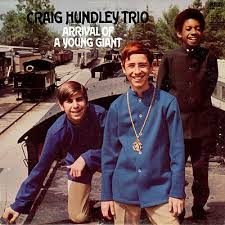
By age twelve he became the bassist for the Craig Hundley Trio, appearing on television shows, such as, the Today show, Johnny Carson, Jonathan Winters, Ted Mack Amateur Hour and the Della Reese show. The Trio recorded an album for World Pacific Records. At eighteen, he joined the Duke Ellington Orchestra under the direction of Mercer Ellington and to this day continues to perform with the Orchestra.
Shakur has performed with not only his father but Ella Fitzgerald, Dizzy Gillespie, Milt Jackson, Billy Eckstein, Al Grey, Sarah Vaughn, Joe Williams, Pearl Bailey, Louie Bellson, Herb Ellis and many others. He was bassist for the Broadway show “Me and Bessie” with Linda Hopkins, “Black and Blue” with Ruth Brown and Linda Hopkins, and the Duke Ellington shows “Sophisticated Ladies” and “Queenie Pie”.
Hassan is a longtime member of the Bill Easley Quartet, recording several albums, and also performs regularly with Monty Alexander on tours in the United States, Europe and Japan. He is a favorite on the cruise lines and has played Montreux, Kool, North Sea Nice, Concord, Hollywood Bowl and Saratoga jazz festivals.
He is adept at playing several instruments but Hassan Shakur’s remarkable technique, flexibility and talent for creating improvisational styles on the bass that are uniquely identifiable with him as a musician.
Take A Dose On The Road
More Posts: bass
Daily Dose Of Jazz…
Rusty Jones was born Isham Russell Jones II on April 13, 1942 in Cedar Rapids, Iowa and began playing drums at the age of thirteen and continued on throughout his college years choosing traditional and modern jazz as his preferred mode of music.
He went “on the road” after graduating college in 1965 from the University of Iowa with a degree in history and political science, to “get it out of his system”, but he never stopped his pursuit of a musical vocation. He moved to the Chicago area in 1967.
Jones appeared with Chicago musician Judy Roberts from 1968 to 1972, soon after becoming a member of George Shearing, then accompanied pianist Marian McPartland, then free-lanced throughout Chicago with several bands, touring the United States and Europe. He has worked with Patricia Barber, Adam Makowitz, Larry Novak, Ike Cole, Clifford Jordan, Danny Long, Johnny Gabor, Frank D’Rone, Art Hodes, Buddy DeFranco, Mark Murphy, Eddie Higgins, Red Holloway, Anita O’Day Stephane Grappelli, Ira Sullivan and J. R. Monterose, and the list goes on.
Between 1958 and 2004 this consummate sideman has been a part of nearly four-dozen recording sessions, all while performing and touring the U.S. and the world. Drummer Rusty Jones currently, appears quite regularly around the Chicago area with the Johnny Gabor Trio featuring vocalist Connie Marshall.
Dose A Day – Blues Away
More Posts: drums
Hollywood To 52nd Street
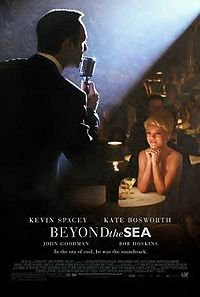
Beyond the Sea was originally titled La Mer, and the lyrics were written by sixteen-year old French lad named Charles Trenet. It wasn’t until 1943 while riding on a train that he composed the music for the song. Jacques Lawrence translated the original French lyrics into what has been widely known to the English-speaking world as Beyond The Sea. Though already a hit around the world as La Mer, it became a huge hit for jazz singer Bobby Darin and has been associated with him ever since.
The song became the title of the 2004 Bobby Darin biopic starring Kevin Spacey and has been heard in the 1995’s French Kiss starring Meg Ryan and Kevin Kline, and as the end music for the 2011 film Tinker, Tailor, Soldier, Spy and in the 2003 movie Finding Nemo.
Sponsored By

www.whatissuitetabu.com

#preserving genius
Daily Dose Of Jazz…
Toshiyuki Honda was born on April 9, 1957 in Tokyo, Japan. A professional saxophonist while still a university student, he released his debut album in 1978 as a leader titled “Burnin’ Wave”.
Honda is one of Japan’s best-known saxophonists and has since recorded with a host of world-celebrated musicians including Chick Corea, Freddie Hubbard, and Christopher Cross among others. He is widely known for his composing and arranging, having scored for television dramas, commercials, movies, and classical music genres.
He has received the Japan Academy’s highest honors for his work on the soundtrack for the movie, Marusa no onna. Toshiyuki’s “Concerto du vent”, a work commissioned by classical saxophonist Nobuya Sugawa, was recorded with the BBC Philharmonic Orchestra. The album was subsequently released on Chandos, a label for classical masterpieces.
Honda has released numerous original albums and soundtracks. One of his latest releases is with the Hyper Chamber Music Unit, “SMILE!” and has composed a work commissioned by Band Restoration 2012. Composer, arranger and producer Toshiyuki Honda continues to perform, record and tour in between utilizing his other talents.
Dose A Day – Blues Away
More Posts: saxophone