

Hollywood On 52nd Street
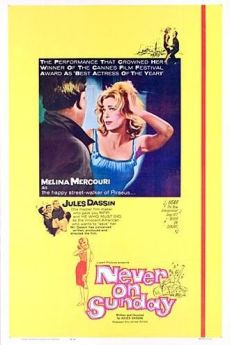
Never on Sunday is the theme song written by Manos Hadjidakis and Billy Towne for the 1960 Greek black-and-white film. The signature song became a hit and bestowed an Academy Award for Best Song on composer Hadjidakis. It stars Melina Mecouri and Jules Dassin and gently submerges the viewer into the Greek culture with music, dance and language through subtitles.
The Story: Ilya, a self-employed, free-spirited prostitute who lives in the port city of Piraeus and Homer, an American tourist from Middletown, Connecticut and a classical scholar enamored with all things Greek. Homer feels Ilya’s life style typifies the degradation of Greek classical culture and attempts to steer her onto the path of morality. It constitutes a variation of the Pygmalion story.
Sponsored By

www.whatissuitetabu.com
More Posts: vocal
Hollywood On 52nd Street
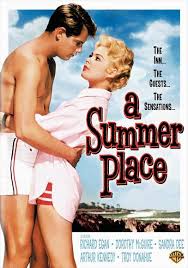
A Summer Place was adapted from the Sloan Wilson novel into a 1959 film of the same name, at a time when divorce, adultery and teenage sexuality were taboo subjects and very controversial. The theme song which became a jazz standard was composed by Mack Discant and Max Steiner.
The Story: Focuses on the adult lives of two one-time teenage lovers, Ken and Sylvia, who were from different social strata. Ken was self-supporting, working as a lifeguard at a Maine island resort, while Sylvia’s family stayed as guests of the owners, one summer between years at college. After their summer love affair, they married other people, but rediscovered each other later in life. At that time, Sylvia has a son, Johnny, and Ken a daughter, Molly. While Ken and Sylvia renew their love affair, their children begin a romance.
Sponsored By
www.whatissuitetabu.com
More Posts: comedy,dance,drama,hollywood,instrumental,jazz,musical,suite ta bu,vocal
Daily Dose Of Jazz…
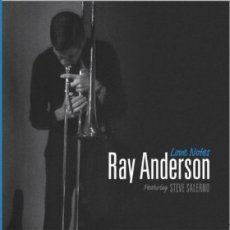
Ray Anderson was born on October 16, 1952 in Chicago, Illinois. An independent jazz trombonist and trumpeter he began training with the Chicago Symphony trombonists then spent time studying in California. By 1973 he was in New York freelancing and four years later joined Anthony Braxton’s group, then with Barry Altschul.
By the late ‘70s his influence was growing, he was leading his own groups, working with George Gruntz’s Concert Jazz Band and over the next twenty years began taking an occasional good-humored vocal singing two notes at the same time.
Anderson also plays the sousaphone, is a master at multiphonics and a supportive sideman has recorded and performed with David Murray, Charlie Haden, Dr. John, Bennie Wallace, Henry Threadgill, John Scofield and Sam Rivers among others. He also received a grant from the National Endowment For The Arts for a series of solo trombone concerts.
While pushing his sound into the future, Anderson has frequently returned to his early love of New Orleans music for inspiration as he continues to perform, record and tour. Since 2003 he has taught and conducted at Stony Brook University.

Give The Gift Of Knowledge
More Posts: sousaphone,trombone,trumpet
Daily Dose Of Jazz…
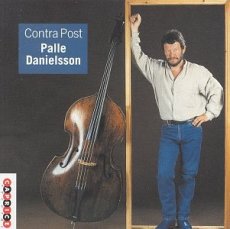
Palle Danielsson was born October 15, 1946 in Stockholm, Sweden and his childhood was an especially musical one. His first instrument he started playing at two was the harmonica and by age eight he was playing violin, which he continued to play and study for roughly five years. Around 13 he became interested in jazz music and started to play the double bass. By the time he was fifteen Palle was playing professionally.
Danielsson studied at the Stockholm Royal Academy of Music from 1962 to1966 and then began playing with Scandinavian musicians such as Eje Thelin, Bobo Stenson and Jan Garbarek and with Americans Lee Konitz and Steve Kuhn.
Perhaps most notable work was done with Keith Jarrett from 1974 to 1979 when he was a member of his European quartet. Over the years he has worked with Bill Evans, Kenny Wheeler, Geri Allen, Michel Petrucciani, Charles Lloyd, Peter Erskine, Ben Webster, George Russell and others.
Palle Danielsson has led and co-led several bands in Sweden, has recorded and released several albums and continues to perform and tour.
Take A Dose On The Road
More Posts: bass
Daily Dose Of Jazz…
Garrison Fewell was born on October 14, 1953 in Charlottesville, Virginia but was raised in Philadelphia, Pennsylvania. He started playing the stride guitar when he was 11 years old and becoming interested in acoustic blues, he turned to the music of Reverend Gary Davis, Fred McDowell, and Mississippi John Hurt. During the early ’70s, Fewell embarked on a tour that took him to Pakistan, Iran, Turkey, and Afghanistan. Three years later he returned to the States, became a jazz student of Pat Martino and Lenny Breau, earned a degree from Berklee College of Music and by 1977 was teaching at his alma mater.
As part of a new exchange program set up between Berklee and Holland’s Rotterdam Conservatory in 1988, Garrison also taught in Rotterdam, worked with Dutch musicians and performed at the North Sea Jazz Festival. The guitarist settled in Paris the following year, playing jazz and teaching at the American School of Modern Music and played the Umbria Jazz Festival. For the next several years he taught and performed around Europe gaining more and more popularity.
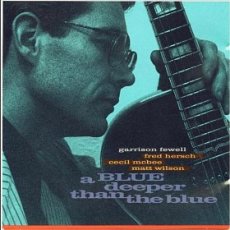
In 1993 his relative obscurity at home changed with the recording of his album A Blue Deeper Than the Blue, bringing him to the attention of jazz lovers. It also bestowed upon him a number of honors with inclusion into the Coda Magazine and United Press International lists of the year’s ten best and the Boston Music Awards named the debut Best Jazz Album of the Year. Guitarist Garrison Fewell continues to perform, record, teach and tour.
Dose A Day – Blues Away
More Posts: guitar