

Daily Dose Of Jazz…
Judy Bady was born on September 3, 1956 in Benton Harbor, Michigan. She went on to matriculate through William Paterson University with a degree in Music Studies. One hears the influence of her great predecessors with her vocal artistry, having a dramatic & rich vocabulary of musically composed American song. After a couple of auspicious performances with Bobby McFerrin at his concert performances, he advised her to leave Kalamazoo and pursue her singing career.
Moving to New York City in 1988 and delved into the artistic scene. Four years later she again appeared with McFerrin in an impromptu duet at the JVC Jazz Festival, again the following year for several songs at the Blue Note
She has performed and/or recorded with such luminaries as Hamiet Bluiett, Doug Carn, Andrew Cyrille, Jon Faddis, Billy Harper, Jon Hendricks, John Hicks, Oliver Lake, Bill Lee, Bobby McFerrin, Rene McLean, Hilton Ruiz, Paul Serrato and Francesca Tanksley, among others.
The vocalist, actress and writer has won multiple Down Beat music awards including Best Jazz Vocalist and was featured in the international award-winning documentary, “Jazzwomen: The Female Side of Jazz”.
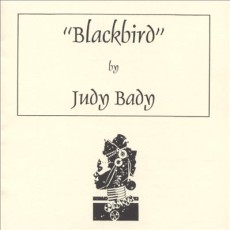
Vocalist Judy Bady, with an emotional range from tender to swinging in her singing, recorded her debut album as a leader and titled it “Blackbird” in 2003. She continues to perform and record.

Give The Gift Of Knowledge
More Posts: vocal
Daily Dose Of Jazz…
Essiet Okon Essiet was born on September 1, 1956 in Omaha, Nebraska to Nigerian parents. His father worked for the U.S. and Nigerian governments, moving the family from city to city. While living in Wisconsin he began studying violin at age 10 later switching to bass viola at 14.
As a child, his wide travels with his family gave him early exposure to many cultures, folkways, languages, and religions fostered his worldview of strength through diversity. This gave Essiet the ability to fluently mix styles, though he predominantly plays in the modern idiom.
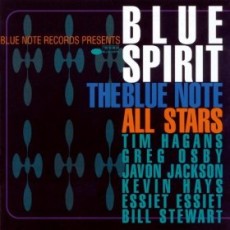
Essiet was Art Blakey’s last bassist, playing with him for 2 years and recording on three sessions. He has performed with Freddie Hubbard, Cedar Walton, Benny Golson, Mulgrew Miller, Jeff “Tain” Watts, Bobby Watson, Billy Higgins, Kenny Kirkland, Joe Henderson, Johnny Griffin, Kevin Mahogany, Kurt Elling and Geri Allen and the Blue Note All Stars to name a few.
Since 1985 he has been at the Conservancy in The Hague as a lecturer. One of the most in demand bassist in jazz, Essiet currently leads Ibo, a Nigerian jazz project.
Dose A Day – Blues Away
More Posts: bass
Daily Dose Of Jazz…
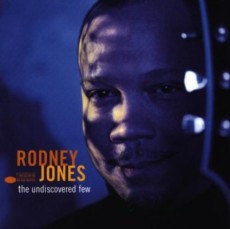
Rodney Jones was born on August 30, 1956. Mastering his instrument during his youth he performed with Jaki Byard and recorded with Chico Hamilton. An underrated cool-toned guitarist best in straight-ahead settings, by the time he was in his early twenties he was working with Dizzy Gillespie.
After moving on from Gillespie, he began working with Lena Horne as her accompanist. Jones put on the leader hat in 1977 with his debut on the the Strata East label, “The Liberation of the Contemporary Jazz Guitar “. This was followed up with his “Articulation” on the Timeless label and then another four sessions took place through 2001 for Muse, R7R and Minor Music labels.
Rodney has been cited as a jazz guitarist who uses modern quartal harmony. He also believes his journey is also one of spiritual awakening that is not separated by theology or music. He investigates the relationship between the art and science of jazz and helps musicians discover their own doorways to development and evolution of their music. He continues to perform, study and tour.
Give A Gift Of Jazz – Share
More Posts: guitar
Daily Dose Of Jazz…
Born August 26, 1943, Dorival Tostes Caymmi, the son of famous Brazilian musicians Dorival Caymmi and Stella Maris. He began playing piano at age eight, studied music theory at the Conservatorio Lorenzo Fernandez and in 1959 made his professional debut accompanying his sister, Nana.
In 1960 Dori became a member of Groupo dos Sete, writing music for plays aired on Brazilian television. He co-directed and played viola in the play Opinião, an important transitional work between the styles of bossa nova and MPB and directed the play Arena Conta Zumbi. For a time he produced Edu Lobo, Eumir Deodato and Nara Leao, co-wrote the prize winning song “Saveiros” with Nelson Matta, a collaboration that lasted many years and produced some of Brazil’s biggest hits.
Caymmi played and toured with Paul Winter, arranged and directed albums by Caetano Veloso, Gal Costa and Gilberto Gil, and was involved with the tropicalia movement of the late 1960s, but did not record in this style himself due to his distaste for Euro-American pop music. He wrote scores for numerous films and television shows in the 1970s and 1980s, moved to Los Angeles, California in 1989 and has since played or recorded with Dionne Warwick, Toots Thielemans, Marilyn Scott, Oscar Castro-Neves, Eliane Elias, Richard Silveira and Edu Lobo; was a collaborator celebrating Tom Jobim at Carnegie Hall and arranged the music for Spike Lee’s film, Clockers.
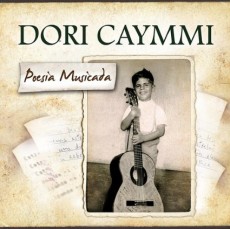
Dori Caymmi has been nominated for Latin Grammys several times and is a two-time Grammy Award winner for Best Latin Song and Best Latin Samba Recording. The Brazilian singer, guitarist, songwriter, arranger, and producer has an extensive discography dating back to 1964 and he continues to perform and record.
Take A Dose On The Road
More Posts: arranger,composer,guitar,songwriter,vocal
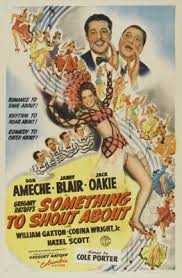
Hollywood On 52nd Street
You’d Be So Nice To Come Home To is a popular song that became a jazz standard. Written by Cole Porter it premiered in the 1943 film Something To Shout About, nominated for two Oscars and introduced by Janet Blair and Don Ameche.
The Story: The movie takes place behind the scenes of a fictional vaudeville play and centers on a recently divorced woman. She decides to use her alimony settlement to produce her own show. Unfortunately her chief backer insists on starring in it but she is saved when a talented man puts everything at risk to replace the talentless chief backer.
Sponsored By

www.whatissuitetabu.com
More Posts: comedy,dance,drama,hollywood,instrumental,musical,suite ta bu,vocal