

Daily Dose Of Jazz…
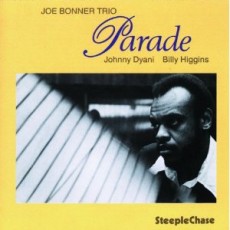
Joe Bonner was born on April 20, 1948 in Rocky Mount, North Carolina. He studied and earned a B.S. in Classical Music from Virginia State College in Petersburg. His early influences were McCoy Tyner and Art Tatum but he cites that he learned much from the musicians he worked with in the ‘70s including Freddie Hubbard, Billy Harper, Pharoah Sanders and Roy Haynes, who hired Bonner to replace Chick Corea.
Joe’s musical travels led him to Denmark where he joined or accompanied traveling jazz artists. Bonner has appeared on a long list of recordings as a bandleader or sideman, with titles released on Evidence, Muse, Capri, and ABC/Impulse! He has over a dozen sides out on the Steeplechase label recorded during his twelve-year stint in Europe, especially Copenhagen.
Since the turn of the new century Bonner has put out more fine records as his “Monkisms” and the highly acclaimed “The Art of Jazz Piano” that display his amazing knowledge of jazz piano structure and his ability to navigate the lucid joining of passionate solos, soulful harmonies, driving rhythms and orchestrating spirited improvised journeys into a celebration of rich modern jazz textures, rooted in bebop, gospel and blues.
Pianist Joe Bonner is known for playing hard bop and modal jazz, this enigmatic pianist has become a Denver jazz scene staple, currently leading the jazz quartet, The Bonner Party and for the past two decades has thrilled audiences with his virtuoso sensibility.

Inspire A Young Mind
More Posts: piano
Daily Dose Of Jazz…
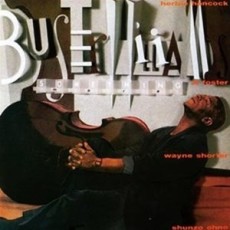
Charles Anthony Williams was born April 17, 1942 in Camden, New Jersey. His father was a bassist and his teacher, preparing lessons for him each day, stringing his bass and demanding practice everyday after school.
Nicknamed Buster, he started his professional career in Philadelphia in 1959 working with Jimmy Heath, then went on to play and record with the Gene Ammons – Sonny Stitt quintet from 1960-61. Leaving the quintet he moved to Los Angeles and played behind Betty Carter, Sarah Vaughan and Nancy Wilson through the decade. He also worked with The Jazz Crusaders, Bobby Hutcherson/Harold Land Quintet and Miles Davis.
In 1969, Williams moved to NYC, joined the Herbie Hancock Mwandishi Sextet and for the next three years doubled on acoustic and electric bass. In the ‘70s he worked with Mary Lou Williams and the Ron Carter Quartet and in 1975 released his debut album “Pinnacle”. Since the ’80s, Williams has appeared as a sideman on a significant number of sessions with notable jazz instrumentalists and vocalists, Chet Baker, Kenny Barron, Dexter Gordon, Carmen McRae, Illinois Jacquet, Frank Morgan, McCoy Tyner, Shirley Horn, Woody Shaw, Stanley Cowell and the list continues.
With opportunities to lead his own sessions being rare, in 2008 Buster began releasing a series of live albums exclusively for download through his company, Buster Williams Productions. A solid supportive player, he has made subtle swing, a precise rhythm and superb technique the landmark of his playing.
Put A Dose In Your Pocket
More Posts: bass
Daily Dose Of Jazz…
Alejandro Santos was born on April 11, 1956 in Buenos Aires, Argentina. He is widely-recognized both in his home country of Argentina and internationally as an extraordinary flutist and multi-instrumentalist playing the piccolo, bass flute, native wood-flutes, tenor and soprano sax, piano, and synthesizers.
He has developed a career as a composer with a unique style, which fuses modern jazz with traditional Argentinean rhythms like candombe, tango, and folk music. He has collaborated on recording and performing projects with Dino Saluzzi, Gonzalo Rubalcaba, Anthony Jackson, Bob Moses, Claudio Roditi, Toquinho, Maria Creuza, Fito Paez and others. Since 2001 he has steadily worked with Al Di Meola’s World Symphony and has recorded on De Meola’s latest album “Flesh on Flesh”.
Alejandro released three solo albums with RCA and GNA/Invasion Records, one of them: 5 Carnavales 4, released in the States, received excellent reviews and reached into the top 30 jazz playlist of the Gavin Report magazine. Alejandro Santos currently performs with his quartet that includes bandoneon, bass and drums.
Jazz Is Global – Share
More Posts: flute,piano,piccolo,saxophone,synthesizer
Daily Dose Of Jazz…
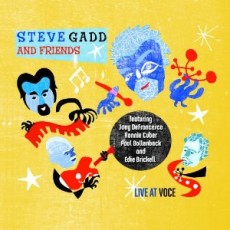
Steve Gadd was born April 9, 1945 in Irondequoit, New York and when he was seven his drummer uncle encouraged him to take lessons. By eleven he had sat in with Dizzy Gillespie. After graduating from Irondequoit’s Eastridge High, he attended the Manhattan School of Music for two years before transferring to the Eastman School of Music in Rochester, playing in wind ensembles and concert bands.
After matriculation in the late ’60s, Steve played regularly with Chuck and Gap Mangione, making his recording debut on Gap’s solo album, “Diana in the Autumn Wind” in 1968. Drafted into the Army he spent the next three years drumming in the Army Music Program as a part of the Jazz Ambassadors. Discharged, Gadd returned to Rochester, formed a band and traveled to New York City where eventually the trio split. Gadd stayed on finding work as a studio musician that led to his short tenure with Chick Corea and Return To Forever.
During the ’70s and ‘80s, he toured internationally, recorded with Paul Simon and also with Al Di Meola’s Electric Rendezvous Band. In 1976, Gadd and other session musicians in New York City, including Richard Tee, Eric Gale and Cornell Dupree formed the group Stuff. Their work included appearances on NBC’s Saturday Night Live.
By the end of the 1970s, Steve Gadd was an accomplished drummer bringing orchestral and compositional thinking, great imagination and a great ability to swing to his playing. In 2005 he was awarded an honorary Doctor of Music degree from Berklee College of Music for outstanding contributions to contemporary music. He is one of the highest paid session drummers in popular music.
Give The Gift Of Kno
More Posts: drums,percussion
Daily Dose Of Jazz…
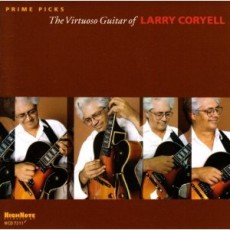
Larry Coryell was born April 2, 1943 in Galveston, Texas moved to Washington as a child. After graduating from Richland High School in eastern Washington, he moved to Seattle to attend the University of Washington.
In 1965, Coryell moved to New York City where he became part of Chico Hamilton’s quintet replacing Gabor Szabo. In the Sixties he recorded with Gary Burton, played with The Free Spirits and extended his musical landscape to include influences of rock, jazz and eastern music.
He formed his own group, “The Eleventh House” in 1973 and following the break-up of this band, Coryell played mainly acoustic guitar but returned to electric guitar later in the 1980s.
In 1979, Coryell formed “The Guitar Trio” with jazz-fusion guitarist John McLaughlin and flamenco guitarist Paco de Lucia. The group toured Europe, released “Meeting of Spirits” recorded at Royal Albert Hall in London, however, his drug addiction led to his being replaced by Al Di Meola.
By the turn of the century he settled back into a more mainstream style of playing releasing “Cedars of Avalon”, “Monk, Trane, Miles & Me”, “Tricycles”, and “Power Trio: Live In Chicago”. In 2007, Coryell published an autobiography titled “Improvising: My Life in Music”. Guitarist Larry Coryell remains active in the music industry performing, touring and recording.
More Posts: guitar