

Requisites
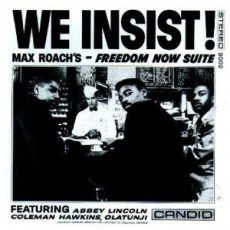
We Insist! Freedom Now Suite: This classic piece of art stands at the intersection of politics and music. It was recorded at a time when the civil rights movement was starting to heat up and drummer Max Roach composed and performed the seven-part suite dealing with black history, particularly slavery and racism.
Driva’ Man has a powerful statement by veteran tenor Coleman Hawkins and there is valuable solo space elsewhere for trumpeter Booker Little and trombonist Julian Priester, but it is the overall performance of Abbey Lincoln that is most notable. Formerly a nightclub singer, Lincoln really came into her own under Roach’s tutelage and she is a strong force throughout this intense set. On Triptych: Prayer / Protest / Peace, Lincoln is heard in duets with the drummer and her wrenching screams of rage are quite memorable.
Personnel: Max Roach – drums, Coleman Hawkins – tenor saxophone, Booker Little – trumpet, Julian Priester – trombone, Walter Benton – tenor saxophone, James Schenk – bass, Olantunji / Ray Mantilla – percussion, Abbey Lincoln / Oscar Brown Jr. – vocal
Record Date: Nola Penthouse Sound Studio, New York / August 31, 1960 & September 6, 1960 / Candid Records
Producer: Nat Hentoff
Songs: Driva’man, Freedom Day, Triptych: Prayer/Protest/Peace, All Africa, Tears For Johannesburg

More Posts: collectible,drums,vocal
Requisites
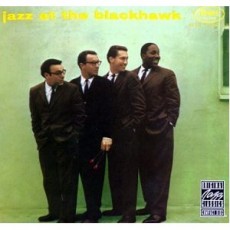
Jazz At The Blackhawk: The quartet that Cal Tjader kept together during 1956-57 was devoted to straight-ahead jazz. His Latin fans found ample consolation in the enjoyment of one of the most swinging groups the vibra-harpist ever led. This set was captured at The Blackhawk in San Francisco with an audience that actually got the sound and inspired the players.
Personnel: Cal Tjader – vibes, Vince Guaraldi – piano, Gene Wright – bass, Al Torre – drums
Record Date: Live at the Blackhawk, San Francisco / January 20, 1957
Songs: Bill B., Land’s End, I’ll Remember April, Blues In The Night, Thinking Of You, MJQ, I’ve Never Been In Love Before, Two For Blues Suite, When The Sun Comes Out, Lover, Come Back To Me
More Posts: collectible,vibraphone
Requisites
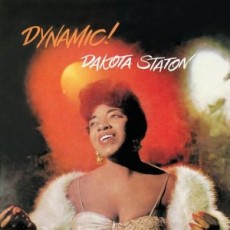
Dynamic: This 1958 classic boasts the talents of the legendary Pittsburgh jazz and soul vocalist Dakota Staton. Tasteful and swinging, with an alternation between lush orchestra arrangements and intimate combo settings, the album coheres beautifully and represents Staton in fine form. This is her sophomore project on the heels of her critically acclaimed “The Late, Late Show” with an addition four previously unreleased tracks added to the re-mastered compact disc. Staton has redefined jazz singing as pure fun!
Personnel: Dakota Staton – vocal, George Shearing – piano, Harry “Sweets” Edison – trumpet, plus orchestra
Record Date: February 1958
Songs: Let Me Off Uptown, Night Mist, Anything Goes, When Sunny Gets Blue, They All Laughed, I Wonder, Say It Isn’t So Joe, Too Close For Comfort, Little Girl Blue, It Could Happen To You, Some Other Spring, Cherokee, Invitation, The Party’s Over, I’ll Remember April, The Nearness Of You
More Posts: collectible,vocal
Requisites
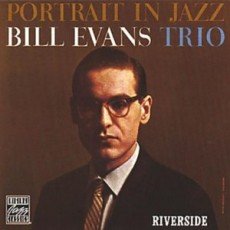
Portrait In Jazz: This album contains Bill Evan’s greatest trio with wonderful interplay between piano and bass on Autumn Leaves and it introduces Evans’ Peri’s Scope. This is a gem of an album filled with standards but the interpretations are not the predictable routine.
Personnel: Bill Evans – piano, Scott LaFaro – bass, Paul Motian – drums
Record Date: Riverside / December 28, 1959
Songs: Come Rain or Come Shine, Autumn Leaves (take 1), Autumn Leaves (take 2), Witchcraft, When I Fall In Love, Peri’s Scope, What Is This Thing Called Love, Spring Is Here, Someday My Prince Will Come, Blue In Green (Take 3), Blue In Green (Take 2*)
More Posts: collectible,piano
Requisites
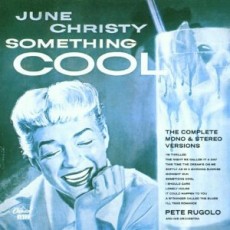
Something Cool: June Christy established her reputation fronting the Stan Kenton Orchestra at the same time that Pete Rugolo was composing and arranging. Her voice was ideal for the high-art ambitions of the progressive jazz movement. Her diction was impeccable, her phrasing often inspired, and as this reissue of her classic Something Cool -augmented by another 12 tracks recorded between 1953 and 1955–so ably demonstrates, her technique was extraordinary, allowing her to navigate the most abstract melody with accurate pitch and rhythmic confidence.
Personnel: June Christy – vocals, composer, arranger and bandleader Pete Rugolo and His Orchestra
Record Date: 1953
Songs: Something Cool, It Could Happen To You, Lonely House, This Time The Dreams On Me, The Night We Called It A Day, Midnight Sun, I’ll Take Romance, A Stranger Called The Blues, I Should Care, Softly As In A Morning Sunrise, I’m Thrilled
(Re-mastered CD has the same songs both in Mono and Stereo)
More Posts: collectible,vocal