

Daily Dose Of Jazz…
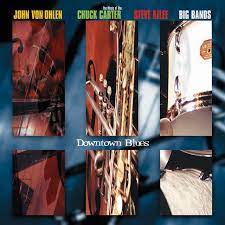
John Von Ohlen was born in Indianapolis, Indiana on May 13, 1941. He began playing trombone in middle school, and continued playing through high school. Graduating from North Central High School in 1960, he briefly studied at North Texas State, but returned to Indianapolis shortly after.
From 1967 to 1968, Von Ohlen toured with Billy Maxted’s Manhattan Jazz Band. He also worked for Woody Herman in 1967 and 1969, then with Stan Kenton from 1970 to 1972.
John went on to lead the Blue Wisp Big Band in Cincinnati from 1980 to 2018 and his own groups under his name ranging from quartets to big bands. During this period of the 1980s and 1990s, he was a member of a big band led by pianist Steve Allee.
Drummer John Von Ohlen transitioned in Cincinnati, Ohio on October 3, 2018 at the age of 77.

More Posts: bandleader,drums,history,instrumental,jazz,music
Daily Dose Of Jazz…
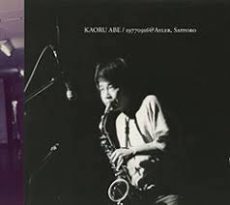
Kaoru Abe 阿部 薫 was born on May 5, 1949 in Kawasaki, Kanagawa, Japan. Self-taught at a young age, at 17 he dropped out of highschool in 1967 to focus on perfecting his playing. The following year he played his first performance at a jazz spot named Oreo.
He generally performed solo but played with notables Motoharu Yoshizawa, Takehisa Kosugi, Yosuke Yamashita, Derek Bailey, and Milford Graves. In 1970, Laoru met guitarist Masayuki Takayanagi and recorded with him.
Abe was prolific, appearing almost every day to jazz spots and concerts. His library consists almost entirely of archival and live recordings, however he has done studio recordings.
His later years saw Kaoru playing different instruments like the bass clarinet throughout his career. By 1976 for two years he was mostly explorative with the harmonica. He was portrayed in Kōji Wakamatsu’s film Endless Waltz by novelist and punk rock singer Kō Machida.
Avant-garde alto saxophonist Kaoru Abe transitioned on September 9, 1978 from Bromisoval overdose causing an acute gastric perforation.
More Posts: bandleader,history,instrumental,jazz,music,saxophone
Three Wishes
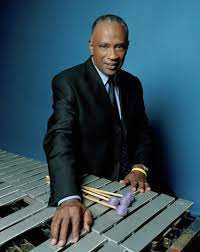
When Nica was hanging out with Bobby Hutcherson she inquired what three wishes he would ask if they could be granted and he told her:
- “I’d want to be happy. I’d want to be very happy.”
- “I’d want to be healthy. Strong.”
- “And play good music.”
*Excerpt from Three Wishes: An Intimate Look at Jazz Greats ~ Compiled and Photographed by Pannonica de Koenigswarter
Bobby Hutcherson: January 27, 1941 ~ August 15, 2016 | Vibraphone, Marimba
More Posts: baroness,history,instrumental,jazz,marimba,music,pannonica,three,vibraphone,wishes
Daily Dose Of Jazz…
Lakshminarayana Shankar was born on April 26,1950 in Madras, India and raised in Ceylon, now Sri Lanka. His father was a violinist and singer who worked as a teacher at the Jaffna College of Music. The young boy learned to play the violin and first performed in public in a Ceylonese temple at the age of seven.
In 1969 he traveled to the United States where he studied ethnomusicology at Wesleyan University. While attending college at Wesleyan University, he met jazz musicians like Ornette Coleman, Jimmy Garrison, and John McLaughlin. With McLaughlin, Shankar founded the group Shakti in 1975, one of the early groups in which Eastern and Western musical traditions met. They released three albums between 1975 and 1977 titled Shakti, A Handful of Beauty, and Natural Elements.
Post performing with various Indian singers for several years, Shankar founded a trio with his brothers, L. Vaidyanathan and L. Subramaniam and they performed throughout India. After the band dissolved, Shankar was a violinist with Frank Zappa for a short time, and then founded the group The Epidemics and released a number of albums as a band leader.
Collaborating with Peter Gabriel, he wrote the soundtrack for the film The Last Temptation of Christ, for which he received a Grammy Award. In the following years, Shankar worked on several of Gabriel’s albums. Since 1996, he has been working with his niece, the violinist Gingger Shankar as the duo Shankar & Gingger.
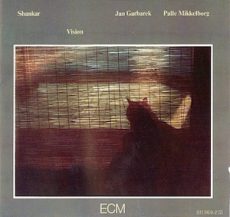
He has performed in trio with trumpeter Palle Mikkelborg and saxophonist Jan Garbarek and has stretched with Elton John, Eric Clapton, Phil Collins, Bruce Springsteen, Van Morrison, Yoko Ono, Stewart Copeland, John Waite, Charly García, Steve Vai, Ginger Baker, Nils Lofgren, Jonathan Davis, The SFA, and Sting.
Better known as L. Shankar, Shankar and Shenkar, violinist, singer and composer Lakshminarayana Shankar continues to perform among other endeavors.
More Posts: bandleader,composer,history,instrumental,jazz,music,violin,vocal
Daily Dose Of Jazz…
Harold Land Jr. was born April 25, 1950 in San Diego, California to Harold and Lydia Land. Five years later the family moved to Los Angeles, California where he was raised in a world of jazz through his father’s acclaimed career. His earliest influences were drummer Frank Butler, bassist Curtis Counce, pianist Elmo Hope, trumpeters Carmell Jones and Jack Sheldon. But what really turned him onto jazz piano was a pair of albums by Sonny Clark, Cool Struttin’ and Leapin’ and Lopin‘.
He began piano lessons at the age of seven and began performing in jazz clubs by the age of 16. Crusaders pianist Joe Sample introduced Harold to Wayne Henderson which led to his first professional gig, and to his first two album appearances, including the cult favorite People Get Ready. He credits bandleader Gerald Wilson with giving him his first traditional Jazz gig, which came shortly after his time with Henderson. He accumulated important credits touring with guitarist Kenny Burrell and saxophonist Pharoah Sanders.
Over a career, spanning jazz, funk, and jazz fusion, Land has worked with Marvin Gaye, Roy Ayers, Gerald Wilson, Freddie Hubbard, Bobby Hutcherson, Lee Morgan, Eric Gale, and Roland Kirk.
He has recorded with Dwight Trible, Fela Kuti, Justo Almario, Gerald Wilson, Roy Ayers, Gene Ammons, Anna Fisher, Spiders Webb, The Freedom Sounds, Paul Humphrey. He performed often with his father and has recorded on three of his albums, Choma (Burn), Damisi, and Xocia’s Dance.
As an educator Land has taught and given workshops at several Los Angeles based music schools and high schools, such as Washington Prepatory High School, Alain LeRoy Locke College Preparatory Academy, Alta Loma Music, and The World Stage.
Pianist Harold Land Jr., who also played with his father, currently performs with his trio.
More Posts: bandleader,history,instrumental,jazz,music,piano