


Daily Dose Of Jazz…
Bryan Spring was born on August 24, 1945 in London, England. A self-taught drummer beginning at the age of six, he later studied with Philly Joe Jones. He led and co-led his own trios and quartets from the mid-1970s to the early 1990s with Don Weller and also Art Themen.
The new millennium saw Bryan collaborating with Mark Edwards and Andy Cleyndert. He has been a member of Bill Le Sage’s Bebop Preservation Society, Alan Skidmore’s Quartet, Klaus Doldinger’s Passport, and various line-ups led by Stan Tracey.
He has worked with other leading British jazz musicians, including Tubby Hayes, Dick Morrissey, Bobby Wellins, as well as accompanying American musicians, notably George Coleman and Charlie Rouse, when they were visiting the UK.
Drummer Bryan Spring, who is sometimes credited as Brian and has led/co-led two recording sessions and played on eighteen as a sideman, continues to be active on the jazz scene.

More Posts: bandleader,drums,history,instrumental,jazz,music
Daily Dose Of Jazz…
Wik Horn was born on August 9, 1943 in Amsterdam, Netherlands. Classically trained piano education for 4 years starting at 10, when he was 14 he started to play classic jazz with his younger brother trumpeter Fred.
After playing in several school bands he formed his first real band in 1965,The Court Town Rhythm Kings. The band played authentic old jazz in the way of Oliver, Morton, early Armstrong, Williams, Beiderbecke and Half Way House.
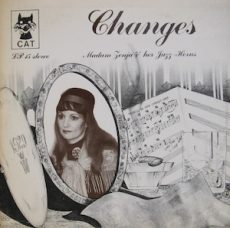
The band broke up in 1972 due to moving members and Wik moved from The Hague to resettle in Amsterdam. There along with his brother they founded in 1973 as Madam Zenja and Her Jazz Horns in 1973, together with singer Zenja Damm, recording two albums, Changes and Was It A Dream. From 1974 to 1980 he was president of the oldest and famous Jazzclub in Holland, the Haarlemse Jazz Club. Many of the great American musicians who came to Europe and Amsterdam performed there.
Settling in the little village of Leiderdorp between Amsterdam and The Hague, he spent some time in advertising and public relations. He started the jazz club De Wagenschuur from 1984 to 1994 and a new band, Swingin’ Crash, that started as a little swing ensemble but grew within a year into a small big band.
He went on to write charts and arrangements for the band and well as compose, song texts and write a little booklet for special occasions like the 60th anniversary of the The Hague Jazz Club. Pianist Wik Horn retired but has continued to have a life filled with music, writing and painting.
More Posts: arranger,bandleader,composer,history,instrumental,jazz,music,piano
Daily Dose Of Jazz…
Philipp John Paul Wachsmann was born August 5, 1944 in Kampala, Uganda. Influenced greatly by the music of his country he studied violin with Isolde Menges, and music at Durham University, then received scholarships to study violin and composition at Indiana University in Bloomington. He went on to study composition with Nadia Boulanger in Paris in 1968 where he also attended courses in modern music given by Henri Pousseur, and, by Pierre Boulez in Basel. He subsequently lectured at Durham University 1969/70 and then moved to London to start a performing career.
He pioneered new sounds using the violin and electronics and can be heard on over 100 LPs/CDs on different labels including ECM, and plays worldwide. He performs with most of the musicians working in modern improvisation related music. He has performed and recorded with the Stellari String Quartet, The Imaginary String Trio but also works as a soloist.
He regularly conducts his own pieces with the London Improvisation Orchestra, including Three Draft Pistons’ for violin and electro-acoustic tape. He also works with film, dance and architecture. For many years he was Director of the Electronic Music Studio at Morley College and currently teaches courses in composition at the City Literary Institute.
Avant-garde jazz/jazz fusion violinist Philipp Wachsmann gives regular workshops in improvised music at various places and which have been a starting place for many of today’s performers, founded his own group Chamberpot, and has worked extensively in the free jazz and electronica idioms.
More Posts: bandleader,history,instrumental,jazz,piano
Daily Dose Of Jazz…
Bobo Stenson was born Bo Gustav Stenson on August 4, 1944 in Västerås, Sweden. Starting at the age of 8 he studied with Werner Wolf for 15 years. In 1963, he stepped up from the local scene in his hometown to begin playing frequently in Stockholm. There he accompanied a long line of visiting American players including Sonny Rollins, Stan Getz and Gary Burton. He worked closely with Don Cherry from the beginning of the trumpeter’s residency in Scandinavia.
The 1970s was an intensive period for Stenson, playing in many groups, amongst them the long-standing band Rena Rama with Palle Danielsson, and a trio with Arild Andersen and Jon Christensen. He would later work with Jan Garbarek.
In 1988, he joined the Charles Lloyd quartet and since 1996 has appeared at major jazz festivals with Tomasz Stańko’s septet/sextet. Pianist Bobo Stenson continues to perform to this day.
More Posts: bandleader,history,instrumental,jazz,music,piano

Daily Dose Of Jazz…
Örjan Kjellin was born on July 21, 1944 in Ljungby, Sweden and didn’t pick up the clarinet until the age of 15 and two years later formed his first band in partnership with pianist Lars Edegran. The band played music in the New Orleans style. He made his first records in his native Sweden at the age of 17.
Moving to New Orleans, Louisiana in 1966 he became a regular performer at several leading jazz venues including Preservation Hall. In 1968 he was a founder member of the New Orleans Ragtime Orchestra. He also led his own bands in the city including, in 1970, a band which held a residency at the Maison Bourbon Club. Two years later he formed the New Orleans Joymakers.
He recorded with several veteran New Orleans musicians including Josiah ‘Cié’ Frazier, Preston Jackson, Jim Robinson, Jabbo Smith, Zutty Singleton and Kid Thomas Valentine. In 1978, Örjan played with NORO for the soundtrack of the movie Pretty Baby. The following year he appeared in New York City as musical director, co-arranger and on-stage clarinetist with the stage musical One Mo’ Time.
In the early 80s he appeared with the same show during its long and successful run in London’s West End. Kellin has toured extensively with his own bands and with bands formed largely from New Orleans veterans. In 1992 he made his first solo tour of the UK.
Clarinetist Örjan Kjellin, a gifted and highly musical player who is known to the jazz world as Orange Kellin, continues to fan the flames of the music of New Orleans.

More Posts: arranger,bandleader,clarinet,history,instrumental,jazz,music