

Daily Dose Of Jazz…
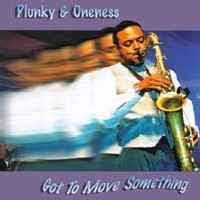
James “Plunky” Branch was born on July 20, 1947 in Richmond, Virginia and educated in the city’s segregated schools. He then attended Columbia University in New York City, but by 1971 he had moved to San Francisco, California. It was here that he formed Juju, a musical group that combined rhythm and blues, jazz, soul, and African musical influences.
He founded the band Plunky & Oneness, which began as Juju in 1971 which he renamed twice, Oneness of Juju and Plunky & the Oneness of Juju, before it was given its current name in 1988. One of Plunky & Oneness’ songs, Every Way But Loose, is featured on the video game Grand Theft Auto: Vice City Stories, playing on fictional radio station Paradise FM.
Branch is the president and founder of the independent record label N.A.M.E. Brand Records, through which he has released 25 albums. As a studio musician Plunky has worked for The Cosby Show and has appeared on several avant-garde jazz albums.
As an educator he has been Director of the Jazz Ensemble at Virginia Union University as well as an instructor of Afro-American Music History at Virginia Commonwealth University.
He has been the recipient of two NEA Jazz Fellowships and was appointed to the Governor’s Task Force for the Promotion of the Arts in Virginia. In 1999 he was recognized by Richmond Magazine as Musician of the Year for 1999. J. Plunky Branch continues to perform, record, compose and produce.

More Posts: bandleader,educator,history,instrumental,jazz,music,producer,saxophone,songwriter
Daily Dose Of Jazz…
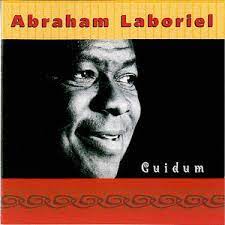
Abraham Laboriel López was born on July 17, 1947 in Mexico City, Mexco into a talented family with a rock singer brother and a sister who is a singer, film and television actress. A classically trained guitarist, he switched to bass guitar while studying at the Berklee College of Music, graduating in 1972.
It was during this time that he learned the importance of versatility as a musician. Henry Mancini encouraged Laboriel to move to Los Angeles, California, to pursue a recording career, which he did in 1976. Though he struggled to find work for two years, he found his first gig on a road tour with Olivia Newton-John. After a consequent European tour with Al Jarreau, he settled into a full-time studio career in Los Angeles.
He would go on to work and record with Al Jarreau, Billy Cobham, Freddie Hubbard, George Benson, Herbie Hancock, Lalo Schifrin, Gary Birton, Stan Getz, Larry Carlton, Lee Ritenour, Quincy Jones, Randy Crawford, Dave Grusin, and Umberto Tozzi as well as Stevie Wonder, Michael Jackson, Barbra Striesand, Madonna, Andre Crouch, Herb Alpert Minnie Riperton, Barry Manilow, and many others.
Abraham was a founding member of the bands Friendship and Koinonia. With the latter he recorded four albums. In addition he recorded several solo albums on which he recruited a cast of musicians that included Alex Acuña, Al Jarreau, Jim Keltner, Phillip Bailey, Ron Kenoly, his son Abe Laboriel Jr. on drums, and others.
In 2005, he was awarded an Honorary Doctorate of Music by the Berklee College of Music. Electric bassist Abraham Laboriel has played on over 4000 recording sessions, is ranked No. 42 on Bass Player magazine’s list of The 100 Greatest Bass Players of All Time, and continues to record and perform as a member of the band Open Hands with Justo Almario, Greg Mathieson, and Bill Maxwell.
More Posts: bandleader,bass,history,instrumental,jazz,music
Daily Dose Of Jazz…
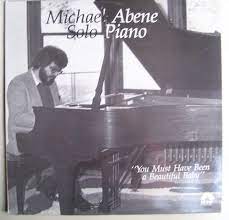
Michael Abene ( was born July 2, 1942 in Brooklyn, New York. Growing up in a musical family he was influenced and inspired by his father, grandfather, and aunt who were musicians. He studied composition at the Manhattan School of Music
His reputation for accompanying singers and for arranging music led Michael to accompany Susannah McCorkle, Julius La Rosa, and others. His debut album was a solo piano project recorded in 1984 and released in 1986 titled You Must Have Been a Beautiful Baby.
He recorded with Maynard Ferguson, Dizzy Gillespie, Cal Tjader during the Sixties and Urbie Green in the Seventies. Abene co-produced the album Avant Gershwin, which won the Grammy Award for Best Jazz Vocal Album in 2007.
Pianist Michael Abene continues to perform, produce and conduct.
More Posts: arranger,bandleader,conductor,history,instrumental,jazz,music,piano
Daily Dose Of Jazz…
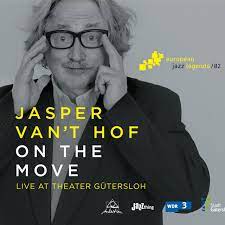
Jasper van ‘t Hof was born on June 30, 1947 in Enschede, Overijssel, Netherlands. He began studying piano at the age of five. He played in jazz bands at school and by 19 was playing at jazz festivals with drummer Pierre Courbois. In 1969, he became a member of Courbois’ early European jazz rock band Association P.C. with German guitarist Toto Blanke.
In 1974, Van’t Hof founded Pork Pie and teamed up with guitarist Philip Catherine, saxophonist Charlie Mariano, drummer Aldo Romano, and bass guitarist Jean-François Jenny Clark, He went on to join the band Eyeball with saxophonist Bob Malach and violinist Zbigniew Seifert.
Jasper had two bands ~ Face to Face with Danish bassist Bo Stief and saxophonist Ernie Watts; and Pili Pili featuring African singer Angelique Kidjo. He played keyboards with Archie Shepp, although he is best known for his solo piano playing.
As part of Piano Conclave he played with pianists George Gruntz, Joachim Kühn, Wolfgang Dauner, and Keith Jarrett. He has recorded more than four dozen albums as a leader and another nineteen as a sideman. Pianist and keyboardist Jasper Van’t Hof, who is a textural player, comfortably blends impressionistic writing with freer concerns, continues to compose, perform and record.

More Posts: bandleader,history,instrumental,jazz,keyboard,music,piano
Daily Dose Of Jazz…
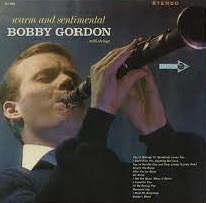
Robert Cameron Gordon was born June 29, 1941 in Hartford, Connecticut and taught himself by listening intently to the stylings of Jimmie Noone, Jimmy Dorsey and Frank Teschmacher, among others. He studied with Chicago clarinetist Joe Marsala. As a teenager he would go to Eddie Condon’s jazz club in New York’s Greenwich Village, sit at a table near the bandstand and nurse a Coke all night as he listened.
Early in his career, he played with Wild Bill Davison, Bobby Hackett, Zutty Singleton, Muggsy Spanier and had a long run with Jim Cullum’s Happy Jazz Band in San Antonio, Texas. Moving to San Diego, California in the 1970s, he played with numerous groups around the county. By the mid-1970s Gordon frequently recorded and toured with singer Leon Redbone, and appeared on the Johnny Carson Show. In 1979, the two survived injuries in a crash of a twin engine prop jet in Clarksburg, West Virginia.
In the late 1990s, Bobby joined the Roadrunners, a popular quintet on the West Coast festival circuit. During this time, he played with Marty Grosz, the Orphan Newsboys and Destiny’s Tots. His longest gig was at Milligan’s Bar & Grill in La Jolla, California leading a quartet.
Clarinetist and bandleader Bobby Gordon, who had been in poor health for years, transitioned from cardiopulmonary arrest on December 31, 2013.
More Posts: bandleader,clarinet,history,instrumental,jazz,music