

Daily Dose Of Jazz…
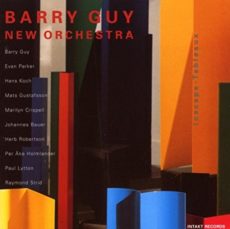
Barry John Guy was born April 22, 1947 in London, England and came to the fore as an improvising bassist as a member of a trio with pianist Howard Riley and drummer Tony Oxley in 1969. He also became an occasional member of John Stevens’ ensembles in the 1960s and 1970s, including the Spontaneous Music Ensemble.
By the early 1970s, he was a member of the influential free improvisation group Iskra 1903 with Derek Bailey and trombonist Paul Rutherford and in the late Seventies was revived with violinist Philipp Wachsmann, replacing Bailey. Guy, saxophonist Evan Parker, and drummer Paul Lytton became one of the best-known and most widely travelled free-improvising trios of the 1980s and 1990s.For a brief time he was a member of the Michael Nyman Band in the 1980s, performing on the soundtrack of The Draughtsman’s Contract.
Guy’s improvisation and formal composition interests led him to the London Jazz Composers Orchestra, originally formed to perform his composition Ode in 1972. The orchestra became one of the great large-scale European improvising ensembles. Though documentation is sketchy early on, in the late 1980s the Swiss label Intakt set out to document the band more thoroughly, resulting in several recordings.
He has also written for other large improvising ensembles, such as the NOW Orchestra and ROVA. Having taught at Guildhall School of Music, double bassist Barry Guy is currently improvising in piano trios with Marilyn Crispell and Agusti Fernandez, recorded several albums for ECM, continues to venture into the pop field with his session work, and along with his wife, run the small label Maya, which releases a variety of records in the genres of free improvisation, baroque music and contemporary composition.
Sponsored By


#preserving genius
More Posts: bass
Daily Dose Of Jazz…
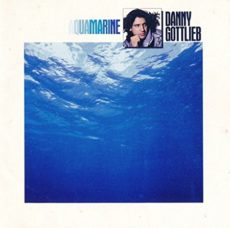
Daniel Richard Gottlieb was born in New York City on April 18, 1953. Taking lessons from Mel Lewis and Joe Morello, he graduated from the University of Miami in 1975. He became a member of the Gary Burton Quartet in 1976 with Pat Metheny, and then was one of the original members of The Pat Metheny Group from 1977–1983. Bassist Mark Egan, who was also in Metheny’s first group, teamed with Gottlieb and formed the band Elements. In 1984 he was a member of the Mahavishnu Orchestra led by guitarist John McLaughlin.
Gottlieb performed or recorded with dozens of musicians not limited to Bill Evans, Branford Marsalis, Jacqui Naylor, Chick Corea, Randy Brecker, Stan Getz, Clark Terry, Ernie Wilkins, Gerry Mulligan, Joanne Brackeen, Herbie Hancock, Hiram Bullock, Booker T and the MG’s, Hubert Laws, Lew Soloff, Jim Hall, Jimmy Haslip, Nnenna Freelon, John Scofield, Bobby McFerrin, Kenny Barron, Larry Coryell, Eddie Gómez, Mark Murphy, Miroslav Vitous, Naná Vasconcelos, Ali Ryerson, Nguyên Lê, Rufus Reid, Sting and Wayne Shorter, as well as the Carnegie Hall Jazz Orchestra, NDR Big Band, Trio, Vanguard Jazz Orchestra, Gil Evans Orchestra and WDR Big Band.
In 2004 he became the drummer for Gary Sinise’s Lt. Dan Band. He has performed on over 400 albums, earned nine Grammy Award nominations and four wins, is on the faculty of the University of North Florida as a full-time Professor of Jazz Studies. Drummer Danny Gottlieb has made over ten instructional DVDs, wrote the textbook The Evolution of Jazz Drumming, and continues to perform and record.

#preserving genius
More Posts: drums
Daily Dose Of Jazz…
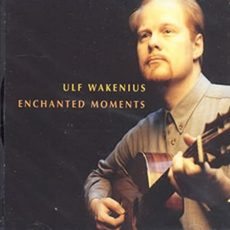
Ulf Karl Erik Wakenius was born April 16, 1958 in Halmstad, Sweden and raised in Gothenburg. In the 1980s he played with Peter Almqvist in Guitars Unlimited during the intermission for 600 million viewers of the Swedish International Finale of the Eurovision Song Contest in 1985. He went to Rio de Janeiro, Brazil that same year and began recording the first of three records with Sivuca, Aquarela Do Brazil, followed by Rendez-Vous in Rio in 1986 and Let’s Vamos in 1987.
During the Eighties Ulf collaborated with Niels-Henning Ørsted Pedersen also started this decade, and during the mid to late Nineties they recorded Those Who Were and This Is All I Ask. He led the U.W. Group, releasing Venture with Jack DeJohnette on drums, Bill Evans and Bob Berg on saxophones, trumpeter Randy Brecker, pianist Niels Lan Doky, Chris Minh Doky and Lars Danielsson on bass. In 1994 he recorded New York Meeting with Niels Lan Doky, Ira Coleman and Billy Hart.
He would go on to work with Lars Jansson, Lars Danielsson, Raymond Karlsson, Gösta Rundqvist, Yasuhito Mori, Jukkis Uotila, Carsten Dahl, Morten Lund, Lars Danielsson, Haakon Graf, John Scofield, Dennis Chambers, Gary Grainger, Oscar Peterson, Michel Legrand, Ray Brown, Pat Metheny Jon Larsen, Stian Mevik, Jimmy Rosenberg Lisa Nilsson, Cæcilie Norby, Viktoria Tolstoy, Esbjörn Svensson and Youn Sun Nah among others.
Guitarist Ulf Wakenius,a member of of Oscar Peterson’s last quartet from 1997 and a member of the Ray Brown trio, continues to lead his own band and record.
Sponsored By

www.whatissuitetabu.com
#preserving genius
More Posts: guitar
Daily Dose Of Jazz…
Alexander Gafa was born on April 9, 1941 in New York City and worked as a student in the city from 1964 to 1969, playing guitar with Kai Winding and Sam Donahue . During the late Sixties he was a part of the New York Playboy Club playing with Winding, Earl May and Al Foster.
From 1969 to 1970, he was musical director and accompanist for Carmen McRae and performed as a member of the Sammy Davis Jr. orchestra in 1970 and 1971. During this decade he also did some live dates with Sarah Vaughan, one of which aired on PBS.
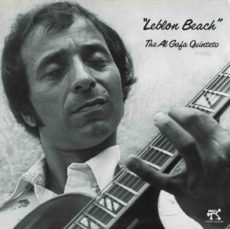
In 1971 Al played with Dizzy Gillespie and joined his group and toured with him for a period. Under his own name, he recorded the album Leblon Beach in 1976 for Pablo Records. He has recorded as well with Susannah McCorkle, Paul Simon, The Monkees, Alex Leonard, Duke Pearson, Johnny Hartman, Joe Albany and Sonny Stitt.
Before the fall of the World Trade Centers, he and bassist Dr. Lyn Christie would play in a duo configuration in the restaurant on the top floor. He is also part of Tom Lord’s 34 recording sessions from 1934 to 2011 of acoustic and electric guitar, and banjo. Guitarist Al Gafa currently resides in Brooklyn, New York where he performs occasionally.
Sponsored By
www.whatissuitetabu.com
#preserving genius
More Posts: guitar
Daily Dose Of Jazz…
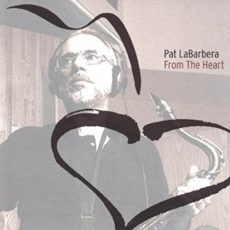
Pat LaBarbera was born Pascel Emmanuel LaBarbera on April 7, 1944 in Mt. Morris, New York. He began as a soloist in Buddy Rich bands from 1967–1973 and went on to work with Elvin Jones in 1975 and touring Europe with him in 1979. While working with Rich, he was also working in groups led by Woody Herman and Louie Bellson, as well as playing with Carlos Santana.
He moved to Toronto, Ontario in 1974 and is a on the faculty at Humber College. LaBarbera has played a major role in the development of a generation of Canadian saxophonists. He has released a handful of albums as a leader since 1975 and another two-dozen as a sideman. In 2000, he won a Juno Award for Best Traditional Instrumental Jazz Album for Deep in a Dream.
He is the brother of trumpeter John LaBarbera with who he is a part of his big band, and drummer Joe LaBarbera and worked with the Dave McMurdo Jazz Orchestra, Denny Christianson, Jan Jarczyk. Tenor, alto and soprano saxophonist, clarinetist, and flautist Pat LaBarbera continues to teach, perform and record.
Sponsored By

#preserving genius