

Daily Dose Of Jazz…
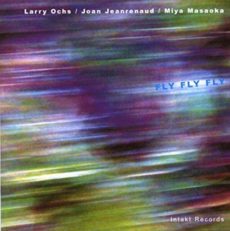
Larry Ochs was born May 3, 1949 in New York City and studied trumpet briefly but concentrated on tenor and soprano saxophones. He has worked as a record producer and founded his own label, Metalanguage Records in 1978, in addition to operating the Twelve Stars studio in California.
A co-founder the Rova Saxophone Quartet, Larry worked in Glenn Spearman’s Double Trio. A frequent recipient of commissions, he composed the music for the play Goya’s L.A. in 1994 and for the film Letters Not About Love, which was named best documentary at SXSW in 1998.
He has played in a trio called Room, and the What We Live ensemble. He formed the group Kihnoua in 2007 with vocalist Dohee Lee and Scott Amendola on drums and electronics, releasing Unauthorized Caprices in 2010.
Avant-garde saxophonist Larry Ochs has released twelve albums as a leader, another twenty-three with Rova and a half dozen with Glenn Spearman, Fred Firth and Maybe Monday, dave Rempis and Darren Johnston. He has performed with Nels Cline, Gerald Cleaver, Donald Robinson, continues to perform and record.
Sponsored By

#preserving genius
More Posts: saxophone
Daily Dose Of Jazz…
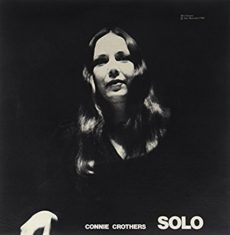
Connie Crothers was born on May 2, 1941 in Palo Alto, California and began studying classical piano at age 9. She went on to major in music and composition at the University of California at Berkeley. While matriculating her teachers put less emphasis on emotional expression and more on procedure, structure and compositional rigor, which did not find a likeable place in her mind.
She subsequently became a student of pianist Lennie Tristano. After Tristano’s death in November 1978, she founded the Lennie Jazz Foundation and recorded a memorial concert album in his honor.
Her debut recording Perception was released in 1974 on the Steeplechase label. She went on to record another twenty albums as a leader over the course of her career and four as a sidewoman. In 1982 she recorded the album Swish with drummer Max Roach for New Artists Records, a label she and Roach founded. She also recorded in groups with, among others, Bud Tristano, Linda Satin, Richard Tabnik and Cameron Brown.
Pianist Connie Crothers, who mainly played in the avant-garde and free jazz genres, passed away of lung cancer in Manhattan, New York City on August 13, 2016.

#preserving genius
More Posts: piano
Daily Dose Of Jazz…
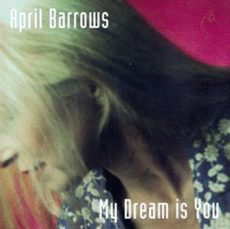
April Barrows was born on April 28, 1954 in Milford, Connecticut and grew up in the San Francisco Bay area where she moved with her family when she was five. The first music she heard came from listening to her mother’s collection of boogie-woogie 78s by such pianists as Meade “Lux” Lewis, Albert Ammons and Pinetop Smith. Singing along with the records and imitating the sounds she learned the formats. She became a record collector herself as a teenager and was always interested in older styles.
She played violin for a few years and in high school sang and played rhythm guitar. Barrows performed duets with a country singer, frequently performing roots music, and learned both steel guitar and electric bass. For a time she had a regular day job as a chemist but her main dream was to become a professional musician.
In the late ’70s she spontaneously quit her job and headed for Nashville where her talents were quickly recognized. She played electric bass in a variety of bands for the next six years working with the Judds’ first band, the Memphis Horns, Vassar Clements, and even Woody Herman. In 1985 she switched her focus and became a songwriter and while she had success writing country, bluegrass, and blues songs, her true love was writing and performing her own new swing tunes.
In addition to her jazz inspirations of Ella Fitzgerald, the Boswell Sisters, Mildred Bailey, Louis Armstrong, Ivie Anderson, Bing Crosby, Ruth Etting, Annette Hanshaw and Cliff Edwards, she listened to Bob Dylan, country music and rock of the ’60s. While continuing in the commercial field, she has recorded as a leader, her debut release of original swing tunes on My Dream Is You followed by her sophomore project All You Need Is the Girl. Vocalist, guitarist and composer April Barrows is currently working on a third project with clarinetist Evan Christopher and cornetist Duke Heitger, and continues to compose and perform.
Sponsored By

#preserving genius
More Posts: electric bass,guitar,vocal
Daily Dose Of Jazz…
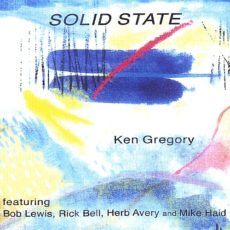
Ken Gregory was born on April 26, 1950 in Atlanta, Georgia and began playing trumpet at age nine, playing in the Northside Highlander Concert Band for three years beginning in 1960. After four years of private training, during his time in high school he sat 1st chair trumpet in the concert band from 1963 to 1968. He went on to work as conductor and lead trumpeter for the Six Flags Over Georgia orchestra until 1971, then learned to play guitar, electric bass and keyboards.
Gregory started playing the nightclub circuit in 1971 for the next nine years. By the Eighties as performance venues transitioned from clubs to private parties, he partnered with an electronics technician and moved into the professional studio business.
As a composer he has been commissioned to write for Warner Bros. Films, CNN, the Weather Channel, numerous radio and television advertisers, songwriters and lyricists. He has added trombone to his arsenal of instruments and has been recorded on thousands of studio sessions and has engineered audio and MIDI programming.
He performs original compositions with his band Solid State and has been featured on some of Atlanta’s best radio stations, on PBS Television’s Jazz Atlanta, and has performed at the Montreux Jazz, Atlanta Jazz and Inman Park festivals. Trumpeter and engineer Ken Gregory continues to be active in the professional music and record business in Atlanta.
Sponsored By
#preserving genius
More Posts: electric bass,guitar,keyboards,trombone,trumpet
Daily Dose Of Jazz…
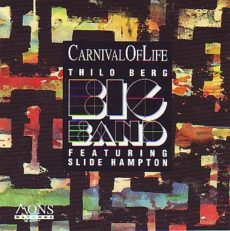
Thilo Berg was born April 23, 1959 in Dortmund, Germany and attracted attention in the 1980s, as a modern jazz drummer and big band leader. He has produced and organized more than 700 jazz, classical, R&B and soul events. Besides his own productions, he worked on large industry concerts as well as kick-off meetings and social events.
Berg completed studies as a classical percussionist with Herrmann Gschwendtner and held the position of solo timpanist and percussionist in the Southwest German Radio Symphony Orchestra and the German between 1981 and 2008. Having worked in various bands, in 1986 he formed his big band, performing with guest soloists such as Barbara Dennerlein, Ack van Rooyen, Jiggs Whigham, Barbara Morrison, Silvia Droste, Jim Snidero, Slide Hampton, Bob Mintzer, Art Farmer and Bill Ramsey.
Over seven year together they recorded three albums and the band saw coming through its ranks Till Brönner, Paul Heller, Peter Weniger, Ludwig Nuss, Mark Nightingale, Gerald Presencer, Martin Shaw, Hubert Nuss and Thilo Wagner.He also worked in smaller groups with Jack van Poll, Bobby Shew, Heiner Franz, John Gordon, Elaine Delmare and Curtis Fuller.
Drummer Thilo Berg founded the jazz and classical music label Mons Records in 1991, has worked as a music producer for Sony Music, BMG, Columbia and Universal, and continues to perform, record and produce.
Sponsored By

www.whatissuitetabu.com
#preserving genius
More Posts: drums