

Requisites
Minor Move ~ Tina Brooks | By Eddie Carter
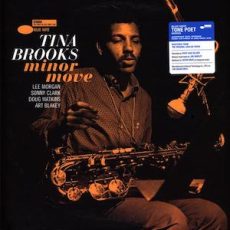
This morning’s choice from the library is Minor Move (Blue Note GXF 3072), a 1958 recording by tenor saxophonist Tina Brooks. It was his first session as a leader and should have resulted in his debut but remained shelved until 1980 when it hit the stores in Japan. He’s joined here by Lee Morgan on trumpet, Sonny Clark on piano, Doug Watkins on bass, and Art Blakey on drums. My copy used in this report is the 2019 Blue Note Tone Poet Series Stereo reissue (B0030487-01). Nutville by Tina Brooks opens Side One with the quintet’s blissfully happy theme. Sonny offers a welcoming smile on the opening statement, then Lee invites us to make ourselves at home next. Tina continues the lighthearted mood with an easy-going interpretation. Doug adds a few cool notes leading to the group’s finale.
The Way You Look Tonight by Jerome Kern and Dorothy Fields debuted in the film, Swing Time (1936). Tina and Lee accelerate the beat to uptempo for the melody, then Brooks dives straight into an invigorating lead solo. Morgan moves through the second interpretation with surgical precision, followed by Clark who applies infectious enthusiasm to the third reading. Blakey engages in a brief exchange with the front line before everyone reassembles for the ending. Side Two starts with Star Eyes by Gene De Paul and Don Raye from the musical-comedy, I Dood It! (1943). Lee begins with a brief muted intro preceding the midtempo theme. Tina steps up first with a relaxing performance, then Sonny and Lee follow with two satisfying performances of sheer delight.
Minor Move by Tina Brooks gets underway with the quintet’s collective theme, then Brooks settles into a bluesy groove on the lead solo. Lee and Sonny follow with two interpretations that will have your fingers popping and toes tapping to the inviting beat before the ensemble’s closing chorus dissolves into nothingness. Everything Happens To Me by Matt Dennis and Thomas Adair is one of the most beautiful songs from The Great American Songbook. This is a showcase for Tina who gives two emotionally touching performances of lyricism and poignancy. Sandwiched between them is a gorgeous presentation of reflective beauty by Lee and a warm insightful interpretation by Sonny leading to the tenor’s soft conclusion.
Minor Move was produced by Alfred Lion and Rudy Van Gelder was the recording engineer. Joe Harley supervised the reissue and Kevin Gray did the mastering. The packaging is superb with great photos of the session. The recording is fantastic with an exceptional soundstage and outstanding detail that comes through your speakers as clear as Waterford Crystal. The record was pressed on 180-gram audiophile vinyl and is very quiet until the music starts. Tina Brooks released only one album during his lifetime and appeared on several Blue Note sessions. Sadly, he never got the recognition he deserved. He passed away from liver failure at age forty-two on August 13, 1974. If you’re a fan of tenor sax and don’t already own the Mosaic box set, I offer for your consideration, Minor Move by Tina Brooks. It’s a terrific recording by one of the underrated jazz musicians and an album I highly recommend for your library!
~ The Complete Blue Note Recordings of The Tina Brooks Quintets (Mosaic Records MR4-106), True Blue (Blue Note BLP 4041/BST 84041) – Source: Discogs.com ~ The Way You Look Tonight, Star Eyes, Everything Happens To Me – Source: JazzStandards.com © 2022 by Edward Thomas Carter

More Posts: choice,classic,collectible,collector,history,instrumental,jazz,music,saxophone
Requisites
Blue Lights, Volume 1 ~ Kenny Burrell | By Eddie Carter
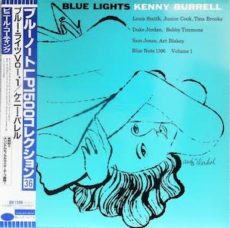
I became a fan of guitarist Kenny Burrell at an early age, enjoying him on Houseparty (1958), The Sermon (1959), Midnight Special (1961), Back At The Chicken Shack (1963), Organ Grinder’s Swing (1965), All Day Long, and All Night Long (1957), and Steamin’ (1963). He steps into the spotlight this morning with a superb 1958 album, Blue Lights, Volume 1 (Blue Note BLP 1596/BST 81596). It’s a straight-ahead blowing session anchored by a superlative supporting cast, Louis Smith on trumpet, Tina Brooks, Junior Cook (tracks: A1, A2, B2) on tenor sax, Duke Jordan (tracks: A1, A2), Bobby Timmons (tracks: B1, B2) on piano, Sam Jones on bass, and Art Blakey on drums. My copy used in this report is the 1996 Toshiba-EMI Limited Japanese Mono reissue sharing the original catalog number.
Side One begins with Yes Baby, an easy-going blues by Kenny Burrell. The sextet’s relaxing melody gets things off to a good start. Kenny goes to work first with a solo as smooth as satin, then Tina comes in for a deliciously mellow statement. Louis takes a carefree drive next, followed by Junior and Duke who gather good notes during their turns. Sam delivers the payoff by walking leisurely into the ensemble’s slow fading closing chorus. Scotch Blues by Duke Jordan gives the group an extremely fun tune to play with a Scottish flavor in the opening and ending theme. The solo order is Burrell, Brooks, Smith, Cook, Jordan, and Blakey. Each musician develops their readings cheerfully sustained by the rhythm section’s infectiously laid-back vibe.
Autumn In New York by Vernon Duke starts Side Two offering Burrell in a quartet setting with Bobby Timmons taking over the piano duties. Kenny begins with a brief solo introduction that evolves into the ensemble’s attractive melody. Burrell is the song’s only soloist and presents a beautifully elegant reading ahead of the quartet’s thoughtfully polite ending. The album concludes with Caravan, an uptempo swinger by Duke Ellington, Irving Mills, and Juan Tizol. It begins briskly with the opening chorus. Smith is off to the races quickly, then Cook and Brooks follow with two examples of splendid solo work. Burrell simply sizzles on the next reading ahead of Timmons’ fingers flying over the keys. Blakey has the last word preceding the sextet’s reprise and disappearance in a fadeout.
Blue Lights, Volume 1 was produced by Alfred Lion and Rudy Van Gelder was the recording engineer. Toshiba-EMI Limited has done a wonderful job with this reissue’s remastering. The soundstage is stunning, and the musicians jump out of your speakers as if they’re playing in front of you. The vinyl is also flat and silent until the music starts. Kenny Burrell is one of those rare musicians who play with a distinctive blend of explosive and punchy rhythms. His discography as a leader and sideman is extensive and his career has lasted seven decades. Here, he’s completely at ease and perfectly at home playing the blues. If you’re a fan of jazz guitar and only know his album, Midnight Blue, I invite you to check out Blue Lights, Volume 1 by Kenny Burrell. It’s an album of great jazz that doesn’t disappoint, and I’ve already added its companion, Blue Lights, Volume 2 to my Want and Wishlist!
~ All Day Long (Prestige PRLP 7081/PRST 7277), All Night Long (Prestige PRLP 7073/PRST 7289), Back At The Chicken Shack (Blue Note BLP 4117/BST 84117), Blue Lights, Volume 2 (Blue Note BLP 1597/BST 81597), Houseparty (Blue Note BLP 4002/BST 84002), Midnight Blue (Blue Note BLP 4123/BST 84123), Midnight Special (Blue Note BLP 4078/BST 84078), Organ Grinder’s Swing (Verve Records V-8628/V6-8628), Steamin’ (Prestige PRLP 7278/PRST 7278), The Sermon (Blue Note BLP 4011/BST 84011) – Source: Discogs.com ~ Autumn In New York, Caravan – Source: Discogs.com © 2022 by Edward Thomas Carter
More Posts: choice,classic,collectible,collector,guitar,history,instrumental,jazz,music
The Quarantined Jazz Voyager
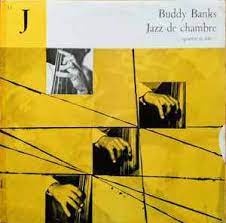
This week the Jazz Voyager is choosing from the library of rare gems seldom heard on this side of the pond. Thanks to the internet, as you listen to the twenty-nine minutes of the album, remember to keep vigilant about the safety of your health and others. On the turntable is the hard bop Jazz De Chambre, a 1954 recording by double bassist Buddy Banks.
Buddy Banks, originally a saxophonist who switched to bass, had arrived in Europe after World War II. On this session he is accompanied by drummer Roy Haynes, pianist Bob Dorough, and guitarist Jimmy Gourley. The leader takes the spotlight in a subtle take of Yesterdays, though a strange clicking mars an otherwise swinging “I Love You.” Banks’ group also offers serviceable interpretations of modern pieces like Gerry Mulligan’s Line for Lyons and Milt Jackson’s Bag’s Groove.
The album was recorded at Geneix Studio in Paris, France and was produced by Frank Ténot. The liner notes were provided by Alain Tercinet with English translation by Martin Davies.
Tracks | 32:56- A Night In Tunisia (Dizzy Gillespie / Frank Paparelli) ~ 4:26
- Almost Like Being In Love (lan Jay Lerner / Frederick Loewe) ~ 3:19
- Bag’s Groove (Milt Jackson) ~ 3:47
- Yesterdays (Otto Harbach / Jerome Kern) ~ 3:29
- I Love You (Cole Porter) ~ 5:58
- Line For Lyons (Gerry Mulligan) ~ 3:46
- You Go To My Head (J. Fred Coots / Haven Gillespie) ~ 4:29
- Buddy Banks Blues (Buddy Banks) ~ 3:27
- Bob Dorough ~ piano
- Buddy Banks ~ double bass
- Jimmy Gourley ~ guitar
- Roy Haynes ~ drums

More Posts: adventure,album,club,double bass,genius,jazz,museum,music,preserving,restaurant,travel
Daily Dose Of Jazz…
Tamm E. Hunt was born into a musical family in New York City, New York on June 19, 1954. The niece of jazz and blues singer Hannah Sylvester and record company owner Benny Clark, she is the daughter of K.D. Searcy, a tap dancer who danced at the Apollo Theater with Tip Tap & Toe. Growing up around music when she heard Dakota Staton’s The Late Late Show, she knew early on that she wanted to sing jazz.
Despite that prophetic introduction, Hunt started out singing other styles of music. In her childhood she sang with a variety of R&B girl groups. She had some commercial success in the early ’80s singing disco, but then switched to jazz. Inspired by Betty Carter, Sarah Vaughan and pianist Dorothy Donegan, she has sung with such notables as alto saxophonist Gary Bartz, tenor saxophonist Clifford Jordan, pianists Ronnie Matthews and Larry Willis, bassist Buster Williams, and drummer T.S. Monk among others.
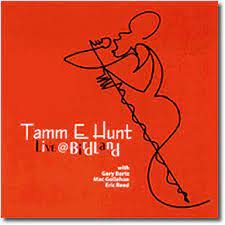
She has performed throughout the U.S. in addition to Europe, Canada, and Japan. Hunt has thus far recorded one CD, Live @ Birdland, for her New Jazz Audience label. She founded the Harlem Jazz Foundation, and has written jazz education programs including Adopt a Kid 4 Jazz and Jazz 4 the Beginner.
She starred in and produced the off-Broadway show Billie Holiday: The Legend, and appeared in a short dramatic film with Bartz called A Jazz Story. Moving to Baltimore, Maryland she has been an important force in the city’s jazz community, both as a singer and behind the scenes. Vocalist Tamm E. Hunt, who is also the executive/artistic director of the Maryland Center for the Preservation of Jazz & Blues, continues to sing, educate and promote jazz.
More Posts: bandleader,educator,history,instrumental,jazz,music,vocal
Daily Dose Of Jazz…
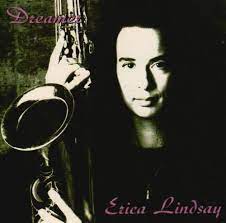
Erica Lindsay was born June 5, 1955 in San Francisco, California to parents who were both teachers and lived in Europe in the 1960s. She began her studies in composition with Mal Waldron in Munich, Germany when she was fifteen years old. She played clarinet, then alto and tenor saxophone. In 1973, she spent a year of study at the Berklee School of Music in Boston, Massachusetts and then went back to Europe, where she began her music career. She formed a local quartet and went on tour. Since 1980, she has lived in New York.
As a saxophonist she has worked with Melba Liston, Clifford Jordan, Dizzy Gillespie, McCoy Tyner, Reggie Workman, George Gruntz, and Pheeroan akLaff. Lindsay composed for theater, television, and dance productions and worked with poets and performance artists such as Carl Hancock Rux, Janice King, Janine Vega, Mikhail Horowitz and Nancy Ostrovsky. She leads her own quartet and is the co-leader of a quartet with Sumi Tonooka.
Erica’s 1989 debut album Dreamer was released on Candid Records, with contributions from Robin Eubanks, Howard Johnson, Francesca Tanksley, and Anthony Cox. The 1990s and 2000s saw her playing with Oliver Lake, Baikida Carroll, Howard Johnson, Jeff Siegel, Thurman Barker and the band Trace Elements. Their album Yes – Live at the Rosendale Cafe appeared in 2008.
Saxophonist Erica Lindsay is co-founder of the Artists Recording Collective recording label, a visiting Assistant Professor at Bard College and continues to perform and record.
More Posts: bandleader,educator,history,instrumental,jazz,music,saxophone