

Daily Dose Of Jazz…
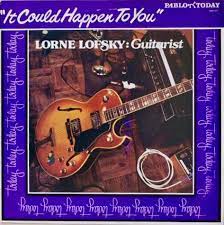
Lorne Lofsky was born May 10, 1954 in Toronto, Ontario, Canada and began playing rock at school dances but later took an interest in jazz after hearing the album Miles Davis’ Kind of Blue. During the 1970s he attended York University in Toronto studying music while working around Toronto’s clubs. He worked with Canadian musicians Butch Watanabe and Jerry Toth and with Pepper Adams, Bob Brookmeyer and Chet Baker when they visited.
In 1980, Lofsky met fellow Canadian, pianist Oscar Peterson, who produced his first album It Could Happen to You. He toured with Peterson in the 1980s, and he toured and recorded as a member of Peterson’s quartet and quintet in the 1990s. Lofsky has also worked with Ed Bickert, Ruby Braff, Rosemary Clooney, Kirk MacDonald, Rob McConnell, Tal Farlow, Dizzy Gillespie, Johnny Hartman, and Clark Terry.
In the early-1980s, Lofsky began an important musical association with saxophonist Kirk Macdonald leading to the formation of a quartet. From 1983 to 1991 Lofsky played in a quartet with guitarist Ed Bickert. This collaboration yielded two recordings, one for Concord Records titled This Is New, along with a tour of Spain in 1991.
He has taught at York University, Humber College’s Community Music School and the University of Toronto. Guitarist Lorne Lofsky continues to perform, record, and tour.

More Posts: bandleader,guitar,history,instrumental,jazz,music
Daily Dose Of Jazz…
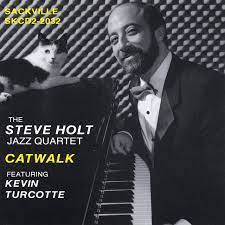
Steve Holt was born in Montreal, Quebec, Canada on May 9, 1954 and exhibited musical ability in early childhood, playing piano at the age of four. By the time he was a teenager, he was a regular on the Montreal club scene.
Self-taught until he entered McGill University, he received instruction from pianist Armas Maiste, whose bebop playing influenced him. Holt became a student of Kenny Barron, traveling regularly to New York City for private lessons. Graduating from McGill in 1981 with that university’s first Bachelor of Music major in Jazz Performance, he taught jazz improvisation there.
Steve’s 1983 debut album, The Lion’s Eyes was nominated for a Juno Award. He has worked with Larry Coryell, Eddie Henderson, and Archie Shepp. Moving to Toronto, Canada in 1987 he worked as an equity analyst and for a time he also continued playing clubs at night. He released three albums in the early Nineties ~ Christmas Light, Just Duet and Catwalk.
At the end of the decade Holt returned his concentration to music full-time and three years later his fifth album, The Dream, was released. He turned his attention to music production and stopped performing jazz live until 2014. A move to the countryside reignited his interest in jazz performance and in 2017 he opened a health food store in Warkworth, Ontario that operates as a jazz venue once a week.
Pianist Steve Hunt continues to play jazz while maintaining outside interests.
More Posts: bandleader,history,instrumental,jazz,music,piano
The Quarantined Jazz Voyager
Contrary to the announcement that the pandemic is over and the unmasking the country has clearly exhibited, a variant is still present and this Jazz Voyager is getting out remains distant from crowds and enclosed spaces. So we will continue to listen to great music.
My selection this week is the Complete Studio Recordings, a two compact disc set whose songs were recorded between 1956 and 1958 by the Curtis Counce Quintet composed of Counce, Jack Sheldon, Harold Land, Carl Perkins and Frank Butler went into the studio of Contemporary Records and recorded twenty-four songs. Though the group was short~lived, their impact produced a powerhouse two-disc set of music comprising the main recordings on the Contemporary label.
The group’s expressed purpose was to develop a West Coast answer to the soulful, hard-bop East Coast sound. Each of the musicians was among the most gifted on his instrument, yet the focus was always on a collaborative result that would reflect undiscovered possibilities within a familiar post-bop idiom. Seldom does a group of musicians come together and play so seamlessly that they sound like one voice speaking. The contribution of each of the five principals, therefore, invites close scrutiny.
The beauty of the recorded disc is that it is a lasting tribute to the musicians who performed on this recording. Lester Koenig at Contemporary Records was known for extremely high audio standards and turned out some of the best-sounding records of the day thanks to the expertise of engineer Roy DuNann. The audio on these Contemporary dates is rich in depth and detailing, allowing the listener to pick out each of the subordinate motifs and subtle moving harmonies. The engineering created a naturally ambient soundscape inviting the listener to partake of the worthy.
The caveat is that this music appeared on previously released albums by Curtis Counce and this is an opportunity to pick up the excellence of 24 tracks of music in a one~stop shop. This represents African-American indigenous art of the highest order. Released by Gambit Records in 2007 and definitely one for the collector.
Track Listing | 150:00+
Disc 1- Landslide (Harold Land) ~ 8:37
- Time After Time (Sammy Cahn/Jule Styne) ~ 6:32
- Mia (Carl Perkins) ~ 4:55
- Sarah (Jack Sheldon) ~ 11:38
- Fifth For Frank (Gerald Wiggins/Cal Tjader) ~ 7:14
- Big Foot (Charlie Parker) ~ 9:07
- Sonar (Kenny Clarke/Gerald Wiggins) ~ 7:28
- Stranger In Paradise (Robert Wright/George Forrest) ~ 7:04
- Woody’n You (Dizzy Gillespie) ~ 6:18
- Pink Lady (Jack Sheldon) ~ 4:41
- Councelation (Curtis Counce) ~ 6:05
- Love Walked In (George Gershwin/Ira Gershwin) ~ 4:56
- Too Close For Comfort (Larry Holofcener) ~ 5:38
- How Deep Is The Ocean (Irving Berlin) ~ 6:37
- Complete (Curtis Counce) ~ 5:52
- Nica’s Dream (Horace Silver) ~ 8:00
- How Long Has This Been Going On (George Gershwin/Ira Gerswin) ~ 3:18
- Mean To Me (Fred E. Ahlert/Roy Turk) ~ 4:31
- I Can’t Get Started (Vernon Duke/Ira Gershwin) ~ 8:01
- Larue (Clifford Brown) ~ 5:04
- Carl’s Blues (Carl Perkins) ~ 5:54
- Night In Tunisia (Dizzy Gillespie/Frank Paparelli) ~ 8:17
- Love Walked In (George Gershwin/Ira Gershwin) ~ 2:55
- Sophisticated Lady (Duke Ellington) ~ 4:10
- Fifth For Frank (Gerald Wiggins/Cal Tjader) ~ 1:56
- The Butler Did It (Frank Butler) ~ 4:39
Personnel
- Jack Sheldon ~ trumpet
- Harold Land ~ tenor saxophone
- Carl Perkins ~ piano
- Curtis Counce ~ bass
- Frank Butler ~ drums
- Gerald Wilson ~ trumpet (replaces Sheldon on three tracks of disc 2)

More Posts: adventure,album,bass,club,drums,genius,jazz,museum,music,piano,preserving,restaurant,saxophone,travel,trumpet
The Quarantined Jazz Voyager
The Jazz Voyager is still practicing social distancing and masking at unknown vac gatherings because the airlines have extended my eCredit another year. The news is talking about another variant and this voyager is vigilant in remaining safe.
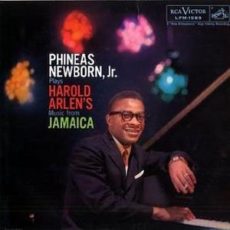
This week I am pulling from the library Phineas Newborn Jr. Plays Harold Arlen’s Music from Jamaica. It is an album by the pianist, produced by A. K. Salim, and recorded on September 7, 8 & 9, 1957 in New York City and released on the RCA Victor label. The album features his interpretations of compositions from the Broadway musical Jamaica.
Track List | 38:00 All compositions by Harold Arlen and Yip Harburg
- Savannah ~ 4:10
- Little Biscuit ~ 3:03
- Cocoanut Sweet ~ 4:23
- Push De Button ~ 4:23
- Napoleon ~ 4:20
- Hooray For De Yankee Dollar ~ 3:31
- For Every Fish ~ 3:47
- Take It Slow, Joe ~ 4:20
- Pity the Sunset ~ 4:07
- Pretty to Walk With ~ 2:52
- Phineas Newborn Jr. ~ piano
- Ernie Royal (tracks 2, 4 & 6-9), Nick Ferrante (tracks 1, 3, 5 & 10) ~ trumpet
- Jimmy Cleveland ~ trombone
- Jerome Richardson ~ tenor saxophone, flute
- Sahib Shihab ~ baritone saxophone, alto saxophone, clarinet, bass clarinet
- Les Spann ~ guitar
- George Duvivier ~ bass
- Osie Johnson ~ drums
- Francisco Pozo, Willie Rodriguez ~ congas, bongos, timbale
More Posts: adventure,album,club,genius,jazz,museum,music,piano,preserving,restaurant,travel
Daily Dose Of Jazz…
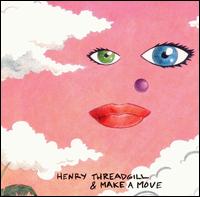
Bryan Carrott was born in Queens, New York on April 23, 1959. After graduating from Fiorello H. LaGuardia High School of Music & Art and continued at the Manhattan School of Music before studying percussion with Morris Lang at Brooklyn College, then studied vibraphone with Dave Samuels at William Paterson University, receiving his Bachelor of Music degrees in Jazz Studies and Jazz Performance.
He has toured and/or recorded with David Fathead Newman, Ralph Peterson, Henry Threadgill, Muhal Richard Abrams, Sam Rivers, Don Byron, Dave Douglas, Charlie Hunter, Bob Moses, Roy Campbell, Herbie Mann, Cassandra Wilson, John Lurie & the Lounge Lizards, Greg Osby, Tom Harrell, Bennie Wallace, Steve Kroon, Joe Batan, and Kip Hanrahan, among others.
Carrott is an assistant professor and coordinator of percussion instruction at Five Towns College. He is a clinician and has led educational performances across the United States, Taiwan and Taipai. A featured soloist with Cologne, Germany’s WDR Orchestra conducted by Gunther Schuller, he was a mallet percussionist for Disney’s Broadway production of The Lion King.
For seven consecutive years, Bryan was cited in DownBeat Magazine’s International Critics’ Poll in the vibe category for Talent Deserving Wider Recognition, and has been featured on several film soundtracks, including 3 A.M. with Branford Marsalis. He currently serves as coordinator & professor of percussion studies at Five Towns College in Dix Hills, N.Y.
Vibraphonist and composer Bryan Carrott, who also plays marimba, piano, and leads his own trio, quartet and quintet, has yet to record as a leader but continues to perform and teach new generations of musicians.
More Posts: bandleader,composer,history,instrumental,jazz,marimba,music,percussion,piano,vibraphone