

Daily Dose Of Jazz…
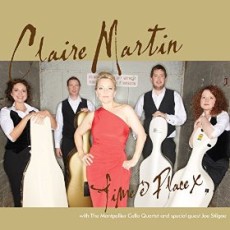
Claire Martin was born on September 6, 1967 in Wimbledon, South London, England. She grew up in a house full of music, claiming to have learned all of Judy Garland’s songs by the time she was 12. She also cites Ella Fitzgerald’s Song Books as being the life changing influence that inspired her to attend Stage School and later to study singing in both New York and London.
Her professional career started with her first engagement, aboard the QE2, where she sang in the Theater Bar for two years. In 1991, at the age of 21, Martin formed her own jazz quartet, and was signed by the Scottish jazz label Linn Records. Her debut album, “The Waiting Game” was extremely well reviewed and was selected by The Times as one of their “Albums of the Year”.
Claire has opened for Tony Bennett at the Glasgow International Jazz Festival, won the British Jazz Awards and BBC Jazz Awards for Best Vocalist, has co-presented for the Jazz Line Up on BBC Radio 3, collaborated with composer and performer Sir Richard Rodney Bennett and has recorded a total of 17 albums.
Vocalist Claire was appointed Officer of the Order of the British Empire (OBE) in the 2011 Birthday Honours for services to music. She continues to perform, tour and record.

Give A Gift Of Jazz – Share
More Posts: vocal
Daily Dose Of Jazz…
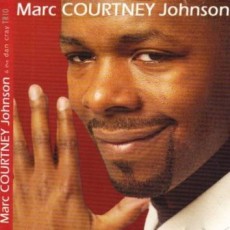
Marc Courtney Johnson was born on September 5, 1967 and began singing in church youth choirs off and on from age 5 through 13. In junior high he was introduced to the clarinet and developed a love for classical music, playing in both symphony and marching bands in high school.
Matriculating at Northern Illinois University where he briefly pursued a vocal performance degree, studying for a semester with Basso Cantante Myron Myers, singing with the NIU Chorus and touring with the NIU Black Choir. However, he transferred to the University of Illinois at Chicago and getting a business degree Johnson returned to his roots in church primarily as a solo vocalist.
In the summer of 2003 Marc began his serious pursuit as a jazz vocalist. He has worked with Chicago’s icons of jazz, Kimberly Gordon and the Alan Gresik Swing Shift Orchestra; works regularly at the Green Mill Cocktail Lounge and Green Dolphin Street, fronts the Ken Arlen band Front of House and performs with the Dan Cray Trio.
In 2004 Marc produced and released his debut self-titled CD “Marc Courtney Johnson” with the dynamic Dan Cray Trio followed with his sophomore project “Dream of Sunny Days” in 2009. He continues to perform and compose.
Jazz Is Global – Share
More Posts: vocal
Daily Dose Of Jazz…
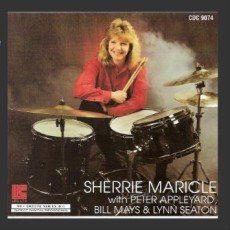
Sherrie Maricle was born Sharon Lee Maricle on September 2, 1963 in Buffalo, New York. She began playing drums professionally performing locally with Slam Stewart while studying music at SUNY-Binghamton. She then attended New York University where she completed a Masters in Jazz Performance and a Doctorate of Philosophy in Jazz Performance and Composition.
Maricle directed Saturday jam sessions at the Village Gate from 1987 until the venue closed in 1993. Beginning in 1987, she also began collaborating and leading small groups with Peter Appleyard. In the late 1980’s, she was appointed director of percussion studies at NYU.
By the 1990’s Sherrie was performing with the New York Pops, Clark Terry, Al Grey and began working with the group DIVA, currently leading the DIVA Jazz Orchestra, the DIVA Jazz Trio, and the quintet Five Play.
As an educator she teaches on the jazz faculty of the New York State Summer Music Festival, as well as running her own private drum and percussion studio. In 2009, she received the Lifetime Achievement Award at the Mary Lou Williams Women in Jazz Festival. Drummer Sherrie Maricle continues to perform, tour and record.
Take A Dose On The Road
More Posts: drums
Hollywood On 52nd Street
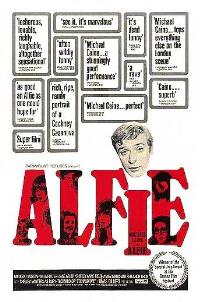
Alfie, the title song, written by Burt Bacharach and Hal David, for the 1966 British romantic comedy-drama directed by Lewis Gilbert. The film starred Michael Caine, with supporting roles by Shelley Winters, Millicent Martin and Vivien Merchant.
The original film soundtrack featured jazz saxophonist Sonny Rollins with local musicians from London including pianist Stan Tracey, who improvised “Little Malcolm Loves His Dad”, Rick Laird on bass, drummer Phil Seamen and tenor saxophonist Ronnie Scott. The released soundtrack album, recorded back in the States with orchestration by Oliver Nelson, featured Rollins, but with other musicians.
The Story: Alfie tells the story of a young womanizer who leads a self-centered life, purely for his own enjoyment, until events force him to question his uncaring behavior and his loneliness. He cheats on numerous women, and despite his charm towards women, he treats them with disrespect and refers to them as “it”, using them for sex and for domestic purposes. Alfie frequently breaks the fourth wall by speaking directly to the camera narrating and justifying his actions. His words often contrast with or totally contradict his actions.
Sponsored By

www.whatissuitetabu.com
More Posts: comedy,dance,drama,hollywood,instrumental,jazz,musical,suite ta bu,vocal
Daily Dose Of Jazz…
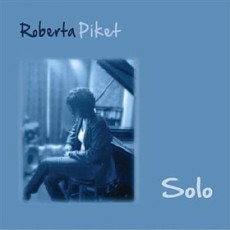
Roberta Piket was born on August 9, 1966 in Brooklyn, New York. Her father, the composer Frederick Piket, gave her first piano lessons when she was seven. She began playing jazz in her early teens, studying jazz piano with Walter Bishop, Jr and classical piano with Vera Wels. After graduating from prestigious Hunter College High School, she entered the joint double-degree program at Tufts University and the New England Conservatory of Music, earning a Bachelor’s Degree in Computer ScienceAll Postsfrom the former and a Bachelor’s Degree in Jazz Studies from the latter. She studied privately with Fred Hersch, Stanley Cowell, Jim McNeely, Bob Moses, Richie Beirach and Sofia Rosoff.
Roberta’s swinging and inventive straight-ahead jazz playing as well as her powerful and sensitive work in creative improvised music has gained her the respect of the jazz community. She has been a side woman performing or recording with David Liebman, Rufus Reid, Billy Hart, Michael Formanek, Lionel Hampton, Mickey Roker, Billy Mintz, Harvey Wainapel, Eliot Zigmund, Benny Golson, Ratzo Harris and the BMI/NY Jazz Orchestra.
Having appeared twice on Marian McPartland’s Piano Jazz, Piket has performed in Europe and japan as well both as a side woman and leader of her own trio and was a finalist in the Thelonious Monk BMI Composers’ Competition. She has released ten albums under her own name and frequently make the “best of” lists of the major jazz magazines and earning rave reviews in Jazz Times, Downbeat, the Washington Post, and Jazziz. A musical pioneer in several ways, Roberta is the first and only woman leader with a release on the prestigious Criss Cross label.
As an educator Roberta hold master classes at the Eastman School of Music, Rutgers University, Cal Arts, Duke University, the Northwestern University Composers’ Colloquium, among others around the world; has taught at the Litchfield Jazz Camp and the Vermont Jazz Center and has coached ensembles at Long Island University and maintained several private students.
Pianist and composer Roberta Piket occasionally performs on B3 organ, as she continues to record, perform and tour throughout Europe America and Japan.
Give A Gift Of Jazz – Share