

Requisites…
<Anthropology~Don Byas | By Eddie Carter
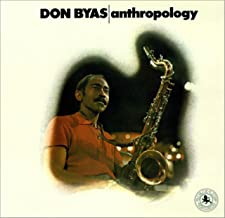
I begin this morning’s discussion with an album by tenor saxophonist Don Byas, a swing and bebop musician who played in the orchestras of Count Basie, Duke Ellington, and Lionel Hampton. He also worked with Art Blakey, Dizzy Gillespie, Bud Powell, and Ethel Waters among others. Anthropology (Black Lion Records BLP 30126) is a 1963 album that was recorded live at the Jazzhus Montmartre (also known as Café Montmartre). The rhythm section is an outstanding trio of Danish descent, pianist Bent Axen, bassist Niels-Henning Ørsted Pedersen and drummer William Schiöpffe. My copy used in this report is the US Stereo reissue (Black Lion BL-160), the date of release is unknown.
The album opens with Anthropology, a bebop classic written in 1945 by Dizzy Gillespie and Charlie Parker that’s also known as Thriving From a Riff or Thriving on a Riff. Schiöpffe introduces the tune, preceding the leader’s feisty delivery of the melody. Byas takes the lead with a compelling lift to start the soloing, then Axen executes the second reading efficiently. Pedersen turns in a brief presentation closely shadowed by Byas and Schiöpffe ends the readings by exchanging a few splendid phrases with the leader.
Moonlight In Vermont was written in 1944 by John Blackburn and Karl A. Suessdorf. This timeless evergreen provides a perfect backdrop for Byas’ gorgeous melody. The saxophonist continues with a very dreamy interpretation of the slow-paced, serene opening solo. Bent follows, displaying a graceful elegance on the next performance with discreet, perfectly tailored support by Niels-Henning and William. Byas’ closing chorus is lovingly rendered, completing the song with a tender finale that’s gorgeous.
Charlie Parker’s 1945 bebop anthem Billie’s Bounce ends the first side with a spirited rendition by the quartet. Pedersen and Schiöpffe open the song as a duet that becomes a lively theme treatment. Don raises the temperature on the lead solo with an effervescent beat that energizes the trio. Bent takes the spotlight last hitting a perfect groove on a swinging performance preceding the leader’s final remarks, theme’s reprise, and coda.
The gears shift upward for Dizzy Gillespie’s most famous recorded tune, Night In Tunisia was written in 1942 with Frank Paparelli. The rhythm section introduces the song at a speedy velocity proceeding to the aggressively energetic theme by Byas who also rips into the first solo voraciously. Bent takes the reins next zipping along like a whirlwind, then Don returns for a second exhilarating statement with bassist and drummer providing the fuel. NHØP takes over for an abbreviated scorcher, then Schiöpffe speaks last exhibiting mesmerizing brushwork into the invigorating climax.
The finale is the 1932 ballad, Don’t Blame Me, written by Jimmy McHugh and Dorothy Fields. This song made its first appearance on Broadway in the show, Clowns in Clover, and later in two films, The Bad and The Beautiful (1952) and Two Weeks in Another Town (1962). Byas begins with a delicate introduction and heart-warming melody ahead of a sultry first statement that’s exquisite. Axen expresses a gentle affection on the final solo preceding Byas who ends the song and LP with a tender sincerity.
In 1964, Byas was celebrating his third decade as a professional musician. In honor of that achievement, the LP was also released as The Big Sound – Don Byas’ 30th Anniversary Album on Fontana in the Netherlands and Debut Records in Denmark. Two songs on the original LP are omitted on Anthropology, There’ll Never Be Another You by Harry Warren and Mack Gordon and Walkin’ by Richard Carpenter. Don Byas was a masterful musician who was adept at a fast clip or on a romantic ballad.
He lived the last twenty-six years of his life in Europe, working extensively before passing away from lung cancer on August 24, 1972, at the age of fifty-nine. The dialogue between the quartet is fascinating and their music a treat for the Café Montmartre crowd. The album was produced by UK music executive Alan Bates who began Black Lion Records and also re-launched the Candid label in London. The sound quality is excellent, transporting the listener to the club amid the crowd. Though out of print for many years, Anthropology is a remarkable live album by Don Byas that I not only recommend but am sure will become a welcome addition in any library.
~ Alan Bates, The Big Sound – Don Byas’ 30th Anniversary Album (Debut Records DEB-142, Fontana 688 605 ZL) – Source: Discogs.com ~ Moonlight In Vermont, Night In Tunisia – JazzStandards.com ~ Don’t Blame Me – Source: Wikipedia.org © 2020 by Edward Thomas Carter
More Posts: choice,classic,collectible,collector,history,instrumental,jazz,music,saxophone
Requisites
Big Blues ~ Art Farmer & Jim Hall | By Eddie Carter
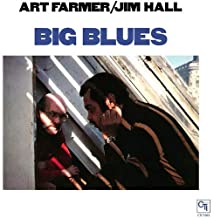
This next choice from the library I acquired after hearing a selection on SiriusXM’s Real Jazz channel. The album is titled Big Blues (CTI Records CTI 7083), released in 1979 and the two men co-leading this enjoyable date are Art Farmer on flugelhorn and Jim Hall on guitar. Rounding out the ensemble are Mike Mainieri on vibes, Mike Moore on bass, and Steve Gadd on drums. My copy used in this report is the 2017 ORG Music Stereo Audiophile reissue (ORGM-2019).
The song that initially sparked my interest leads off the first side, Benny Golson’s 1956 contemporary jazz classic, Whisper Not! It’s one of his most recorded compositions and also became a beloved vocal after Leonard Feather added lyrics in 1962. The quintet jointly creates a mellow melody with a blues beat to begin the song. Jim makes his guitar sing first with a relaxed casualness and steady rhythm. Art gets into an infectious laid-back groove next moving upward with bright chops and impeccable prowess. Mike takes over for the finale with an astonishing drive and intensity preceding the reprise and gentle coda.
The 1969 jazz standard, A Child Is Born by Thad Jones closes the first side starting gently with a brief introduction and tender theme by the rhythm section. Farmer starts the soloing with a ravishingly beautiful, muted performance, followed by Hall who delivers passionately elegant lines on the next interpretation. Mainieri gives a delicately gentle and evocative presentation recalling the spirit and imagination of the song’s composer into the serenely beautiful climax. Big Blues by Jim Hall starts the second side with a spirited midtempo opening chorus by the ensemble and the solo order is the same as on Whisper Not. Jim takes the lead here, showing us his versatility with charming articulation. Art follows, using the mute to deliver skillful assertion on the next reading. Mike’s closing statement is captivating from the moment it starts, expressing joy into the reprise and fadeout. Pavane For A Dead Princess by Maurice Ravel ends the album and was written as a solo piano piece in 1899. The song’s original title is Pavane pour une infante défunte (Pavane for a Dead Infanta) and the ensemble begins the introduction and melody at a slow tempo fitting the original composition. Farmer steps up first, back on the open horn, beginning as he did on the theme, then raises the temperature to midtempo before returning to a softer mood for the close. Mainieri pulls out all the stops on the next reading with a sparkling presentation. Hall takes the final bow with a gorgeous performance preceding the reprise and graceful fadeout.
Big Blues was originally produced by Creed Taylor and engineered by David Palmer who worked at Electric Lady Studios, and Joel Cohn who’s worked on many CTI albums. This reissue was mastered from the original analog tapes by Bernie Grundman and pressed on 180-gram Audiophile vinyl at Pallas Group in Germany. As was the case of many of the classic CTI Records, the sound quality is first-rate with an excellent soundstage across the highs, midrange, and low end that won’t disappoint the listener in their favorite spot to listen to music. Art Farmer and Jim Hall recorded together four other times, Interaction (1963), Live at The Half Note, To Sweden With Love (1964), and Panorama-Live at The Village Vanguard (1997). Each is highly recommended, and I feel the same can be said for Big Blues. I invite you to make time for this one on your next vinyl hunt, it’s an enjoyable album of Contemporary Jazz with extraordinary chemistry, and exceptional performances you won’t soon forget!
~ Interaction (Atlantic 1412/SD 1412); Live at The Half Note (Atlantic 1421/SD1421); Panorama-Live at The Village Vanguard (Telarc Jazz CD-83408); To Sweden With Love (Atlantic 1430/SD 1430) – Source: Discogs.com
~ Whisper Not, A Child Is Born ~ Source: JazzStandards.com
~ Pavane For A Dead Princess ~ Source: Wikipedia.org
© 2020 by Edward Thomas Carter
More Posts: choice,classic,collectible,collector,guitar,history,instrumental,jazz,music,trumpet
Daily Dose Of Jazz…
Roy Powell was born on October 2, 1965 in Langham, Rutland, England. His mother was a historian, his father a scientist who moved the family to Canada. His father had given him piano lessons and had been playing the piano for five years. Returning to England when he was ten, he attended New Mills Grammar School at the same time as Lloyd Cole.
In the 1970s, Powell was listening to Duke Ellington and Miles Davis and buying albums through the mail from America. He attended the Royal Northern College of Music, studying piano and classical composition during the day and playing in Manchester jazz clubs at night. After departing school, he started a jazz fusion band and choreographed a ballet. In 1992 he was a member of the Creative Jazz Orchestra. Three years later he moved to Norway to teach.
Powell has been a member of the group InterStatic with Jacob Young, and Jarle Vespestad, and the group Naked Truth with Lorenzo Feliciati, Pat Mastelotto, and Graham Haynes. He recorded the album Mumpbeak with Feliciati, Mastelotto, Bill Laswell, Tony Levin, and Shanir Ezra Blumenkranz. Pianist, organist, composer, and educator Roy Powell has recorded fifteen albums as a leader and continues to perform and record.
More Posts: bandleader,composer,educator,history,instrumental,jazz,music,piano
The Quarantined Jazz Voyager
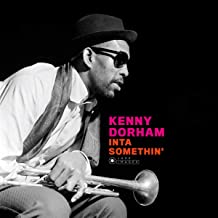
As we await the opening of the country this Quarantined Jazz Voyager presses on with his listening to great jazz by placing on the turntable the classic Kenny Dorham disc titled Inta Somethin’. This live album by the trumpeter features performances recorded at The Jazz Workshop in San Francisco, California on November 13, 1961. It was released in the first quarter of 1962 on the Pacific Jazz label. Dorham contributed two originals to the set, track #1 and track #6.
Track Listing | 38:31- Una Mas ~ 7:13
- It Could Happen to You (Johnny Burke, Jimmy Van Heusen) ~ 6:00
- Let’s Face the Music and Dance (Irving Berlin) ~ 6:06
- No Two People (Frank Loesser) ~ 6:59
- Lover Man (Jimmy Davis, Ram Ramirez, James Sherman) ~ 5:01
- San Francisco Beat ~ 7:12
- Kenny Dorham ~ trumpet (except tracks 3 and 5)
- Jackie McLean ~ alto saxophone (except track 2)
- Walter Bishop Jr. ~ piano
- Leroy Vinnegar – bass
- Art Taylor – drums
As you listen and enjoy this wonderful addition to the jazz catalogue, I emplore you follow your conscience to stay healthy and encourage you to remain vigilant in your social distancing. During this sabbatical from jet setting investigations of jazz around the globe, this voyager’s choices are ever-present. The world will be back and so will I.

More Posts: adventure,club,genius,jazz,museum,music,preserving,restaurant,travel,voyager
The Quarantined Jazz Voyager
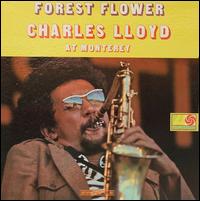
The Quarantined Jazz Voyager continues to social distance and in doing so continues to listen to some of the greatest recordings of the 20th century. This week the spotlight is on Forest Flower: Charles Lloyd at Monterey. It was recorded on two separate dates: in~studio in New York City on September 8, 1966, tracks 3 & 4, and live on September 18, 1966 at the Monterey Jazz Festival in Monterey, California. The album was produced by George Avakian and released on Atlantic Records on February 21, 1967.
Track Listing | 39:17- Forest Flower: Sunrise (Lloyd) ~ 7:18
- Forest Flower: Sunset (Lloyd) ~ 10:37
- Sorcery (Keith Jarrett) ~ 5:18
- Song of Her (Cecil McBee) ~ 5:24
- East of the Sun (Brooks Bowman) ~ 10:40
- Charles Lloyd – tenor saxophone, flute
- Keith Jarrett – piano
- Cecil McBee – bass
- Jack DeJohnette – drums
More Posts: adventure,club,genius,jazz,museum,music,preserving,restaurant,saxophone,travel,voyager