

Daily Dose Of Jazz…
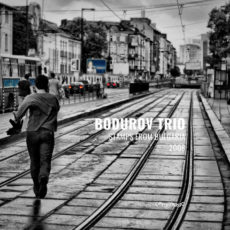
Dimitar Bodurov was born on September 17, 1979 in Bulgaria and studied at the Conservatory of Sofia and the Rotterdam Conservatory, where he graduated in 2004 jazz piano and in 2006 jazz composition.
In 2000 Dimitar moved to Amsterdam, Netherlands and began performing throughout the country and Europe. He recorded his debut recording as a leader in 2004 titled Melatonic on the Acoustic Records label followed by his live sophomore release the same year titled Resumption Suite. He would go on to record solo and trio albums on both Dutch and Norwegian labels.
Bodurov ventured into composing for theater, opera, and orchestra. He has received several jazz awards, receiving a mention at the Martial Solal Jazz Solo Piano Competition in Paris. He has released a number of CD and digital albums as a leader, producer, and guest for Dutch and Norwegian labels. In 2012 he founded his own label Optomusic.
As an active event organizer, Dimitar has initiated several events: Jazz and Vino ~ a series of concerts with charity purpose in Varna, Bulgaria; Keys and Stix Festival ~ celebrating duets of piano and drums in collaboration with Bimhuis, Amsterdam & Unterfahrt, Münich; and since 2013, he has been the artistic leader of Radar Festival, Varna, Bulgaria.
Pianist and composer Dimitar Bodurov, who has worked with Randy Brecker, Didier Lockwood, Theodosii Spassov, Claron Mcfadden and Svetlin Rouseev, continues to compose, perform and record.

More Posts: bandleader,composer,history,instrumental,jazz,music,piano

Daily Dose Of Jazz…
Ayako Shirasaki was born on September 16, 1969 in Tokyo, Japan and started classical piano lessons at age five, and was intrigued by her father’s professional trombone-playing. By age twelve she began her professional career playing gigs at the “J” jazz club in Tokyo.
After attending the Tokyo Metropolitan High School for Arts, Shirasaki majored in classical music at the Tokyo National University of Fine Arts and Music and gave concerts as a classical pianist for several years after graduating before returning to play jazz.
Her 1997 move to New York City saw her pursuing a master’s degree at the Manhattan School of Music, studying with pianist Kenny Barron. Landing in the Park Slope neighborhood of Brooklyn, Ayako operates the Brooklyn location of the Sakura Music School, which specializes in teaching music to small children with an emphasis on those of Japanese ancestry.
Performing regularly in the New York area, she tours internationally, in addition to recording. Her debut trio album Existence brought drummer Lewis Nash and bassist Marco Panascia together in 2003. She has since recorded four addition albums, has been featured on Marian McPartland’s National Public Radio show Piano Jazz, and was a finalist in the Mary Lou Williams Women In Jazz Piano Competition in 2005 and 2006 and the Great American Jazz Piano Competition in 2004, 2005 and 2006. Pianist and educator Ayako Shirasaki continues to perform, tour, record, and teach.
More Posts: bandleader,educator,history,instrumental,jazz,music,piano
The Quarantined Jazz Voyager
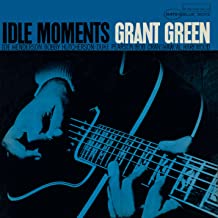
Idle Moments by guitarist Grant Green is this week’s jazz album that the quarantined jazz voyager has chosen to spotlight. It was recorded on November 4 and 15, 1963 at Van Gelder Studios in Englewood Cliffs, New Jersey, however, it wasn’t released until February 1965 on the Blue Note Records label.
The album was produced by Alfred Lion and is best known for the title piece, a slow composition in C minor which lasts for nearly 15 minutes. Pearson, who wrote the song, explains in his liner notes to the album that the tune was meant to be much shorter. Due to the musicians repeating the main melody twice, however, there was some confusion as to whether or not one chorus would consist of 16 or 32 measures.
Track Listing | 42:45
- Idle Moments (Pearson) ~ 14:56
- Jean De Fleur (Green) ~ 6:49
- Django (John Lewis) ~ 8:44
- Nomad (Pearson) ~ 12:16
Personnel
- Grant Green – guitar
- Joe Henderson – tenor saxophone
- Duke Pearson – piano
- Bobby Hutcherson – vibraphone
- Bob Cranshaw – double bass
- Al Harewood – drums

More Posts: adventure,club,genius,guitar,jazz,museum,music,preserving,restaurant,travel,voyager
Requisites
Something In Common ~ Sam Jones | By Eddie Carter
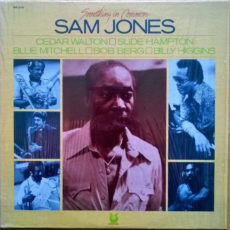
Up next from the library is a 1978 album by bassist Sam Jones titled Something In Common (Muse Records MR5149). If you’re unfamiliar with him, he’s recorded as a leader for East Wind, Interplay, Riverside, SteepleChase, and Xanadu. For five years, he was an essential member of the quintet and sextet of Cannonball Adderley. He’s also appeared on some of the most important jazz LP’s ever recorded and worked with Nat Adderley, Gene Ammons, Donald Byrd, Al Cohn, Arnett Cobb, Lou Donaldson, Kenny Dorham, Red Garland, Dizzy Gillespie, Johnny Hodges, Clifford Jordan, Duke Jordan, Yusef Lateef, Thelonious Monk, Sonny Stitt, and Bobby Timmons among others. For this date, Jones assembled an excellent quintet, Blue Mitchell on trumpet; Slide Hampton on trombone; Bob Berg on tenor sax; Cedar Walton on piano and Billy Higgins on drums. My copy used in this report is the original US Stereo release.
The briskly paced Slide Hampton tune, Every Man Is A King kicks off Side One with Sam presenting a gentle solo introduction that evolves into a swinging affair on the melody. The solo order is Hampton, Mitchell, Berg, Walton, Higgins, and the front line’s strength is in evidence on three exhilarating readings. Cedar kicks it up a notch when his turn comes, followed by Billy who makes a brief closing comment. For All We Know is a jazz and pop standard that was written in 1934 by Fred Coots and Sam Lewis. The ensemble begins with a very pretty melody reminiscent of the cool jazz sound Miles Davis, Gil Evans, and Gerry Mulligan achieved on the LP, Birth of The Cool. Sam shapes the opening statement thoughtfully into an elegant interpretation. The beat moves upward for a brief reading by Blue into the ensemble’s soothing coda.
Mitchell’s Blue Silver ends the first side with the group taking the main theme at a speedy velocity. Blue takes flight first with a joyously, happy lead solo. Bob, Slide, and Cedar follow with three brief energetic interpretations, then Higgins takes the final bow exchanging short riffs with all four soloists preceding the out-chorus. Something In Common is the first of two tunes from Cedar’s pen and starts Side Two swinging from the melody with the sextet showing off their chemistry. Walton opens with an aggressive solo, then Berg shines on a marvelous statement that’sa knockout. Mitchell responds to the saxophonist with exuberant energy next. Hampton follows, making an authoritative entrance into the fourth presentation with passionate emotion. Higgins delivers the final performance with aggressive incisiveness, providing the perfect counterpoint to each artist.
Bolivia, one of Cedar’s most famous compositions made its debut on the 1975 album, Eastern Rebellion with Jones, Higgins, and George Coleman joining the pianist. Blue is featured during the robust melody and end theme but does not solo here. Slide jumps out the box first with enthusiastic authority, then Cedar gives a fiery display on a jubilant statement. Bob makes a bold statement of robust wailing on the next reading. Sam completes the solos with luminous intensity ahead of the ensemble’s reprise and fadeout. Jones’ Seven Minds is the longest track on the album, affording solo opportunities for everyone except Mitchell and Higgins. Sam opens auspiciously with an extended solo vamp, developing into the sextet’s expedient theme. Walton opens with a fiercely, exciting first statement. Hampton demonstrates the tools of a master craftsman with a cooking reading next. Berg follows, producing incandescent heat, then Jones culminates the set with a delightful improvisation.
This release was recorded by one of the best engineers in the business, Chuck Irwin whose list of credits includes many albums across several genres. The LP also has a fine tonal balance of treble, midrange, and bass with superb sound quality as though we’re in the studio with the musicians, eavesdropping. If you’re a fan of Hard-Bop, or Post-Bop, or are looking for an album showcasing superb bass, I offer for your consideration and also recommend Something In Common by Sam Jones. It’s a great set of excellent jazz that should become an essential addition to any library!
~ Birth of The Cool (Capitol Records T-762); Eastern Rebellion (Timeless SJP 101) – Source: Discogs.com
~ For All We Know – Source: Wikipedia.org © 2020 by Edward Thomas CarterAs you listen to this version of the album, be mindful that three songs, Shoulders, One for Amos, and You Are the Sunshine of My Life, have been added to the compact disc release of this album that are not included on the original release. For what reason I am not aware.

More Posts: choice,classic,collectible,collector,history,instrumental,jazz,music

Daily Dose Of Jazz…
Linda Ciofalo was born on August 28, 1972 in New York City, New York. She began singing from a very early age, first appearing in public at the age of nine. The music at this time in her life was traditional church music but later, after deciding upon a career as a singer, she studied at the Juilliard School of Music.
Encouraged by educator Howlett Smith to explore jazz, Linda studied at jazz workshops, learning from singers such as Sheila Jordan and Mark Murphy. She also performed with Murphy, as well as pianist Barry Harris.
In the mid-80s her professional career was launched when she was chosen from three hundred applicants to sing with a big band. Although her chosen field is jazz, Ciofalo has also sung with reggae and rock bands, and has performed in the musical theatre. Her performances take her from small clubs to festivals, and is mainly centred on the East Coast states.
Vocalist Linda Ciofalo, who is also an accomplished songwriter, sings a wide-ranging repertoire, incorporating sultry ballads and raunchy blues songs.

More Posts: history,instrumental,jazz,music,vocal