

Requisites
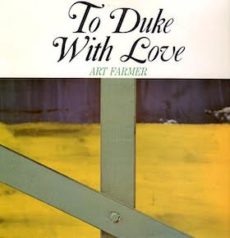
To Duke With Love~Art Farmer | By Eddie Carter
I was looking for something to play a few nights ago when I came across a 1976 album by one of my favorite trumpet players, Art Farmer. To Duke With Love (East-West EW-8012) is this morning’s choice from the library submitted for your consideration. I’d forgotten how much I enjoyed this record and after listening, began writing about it for this week’s column. This album was one of my Mom’s favorites and she loved the velvety softness of Art’s flugelhorn. It was because of her love of jazz and the joy of listening to the albums together that I became a fan also. Art plays the flugelhorn exclusively on this six-song letter to Duke Ellington and he’s working with a brilliant trio, Cedar Walton on piano, Sam Jones on bass, and Billy Higgins on drums. My copy used in this report is the 1978 Stereo reissue (Inner City Records IC 6014).
Arthur Stewart Farmer’s first album as a leader was Work of Art (1954). He co-led The Jazztet with Benny Golson from 1959 to 1962. After the group disbanded, he had a successful twenty-year solo career until the band reformed in 1982 to 1986. Art reunited with The Jazztet again during the nineties to perform live at various festivals. He was comfortable in any setting and could play anything, on an uptempo tune, Farmer played vigorously with a fiery passion. At midtempo, his gift of expression was precisely defined, and with slow-tempo ballads and standards, Art skillfully constructed them with innocence and romanticism.
Cedar Walton was an immensely gifted and prolific pianist who typically built perfect solos from simple ideas, proving himself an exemplary accompanist and versatile leader in large ensembles and small groups.
Sam Jones had a beautiful sound on bass with a splendid technique and a marvelous grasp of harmony, he’s best known as one-third of the rhythm section in The Cannonball Adderley Quintet and Sextet. Sam was among the first to make the cello sound plausible on a jazz album, and his bass lines always enhanced any record as the leader of the date or as a sideman. Billy Higgins was the drummer of choice on some of the most memorable Hard-Bop and Free Jazz recordings. He appeared on over seven hundred records including Funk and Rock albums. There was an unmistakable power in his playing, but when called upon, Billy’s drumming could also be considerate and thoughtful, and he brought his A-game every time he sat behind the drums.
Side One opens with the 1935 jazz standard, In a Sentimental Mood by Duke Ellington and Manny Kurtz. Art makes an enticingly delicate introduction to the melody, then takes the lead on a slow and sultry statement. Cedar follows with an impressively tender interpretation into the foursome’s luscious close. The 1931 Duke Ellington, Irving Mills standard, It Don’t Mean a Thing begins with an energetic introduction by Jones backed by just Higgins before Farmer and Walton come in to state the theme. Walton takes off first with a briskly stated opening chorus after a brief riff by Higgins. Farmer follows, adding some searing heat on the next performance. Jones gets the last word with an exuberant closing statement ahead of the quartet’s exit.
The Star-Crossed Lovers appeared on Such Sweet Thunder (1957) as part of a twelve-part suite based on the works of William Shakespeare. This Duke Ellington, Billy Strayhorn tune gives Farmer a showcase to emerge ever so gently on the theme after a luscious introduction by Cedar. Art gives a pretty presentation as sweet as Johnny Hodges achieved on the original song. Cedar also performs beautifully on a gorgeous finale before the coda. Duke Ellington’s The Brown Skin Girl In The Calico Gown was first recorded by Duke and Ella Fitzgerald on Ella at Duke’s Place (1965). It starts Side Two with a duet by Farmer and Jones, segueing into the ensemble’s touching theme. Farmer has the first spot with an attractive interpretation. Walton takes the reins next and is enchanting preceding the unison ending.
The standard Lush Life is afforded a slow, meditative treatment on the opening chorus. Billy Strayhorn wrote the song in 1933 but fine-tuned it until 1938 when he performed it for Ellington. The song’s lyrics describe the author’s weariness of the nightlife after a failed romance. Art paints from a seductive palette of delicacy and elegance on the first solo. Cedar infuses the next reading with a tender expression of love, culminating an exquisite rendition. The album wraps with Duke Ellington’s Love You Madly, written in 1950 and featured on Duke’s Big 4 (1974). After a short Walton introduction, the ensemble provides a happy aura led by Farmer who grooves at midtempo on the melody and lead solo. Walton eases into a medium groove on the final reading that’s an absolute joy.
To Duke With Love was recorded in 1975 by East-West Music in Japan, less than one year after Ellington passed away. The engineer is Ben Taylor and Stan Ricker mastered the album at JVC Cutting Center. It has an excellent soundstage, effectively capturing the essence of Art’s tastefully restrained tone. Farmer recorded over sixty albums as a leader, over seventy as a sideman, and an additional twelve as a member of The Jazztet. He passed away from a heart attack on October 4, 1999, at age seventy-one. If you’re a fan of Art Farmer and in the mood for some soothing jazz, To Duke With Love is a great session honoring one of the greatest composers of all time, Duke Ellington. It’ll repay its owner with many listens for years to come and I highly recommend it for a spot on your shelf! ~Duke’s Big 4 (Pablo 2310-703), Ella at Duke’s Place (Verve Records V-4070/V6-4070), Such Sweet Thunder (Columbia CL 1033) – Source: Discogs.com ~In a Sentimental Mood, It Don’t Mean A Thing, Lush Life – Source: JazzStandards.com ~Art Farmer, The Star-Crossed Lovers, The Brown Skin Girl In The Calico Gown, Lush Life, Love You Madly – Source: Wikipedia.org © 2021 by Edward Thomas Carter

More Posts: choice,classic,collectible,collector,history,instrumental,jazz,music,trumpet
Requisites
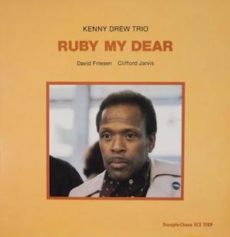
The Kenny Drew Trio steps into the spotlight for this morning’s discussion with their 1980 album, Ruby My Dear (SteepleChase Records SCS 1129). This was Kenny’s fourth release on the Danish label using a trio format, the first three are Dark Beauty (1974), If You Could See Me Now (1975), and Morning (1976). Here, Drew’s working with David Friesen on bass and Clifford Jarvis on drums. My copy used in this report is the US Stereo album sharing the Danish catalog number.
Kenny began playing the piano at age five, and later attended the High School of Music & Art. His first recording was with Howard McGhee. He’s also worked with John Coltrane, Buddy DeFranco, Johnny Griffin, Coleman Hawkins, Charlie Parker, Buddy Rich, Dinah Washington, and Lester Young among others. Drew also led his own groups throughout the fifties and has an extensive discography as a leader and sideman. Bassment, an uptempo original by Kenny launches Side One with an exciting introduction into a spirited melody. The leader’s opening solo sizzles right from the start, then David ends with an effective climax into the threesome’s closing chorus.
Thelonious Monk composed some of the most evocative standards in jazz and Ruby My Dear is one of his most beautiful songs. It’s named for Monk’s first love, Rubie Richardson, and was originally released in 1947, then later reissued on Genius of Modern Music, Volume 1 (1952). The trio starts the melody speaking elegantly, then Drew provides a solo of serene beauty into an intimate coda. Gentle Rain possesses a Bossa Nova flavor as originally intended by its creator, Luis Bonfá who wrote it with Matt Dubey. It premiered in The Gentle Rain that Bonfá scored with Eumir Deodato a year later. The group’s theme is sweet and lovely. Kenny swings softly on the only reading with an enchanting reading.
Side Two starts with Kenny’s Ending. This very pretty ballad opens with a short introduction by the trio preceding an elegant melody. Drew cultivates a very beautiful tone into a memorable interpretation. Friesen delivers the closing performance with easy assurance, ending with a tranquil finale. Sunspots by Austin Wells gets underway with a very pretty introduction of gentle cascades on the piano, gradually growing to a lively frolic on the opening chorus. Kenny starts the solos with a lengthy interpretation that’s a work of art. David steps in next for a rousing statement of effortless artistry. Clifford has an invigorating exchange with the leader and bassist on a breathtaking finale ahead of a soft climax.
Ruby My Dear was produced by SteepleChase Records’ Founder Nils Winther and the man behind the dials is Freddy Hansson. Both men put their talents to great use because the sound quality is astonishing with superb fidelity, placing the trio in your listening room to fill your ears with excellent music. If you’re seeking some outstanding bop for your library, I enthusiastically offer for your consideration, Ruby My Dear by The Kenny Drew Trio. It’s a perfect introduction to Drew’s music for newcomers, and an exceptional companion to his other three albums as well!
~ Dark Beauty (SteepleChase SCS-1016), Genius of Modern Music, Volume 1 (Blue Note BLP 5002), If You Could See Me Now (SteepleChase SCS-1034), Morning (SteepleChase SCS-1048), Ruby My Dear (Blue Note 549) – Source: Discogs.com ~ Kenny Drew, Ruby My Dear – Source: Wikipedia.org © 2021 by Edward Thomas Carter
More Posts: choice,classic,collectible,collector,history,instrumental,jazz,music,piano
Requisites
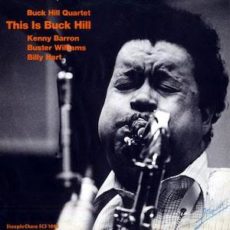
This Is Buck Hill ~ Buck Hill Quartet | By Eddie CarterMy first choice from the library for April is by one of the hidden stars of jazz. His name was Roger Wendell Hill, but everyone would know him by his nickname Buck. Hill began his professional career as a musician in 1943 while working as a Washington D.C. mailman. Buck first worked with Charlie Byrd in the late fifties, later appearing on albums by Shirley Horn, Alan Houser, and Shirley Scott. He also performed with Miles Davis, Dizzy Gillespie, Max Roach, and Sonny Stitt but didn’t record as a leader until the late seventies. Buck also played the clarinet and soprano sax, but the tenor sax was his primary instrument. This Is Buck Hill (SteepleChase Records SCS 1095) is a 1978 release offering all the excitement and energy of an after-hours jam session. He’s working with an outstanding rhythm section, Kenny Barron on piano, Buster Williams on bass, and Billy Hart on drums. My copy used in this report is the 1978 US Stereo album.
Side One starts with Tokudo, an original by Buster Williams that the bassist would record again a year later on his album, Heartbeat. This tune begins at a brisk tempo for the melody, and everyone is afforded a solo opportunity. Buck delivers the goods with aggressive momentum on the first presentation. Kenny shifts into high gear on the next reading. Buster dips into a soulful groove on the third statement, and Billy gives a dazzling performance before the out-chorus. Yesterdays by Jerome Kern and Otto Harbach is one of the most recorded jazz and pop compositions since its creation in 1933. The group swings at a medium tempo on the main theme. Hill gradually builds the excitement on the first statement to a sensational climax. Barron offers a beautiful sentiment in the next reading. Williams swings to a groovy beat preceding a luscious ending.
A blistering introduction by Billy begins Oleo by Sonny Rollins. The foursome gets things underway with a very quick melody. Buck takes off like the Road Runner for a high-octane fast ride including three unaccompanied verses of white heat. Kenny powers the next interpretation with energetic exertion, then Billy has a final furious exchange with Buck culminating into a brilliant climax.
Side Two begins with the first of three selections by the leader. I’m Aquarius is a beautiful ballad that originally appeared in a suite on trumpet player Alan Houser’s 1973 album, No Samba. It opens elegantly with a cascading flow of tenderness from Barron segueing gently into the melody with Hill directing the ensemble softly. The tenor remains tastefully restrained on the opening statement. Kenny closes with a delicate sensitivity leading to a sultry coda.
S.M.Y. is a lively original possessing an irresistible beat exuding happiness from the first notes of the opening chorus. The saxophonist starts the ball rolling with some vigorous blowing. Kenny digs in for some good rocking jazz next, then Buck supplies an abundant supply of high-voltage current into the theme’s reprise. The album closes with Two Chord Molly, an uptempo tune allowing everyone except Hart to contribute lengthy readings. The trio lays down a swinging line on the introduction with Hill providing vast amounts of energy to the festive melody. Barron delivers an enthusiastically rigorous lead solo. Buster gets down to business next with an intense workout. Buck accelerates on the closer producing electrically charged notes. During Hill’s statement, you can hear someone commenting (I’m sure positively) on his performance.
The man behind the controls is Elvin Campbell, whose work can be heard on many jazz albums. This record is well recorded, and the highs, midrange, and bottom end are all very detailed with an excellent soundstage and crystal-clear clarity. Buck recorded three more albums for SteepleChase, Scope (1979), Easy To Love (1982), and Impressions (1983). Hill passed away at age ninety on March 20, 2017. You’d never suspect this was the quartet’s first recording together because the music is excellent, and their interaction is seamless. Buck also meets the challenge of writing good compositions with strong performances inspired by Kenny Barron, Buster Williams, and Billy Hart. On your next vinyl hunt, I’ll hope you’ll consider This Is Buck Hill for a spot in your library. He was a veteran jazzman who certainly deserves a place alongside the greatest to ever blow the tenor saxophone! ~ Easy To Love (SteepleChase SCS-1160), Heartbeat (Muse Records MR 5171), Impressions (SteepleChase SCS 1173), No Samba (Straight Ahead ARS 001), Scope (SteepleChase SCS 1123) – Source: Discogs.com ~ Oleo, Yesterdays – Source: JazzStandards.com ~ Alan Houser, No Samba – Source: Album liner notes by J.R. Taylor ~ Roger Wendell Hill, Tokudo, Heartbeat, Scope, Easy To Love, Impressions, Elvin Campbell – Source: AllMusic.com, Wikipedia.org © 2021 by Edward Thomas Carter
More Posts: choice,classic,collectible,collector,history,instrumental,jazz,music,saxophone
Requisites
Neo/Nistico ~ Sal Nistico | By Eddie Carter
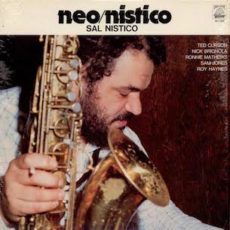
This morning’s choice from the library is another recent acquisition that introduced me to tenor saxophonist, Sal Nistico. Salvatore was born on April 2, 1938, in Syracuse, New York, and began playing the alto sax, before switching to tenor in 1956. He also played baritone sax for a few years. Sal was a member of Count Basie’s and Woody Herman’s bands and also played with Nat Adderley, Chet Baker, Don Ellis, Curtis Fuller, Dusko Goykovich, Johnny Griffin, The Jazz Brothers Band, Buddy Rich, and Stan Tracey to name a few. Neo/Nistico (Bee Hive Records BH 7006) finds him leading a world-class sextet, Ted Curson on flugelhorn (tracks: A1, B3), trumpet (tracks: B1, B2), Nick Brignola (tracks: A1, B2) on baritone sax, Ronnie Matthews on piano, Sam Jones on bass, and Roy Haynes on drums. My copy used in this report is the original 1978 Mono release.
Side One takes off with Anthropology by Dizzy Gillespie and Charlie Parker set at a blistering pace with both saxes backed by Roy presenting the melody. Nick applies searing heat to the opening statement, then Ted gives a high-energy reading that ascends to an exciting climax. Sal sizzles like a firecracker about to explode on the third solo, and Ronnie stirs it all together in an exhilarating statement preceding the front-line’s exchange and ensemble’s abrupt close. The beat slows down for You Don’t Know What Love Is by Gene de Paul and Don Raye. The quartet opens with a sensuous theme. Nistico begins the first reading with a delicately elegant conversation. Matthews begins the second statement with a soothing, almost seductive quality that’s beautifully tender. Nistico swings briefly on a robust return culminating in a gorgeous ending.
The quartet continues with a brisk workout of Be My Love by Nicholas Brodsky and Sammy Cahn. It was written in 1949 for Mario Lanza who sang it in the 1950 film, The Toast of New Orleans. The trio makes a feisty introduction to Sal’s lively theme and enthusiastic lead solo. Ronnie follows with a jubilant reading, then Sam cuts into the next statement like a hot knife through butter. Roy engages in a satisfying exchange with Sal that doesn’t stop swinging until the upbeat ending. Blues For K.D. is a Nistico original written to honor trumpeter Kenny Dorham that charges out of the gate on a vigorous melody. The leader is up first and delivers a torrid solo, then Curson ignites a mighty fire with his trumpet. Matthews keeps the flame burning next, and Haynes does some heavy cooking on the closer amid an interchange of ideas with all three soloists.
Sal’s Bambu is a festive tune he composed while playing around on the piano in Europe. It’s a danceable mix of Afro-Calypso and Latin that’s highly rhythmic, infectious, and fun. The solo order is Brignola, Curson, Matthews, Haynes, and all four soloists invite us to party with them until an abrupt halt. Fee-Fi-Fo-Fum by Wayne Shorter was first recorded by its composer on Speak No Evil (1966). The quintet starts with a stroll on the opening chorus at a leisurely tempo. Nistico starts the first solo conveying a light mood that’s joyously carefree and happy. Curson begins the next reading with an easy-going attitude, building steadily into an enjoyable groove. Matthews adds a great finishing touch with a briskly efficient finale cooking over a mild flame from Jones and Haynes ahead of the quintet’s closing chorus.
Neo/Nistico was produced by Joe Neumann, founder of Bee Hive Records, and engineered by Fred Norsworthy. I was very impressed with the record’s sound quality. It has an excellent soundstage with crystal-clear highs, a sharp midrange, and solid bass. Sal’s career as a musician lasted nearly three decades, and he spent a lot of time performing in Europe. He passed away on March 3, 1991, at age fifty-three. If you’re a fan of the tenor sax, Post-Bop, or are just discovering him as I have, I offer for your consideration, Neo/Nistico by Sal Nistico, an album of six performances that sparkle and swing from start to finish. I’m very happy I found it and have it in my library. After one audition, I’m sure you’ll feel the same!
~ Speak No Evil (Blue Note BLP 4194/BST 84194) – Source: Discogs.com ~ Anthropology, You Don’t Know What Love Is, Be My Love – Source: Wikipedia.org © 2021 by Edward Thomas Carter
More Posts: choice,classic,collectible,collector,history,instrumental,jazz,music,saxophone
Requisites
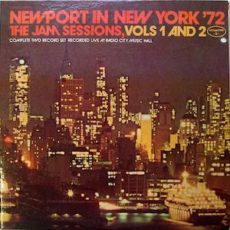
Newport In New York ’72: The Jam Sessions, Vols. 1 & 2 ~ Various Artists | By Eddie Carter
If you love music as I do, I’m sure you’ve attended several live concerts, festivals, and performances in your lifetime. I’m also certain that there’s at least one that stands out and is so special, it’s become a truly unforgettable experience and a timeless memory. For me, that date was July 3, 1972, and I remember it like it was yesterday. I got the opportunity to visit Radio City Music Hall for a thrilling summit that was the ultimate jam session and the greatest jazz concert I’d ever seen. The night only got better when the audience learned that our show was being recorded to be released and enjoyed on LP. This morning’s choice from the library is Newport In New York ’72 – The Jam Sessions, Vols. 1 & 2 (Cobblestone CST 9025–2) featuring highlights of that night’s performance alongside two tunes from the July 6 concert.
The personnel reads like an encyclopedia of jazz luminaries: Cat Anderson (tracks: A1, B1), Dizzy Gillespie (tracks: C1, D1), Jimmy Owens (tracks: A1, B1) on trumpet, Benny Green (tracks: C1, D1) on trombone, Charles McPherson (tracks: A1, B1) on alto sax, Stan Getz (tracks: C1, D1), Buddy Tate (tracks: A1, B1) on tenor sax, Milt Jackson (tracks: C1, D1) on vibes, Roland Hanna (tracks: A1, B1), Mary Lou Williams (tracks: C1, D1) on piano, Milt Buckner (tracks: A1, B1) on organ, Kenny Burrell (tracks: C1, D1) on guitar, John Blair on violin (track: C1), Percy Heath (tracks: C1, D1), Charles Mingus (tracks: A1, B1) on bass, Alan Dawson (tracks: A1, B1), Max Roach (tracks: C1, D1) on drums, Big Black (tracks: C1, D1) on congas. My copy used in this report is the original US Stereo album.
Side One kicks off with Count Basie’s 1938 classic, Jumpin’ at The Woodside, co-written with Eddie Durham and Jon Hendricks. It’s one of his band’s signature tunes and the title comes from Harlem’s old Woodside Hotel, a popular spot for jazz musicians of the era and Negro baseball teams to stay. Buckner starts with a lively introduction segueing into the melody. Buddy opens with a joyful statement, then Jimmy swings with compelling strength. Charles takes an exciting joyride on the third reading. Cat then wails into the stratosphere next. Milt ignites an energetic fuse including a few notes of the wedding march on the fifth solo. Roland swings consistently on a short statement, then Charles takes his bass for a brief brisk walk. Alan has a quick exchange with Mingus before applying the finishing touches with a concise comment into the ending theme.
Lo-Slo Bluze by Jimmy Owens gets Side Two underway with the composer showing tasteful restraint on the opening chorus and first solo. Tate personalizes the second statement with a graceful, heart-melting interpretation. Anderson raises the temperature significantly on the third reading soaring to a very high level. McPherson takes over to touch the audience with a soulfully satisfying performance, then Buckner starts the next presentation feeling at ease, then gradually builds the tension steadily to a riveting climax. Hanna turns in a superb effort on a rhythmically infectious reading and Mingus gets the final spot for a sensuously smooth improvisation leading to the ensemble’s reprise and coda.
Bags’ Groove by Milt Jackson was written in 1952 and first heard on Wizard of The Vibes that year. It starts the second record, and the title is from Milt’s nickname given to him by a Detroit bass player, referring to the bags under his eyes after one night of heavy drinking. The group brings the song to life with a collective theme at a leisurely tempo. The beat turns upward for Bennie’s opening chorus, then Stan taps into a creative vein on the second reading. Bags follows with a breathtaking presentation. John puts himself into his only interpretation with boundless energy and unbridled passion. Dizzy steps up next, opening the throttle a little further with a stunning showcase. Mary Lou handles the next performance with zestful virtuosity. Percy gives a brief impression that he’s soloing next, but steps aside for Max who provides a thunderous finale ahead of the out-chorus.
Night In Tunisia by Dizzy Gillespie and Frank Paparelli is off to the races from the first notes of the introduction by the rhythm section leading to the ensemble’s theme. Gillespie launches into an electrifying lead solo setting the tone. Burrell charges the next spot with a jolt of high-voltage energy, then Getz provides an infectious enthusiasm on the third statement. Green takes an enjoyable romp into the next presentation propelled by Big Black’s congas. Jackson is firing on all cylinders during his turn, then Williams takes charge with authority on the next solo complemented by Heath’s brilliant bass and Roach’s vigorous brushwork. Big Black adds some spicy sauce to the next reading, receiving the crowd’s approval before the closing ensemble. Roach provides the exclamation point with radiant intensity culminating a thoroughly satisfying set to a thunderous ovation from the crowd.
Both concerts were produced by Don Schlitten who co-founded Cobblestone Records with Joe Fields and later founded Xanadu Records. Fields founded the jazz labels, Muse, Onyx, and High Note. Michael DeLugg is the man behind the dials. His work offers a wealth of wonderful detail from each instrument and the energy of the crowd. It also possesses a solid soundstage placing the listener in a great seat to enjoy the musicians. There are a total of six records in this series and all are worthy of consideration for your library. If you’re a fan of live jazz, I invite you to reserve your seat for Newport In New York ’72 – The Jam Sessions, Vols. 1 and 2. I guarantee you’ll hear some truly great performances that’ll leave an indelible imprint you won’t soon forget!
~ Newport In New York ’72 – The Jam Sessions, Vols. 3 and 4 (Cobblestone CST 9026-2), Newport In New York ’72 – The Jimmy Smith Jam, Vol. 5 (Cobblestone CST 9027), Newport In New York ’72 – The Soul Sessions, Vol. 6 (Cobblestone CST 9028), Newport In New York ’72 – The Complete Six Record Set, Vols. 1–6 (Cobblestone CST 9032–6), Wizard of The Vibes (Blue Note BLP 5011) – Source: Discogs.com ~ Night In Tunisia – Source: JazzStandards.com ~ Bags’ Groove, Jumpin’ At The Woodside – Source: Wikipedia.org © 2021 by Edward Thomas Carter
More Posts: choice,classic,collectible,collector,history,instrumental,jazz,music