

Requisites
The Wes Montgomery Trio | By Eddie Carter
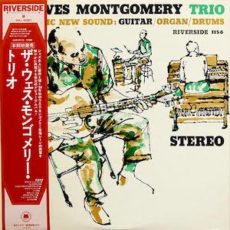
“It wouldn’t be easy,” I thought to myself. Other reviewers have been crafty, cunning, and just as resourceful when writing about Wes Montgomery. “What could I say, that hasn’t already been said about one of the true innovators on the guitar?” Staring at the blank page and flashing pointer on the computer screen, I anxiously awaited an answer that never came. I took one of my favorite albums down from the shelf to listen to after writing a review, placed the record on the turntable, and began to listen. The Wes Montgomery Trio (Riverside RLP 12-310/RLP 1156) was recorded and released during that magical year of 1959 shortly after he relocated from Indianapolis, Indiana to New York City. The other members of his trio are Melvin Rhyme on guitar and Paul Parker on drums. My copy used in this report is the 1975 Riverside Original Recording Series Japanese Stereo reissue (SMJ-6080) by Victor Musical Industries, Inc.
Side One opens with one of the greatest jazz standards ever recorded, ‘Round Midnight by Thelonious Monk, Cootie Williams, and Bernie Hanighen. The trio begins with an elegantly tender introduction by Wes that flows softly into a graceful theme with Melvin and Paul trailing him ever so gently. Montgomery is the only soloist and gives a mesmerizing interpretation with the delicacy of fine porcelain figurines preceding the ensemble’s heartwarming finale. Yesterdays by Jerome Kern and Otto Harbach was an instant hit after the Broadway musical, Roberta (1933), and remains an enduring standard to this day. The trio starts with a beautifully constructed, bluesy melody. The guitarist takes the reins again for the song’s only interpretation and unfolds an infectious performance that’ll have the listener snapping their fingers and tapping their toes.
The End of a Love Affair is from the pen of Edward C. Redding and was written in 1950. It’s a marvelous song that hasn’t been over-recorded. Wes would revisit it a few years later on Goin’ Out of My Head (1966) backed by The Oliver Nelson Orchestra. The group’s rendition is uptempo with Wes in front on the melody, then making use of his octaves and chords for an effervescent first solo. Melvin dances over the pedals on the next reading leading to the exit. Benny Golson wrote Whisper Not in 1956 while he was with The Dizzy Gillespie Big Band. It’s one of his most recorded compositions and the trio starts with a warm and mellow theme. Wes starts the soloing at a low glow and Melvin adds a modest comment before the close. Ecorah by Horace Silver is also taken at midtempo, and one can’t help but marvel at the trio’s collective improvisation during the first and final choruses.
The inspiration for Satin Doll by Duke Ellington, Billy Strayhorn, and Johnny Mercer comes from a famous black stripper who used the song’s title as her stage name. The trio pays homage to the standard with a happy theme and closing chorus that’s sure to put a smile on your face with its catchy beat. Melvin shows off a wonderful articulation on the first reading, followed by Wes who keeps things swinging with some relaxed cooking on the closer. Missle Blues, the first of two tunes by Montgomery, is named after the Indianapolis club he played in. This mid-tempo original begins with a compelling swing that the ensemble states proficiently in the melody. Melvin and Wes are the featured soloists and the organist opens with a velvety smooth interpretation. Wes strolls into the closing performance at a casual flow punctuated by Paul’s brushwork.
Too Late Now by Burton Lane and Alan Jay Lerner is a very lovely standard beginning with a collective, wistful opening chorus. Montgomery refreshes this chestnut with a breathtaking lead solo tinged with melancholy. Melvin expresses a remorseful answer to the guitarist ahead of the trio’s elegant closing thoughts culminating with a delicate climax. Wes’ Jingles ends the album allowing each member solo space beginning with Rhyme who cruises happily on the melody and first solo. Wes gets into a swinging groove on the second statement, and Paul has a quick exchange with Melvin and Wes leading to the reprise and finale. Jack Higgins engineered the original recording and Victor’s remastering of the tapes is nearly perfect. The sound quality is excellent, but on Jingles, both the guitar and organ are miked too strongly and there’s a bit of harshness on both solos and the out-chorus.
In fairness to Victor, I think this miking error may have happened during the original recording. That issue aside, the rest of the album’s sound is superb and worth auditioning for a spot in your jazz library. Wes Montgomery influenced countless guitarists with his creativity, innovation, and outstanding technique. Many have paid homage to him with original songs and tribute albums and whether working with big bands, small groups, or strings, his playing showed he could converse musically in any setting. He passed away from a heart attack on June 15, 1968. If you’re a fan of Wes Montgomery and enjoy jazz guitar, The Wes Montgomery Trio is a great album for any enthusiast and perfect for listening any time of the day or night!
~ Dizzy Gillespie and His Orchestra (Fanfare N 46 146); Goin’ Out of My Head (Verve Records V-8642/V6-8642) – Source: Discogs.com ~ Dizzy Gillespie and His Orchestra – Source: JazzDisco.org ~ ‘Round Midnight, Yesterdays, The End of a Love Affair, Whisper Not, Satin Doll, Too Late Now – Source: JazzStandards.com ~ Wes Montgomery – Source: Wikipedia.org © 2021 by Edward Thomas Carter
More Posts: choice,classic,collectible,collector,guitar,history,instrumental,jazz,music
The Quarantined Jazz Voyager
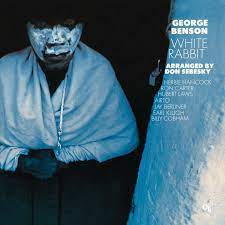
As the Delta variant cases are increasing and vaccinations have leveled out masking and social distancing remain the modus operandi of the day. In my continuation of revisiting albums I have in my collection. So this week I turn to George Benson and his 1972 recording White Rabbit. It was recorded on November 23, 24 & 30, 1971 at Van Gelder Studio in Englewood Cliffs, New Jersey. The album was produced by Creed Taylor, engineered by Rudy Van Gelder and Don Sebesky did all the arrangements. The album cover was designed by Bob Ciano and the cover photography was taken by Pete Turner. The original cover photo was of a Pondo tribe woman that he photographed in South Africa in 1970.
Don Sebesky brought the title track to Taylor and Benson’s attention as Benson had never heard of Jefferson Airplane or Grace Slick. However, Benson doesn’t read music, he just heard the song and automatically fell into the groove, proving that music doesn’t exist on the page, only in the air. White Rabbit was his second CTI Records project and his first Grammy Award nomination in the category of Best Jazz Performance by a Group. This continues to be one of my road trip albums.
Track Listing | 36:18- White Rabbit (Grace Slick) ~ 6:55
- Theme From Summer Of ‘42 ( Michel Legrand) ~ 5:08
- Little Train | from Bachianas Brasileiras (Heitor Villa~Lobos) ~ 5:47
- California Dreamin’ (John Phillips, MIchelle Phillips) ~ 7:22
- El Mar | The Sea (George Benson) ~ 10:49
- George Benson ~ guitar
- Jay Berliner ~ Spanish guitar
- Earl Klugh ~ acoustic guitar (5)
- Herbie Hancock ~ electric piano
- Ron Carter ~ electric bass (1, 3), double bass (2, 4, 5)
- Billy Cobham ~ drums
- Airto Moreira ~ percussion, vocals
- Phil Kraus ~ vibraphone, percussion
- Gloria Agostini ~ harp
- Phil Bodner ~ flute, alto flute, oboe, english horn
- Hubert Laws ~ flute, alto flute, piccolo, flute solo (1)
- George Marge ~ flute, alto flute, clarinet, oboe, English horn
- Romeo Penque ~ english horn, oboe, alto flute, clarinet, bass clarinet
- Jane Taylor ~ bassoon
- Wayne Andre ~ trombone, baritone horn
- Jim Buffington ~ french horn
- John Frosk ~ trumpet, flugelhorn, trumpet solo (1, 5)
- Alan Rubin ~ rumpet, flugelhorn

More Posts: adventure,album,club,genius,jazz,museum,music,preserving,restaurant,travel
The Quarantined Jazz Voyager
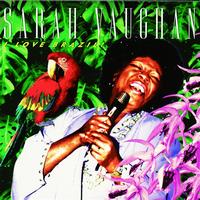
Masking and social distancing are still my mantra in maintaining my health and this pandemic has given me a great opportunity to sit and listen to albums I have’nt in a long time. So as I revisit my music collection this week I place on the turntable the 1977 studio album by Sarah Vaughan titled I Love Brazil! If you love Vaughan’s voice and the music of Brazil, you will want this in your collection.
The session was recorded on October 31 ~ November 7, 1977 and was her first album released on Pablo Records. This was Vaughan’s first but not last foray into Brazilian music, bossa nova and mpb. It was followed by Copacabana in 1979, and Brazilian Romance in 1987.
Track Listing | 54:43- If You Went Away | Preciso Aprender a Ser Só (Ray Gilbert, Marcos Valle, Paulo Sérgio Valle) ~ 4:25
- Triste (Antônio Carlos Jobim) ~ 2:58
- Roses and Roses | Das Rosas (Dorival Caymmi, Gilbert) ~ 3:23
- Empty Faces | Vera Cruz (Lani Hall, Milton Nascimento) ~ 6:26
- I Live to Love You | Morrer de Amor (Oscar Castro-Neves, Luverci Fiorini, Gilbert) ~ 3:54
- The Face I Love | Seu Encanto (Gilbert, Carlos Pingarilho, M. Valle) ~ 3:29
- Courage | Coragem (Nascimento, Cootie Williams) ~ 3:42
- The Day It Rained | Chuva (Pedro Camargo, Durval Ferreira, Gilbert) ~ 4:40
- A Little Tear | Razão de Viver (Deodato, Gilbert, P.S. Valle) ~ 4:07
- Like a Lover | Cantador (Alan and Marilyn Bergman, Dori Caymmi, Nelson Motta) ~ 4:45
- Bridges | Travessia (Nascimento, Fernando Brant, Gene Lees) ~ 4:12
- Someone to Light Up My Life | Se Todos Fossem Iguais a Vocë (Jobim, Vinicius de Moraes, Lees) ~ 3:26
- Sarah Vaughan ~ vocals
- Dorival Caymmi – vocals (3)
- Milton Nascimento – acoustic guitar, vocals (4,7,11)
- Dori Caymmi – acoustic guitar, vocals (10)
- Nelson Angelo – electric guitar (4,7,11)
- Hélio Delmiro – electric guitar (1-3,6,8-9,12)
- Danilo Caymmi – flute (4,7,11)
- Paulo Jobim – flute (4,7,11)
- Mauricio Einhorn – harmonica (8)
- Antônio Carlos Jobim – piano (2,12)
- José Roberto Bertrami – electric piano (1-3,6,8-9), organ (4,7,11)
- Edson Frederico – orchestration (1-3,5-6,8-9,12), piano (5)
- Sergio Barroso – acoustic bass (1-2,6,9,12)
- Claudio Bertrami – acoustic bass (3,8)
- Novelli – electric bass (4,7,11)
- Wilson das Neves – drums (1-3,6,8-9,12)
- Robertinho Silva – (4,7,11)
- Ariovaldo – percussion (1-4,6-7,9,11-12)
- Chico Batera – percussion (1-4,6-7,9,11-12)
- Luna – percussion (12)
- Marçal – percussion (12)
- Durval Ferreira – creative director
- Sheldon Marks – design, layout design
- Norman Granz – design, layout design, liner notes
- Mário Jorge Bruno – engineer
- Tamaki Beck – mastering
- Aloísio de Oliveira – producer
More Posts: adventure,album,club,genius,jazz,museum,music,preserving,restaurant,travel,vocal
Daily Dose Of Jazz…
Sameer Gupta was born July 1, 1976 in San Francisco, California. Now based in Brooklyn, New York he is a co-founder of Brooklyn Raga Massive, the jazz ensemble The Supplicants and drummer for the Marc Cary Focus Trio.
He has also worked with vidyA, Kosmic Renaissance, Grachan Moncur III, Victor Goines, Vincent Gardner, Sekou Sundiata, Sonny Simmons, Marcus Shelby, Calvin Keys, Richard Howell, Dayna Stephens, and Julian Lage.
Percussionist, tabla player, and composer Sameer Gupta continues to compose, perform and record.
More Posts: drums,history,instrumental,jazz,music,percussion,tabla
Requisites
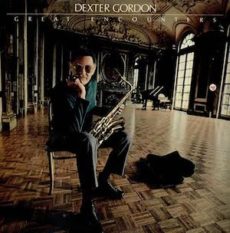
Great Encounters ~ Dexter Gordon | By Eddie Carter
Dexter Gordon steps into the spotlight for this report with two sessions making up the album, Great Encounters (Columbia JC 35978). Side One consists of two tracks recorded live at Carnegie Hall on September 23, 1978. The three tracks on Side Two were recorded at CBS Recording Studios on May 1, 1978, and January 26, 1979. The personnel appearing with Dexter on this record are Woody Shaw on trumpet, Curtis Fuller on trombone, and Eddie Jefferson on vocals (tracks: B1, B3), Johnny Griffin on tenor sax (tracks: A1, B1), George Cables on piano, Rufus Reid on bass, and Eddie Gladden on drums. My copy used in this report is the 1979 US Stereo album.
Blues Up and Down was written in 1950 by Gene Ammons and Sonny Stitt. This tune is the epitome of the terms, “blowing session”, or “cutting session”, and was first heard on Battle of The Saxes. Both saxophonists begin the melody at a blistering speed. Dexter gives a lengthy performance rivaling the speed of Indy 500 race cars. Johnny responds with an amazing quickness on the next reading. Dex and Griff continue sparring with each other vigorously until the climax. Cake, a Gordon original, was written in 1962, premiering on his album Go, as Cheese Cake. The trio makes an efficient introduction, then both horns work together on the melody. Gordon goes first with a heated reading. Griffin delivers the second solo with the impact of a brick through a plate-glass window and Gladden has a brief conversation with both saxes into the close. Both songs also appear on the CD album, Live at Carnegie Hall (1998).
The mood changes to start Side Two with a rollicking rendition of Gordon and Jefferson’s original Diggin’ In. The front line gets the party started with a lively introduction, then Jefferson stokes the engines with an impressive vocal melody and an exchange with Dexter on the lead solo. The saxophonist takes over for a jubilant reading that swings like mad. Woody comes in next to fuel the rhythm section with fire from his horn. Curtis gets the last word with an enthusiastic presentation. Ruby My Dear was written by Thelonious Monk in 1947 and appeared on Genius of Modern Music (1952). Lyrics were added by Sally Swisher for Carmen McRae who sang it on her tribute album, Carmen Sings Monk (1990). Gordon’s opening statement is picturesque, lovely, and elegantly presented. Cables expresses a haunting dreaminess on the second reading ahead of a gentle climax.
It’s Only a Paper Moon was written in 1933 by Harold Arlen, E.Y. Harburg, and Billy Rose. The song starts on a joyous introduction by the trio segueing into the lively opening chorus by Dexter. Eddie creates pure pleasure in a vigorous vocal interpretation. Dex is inspired on the following statement, then Woody has a brief uptempo improvisation that’s especially gratifying. George communicates his excitement next on a short statement and Curtis hits a perfect stride with a concise comment before the ending. The choice of using Jefferson for this album happened when Dexter met up with him at The Tin Palace after performing at The Village Vanguard. My only regret is that he couldn’t be used for the entire album instead of just two tracks. Eddie was an innovator of Vocalese, his treatments of classic songs and ballads were fresh and exciting, possessing a tremendous fire and imagination.
Six months after this recording session, Eddie Jefferson was shot and killed after leaving Baker’s Keyboard Lounge in Detroit, Michigan on May 8, 1979, by a disgruntled dancer he fired. The engineers behind the dials on Great Encounters are Tom Arrison (tracks: A1, A2), Don Puluse (track: B1), and Jerry Smith (tracks: B2, B3). The live and studio tracks are wonderfully recorded with a stunning soundstage that places the listener in the concert venue and the studio. If you’re a fan of Dexter Gordon, Great Encounters is an underrated album of wonderful performances that I recommend for your library, and it might just become one of your favorites!
~ Vocalese – a musical composition consisting of the singing of melody with vowel sounds or nonsense syllables rather than text, as for special effect in classical compositions, in polyphonic jazz singing by special groups, or in virtuoso vocal exercises. Source: Dictionary.com
~ Battle of The Saxes (Prestige PRLP 107), Carmen Sings Monk (Novus 3086-1-N), Extensions (Atlantic SD 19258), Genius of Modern Music (Blue Note BLP 5002), Go (Blue Note BLP 4112/BST 84112), Live at Carnegie Hall (Columbia Legacy CK 65312) – Source: Discogs.com ~ Eddie Jefferson, It’s Only a Paper Moon, Ruby My Dear – Source: Wikipedia.org ~ © 2021 by Edward Thomas Carter
More Posts: choice,classic,collectible,collector,history,instrumental,jazz,music,saxophone