

Requisites
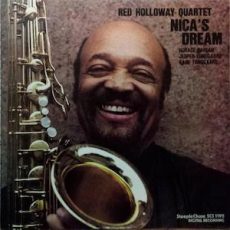
Nica’s Dream ~ Red Holloway Quartet | By Eddie Carter
For my discussion this morning, I’ve chosen a swinging 1984 session by The Red Holloway Quartet. Nica’s Dream (SteepleChase Records SCS 1192) highlights the group in a program of jazz standards and original tunes. Red was born James Wesley Holloway in Helena, Arkansas. He began playing the banjo and harmonica as a child before graduating to the tenor sax at age twelve. In this session, he is equally skilled on the alto sax (tracks: A2, B2, B4) and tenor sax (A1, A3, B1, B3). Red is joined on this date by an excellent rhythm section, Horace Parlan on piano, Jesper Lundgaard on bass, and Aage Tanggard on drums. My copy used in this report is the original Danish Stereo release.
Side One starts with Reshma Rani Barnase, an uptempo original by Red Holloway. Red initiates the song’s lively theme, then gives an enthusiastic opening solo. Horace takes the baton and sprints through the following reading. Jesper does a bit of brisk walking next; afterward, Red returns to add a few more spirited remarks ahead of the finale. The leader switches to the alto for a gorgeous rendition of Lover Man by Jimmy Davis, Roger Ramirez, and Jimmy Sherman. The quartet begins with a lovely melody that leads to a stunning opening statement by Holloway. Parlan demonstrates his affection for this song in the next delicately tender performance. The saxophonist concludes the piece in fine form with a dreamy climax.
Love For Sale by Cole Porter places Red back on tenor for a gentle introduction that climbs to the ensemble’s festive theme. Red opens with a lusty statement that’s full of energy. He shares the next reading with Jesper in a robust exchange before the quartet’s closing chorus fades into nothingness. Side Two starts with Nica’s Dream by Horace Silver. It was composed in honor of Baroness Kathleen Annie Pannonica de Koenigswarter, a friend and patron of jazz musicians. This one starts from the group’s swift melody and does not let up until the final note. Holloway charges into the opening statement with a blazing interpretation. Parlan ignites the second statement with intense heat, and Red and Aage get their licks in an immensely satisfying finale.
Georgia on My Mind by Hoagy Carmichael and Stuart Gorrell gets going with Red back on alto for the medium theme and the tasty treat he delivers with deceptive ease on the opening solo. Horace takes the second spot with an endearing presentation he handles skillfully. Aage gets the last word and strolls in the finale toward the foursome’s closing chorus. Red Holloway’s 369 Blues is a happy groove that commences with the quartet’s collective melody that gets your foot tapping along from the outset. Holloway provides plenty of enjoyment on the opening tenor solo. Parlan steps up next to take a short, exhilarating ride, then Red and Tanggard engage in a delightful conversation ahead of the theme’s return.
Wee by Denzil Best brings the album to a close with the quick notes of the ensemble’s melody. Red takes his final turn on the alto sax and flies furiously through the first solo. Horace continues the aggressive pace on the second interpretation. Red and Aage bring a few more fireworks in a fleet interchange of ideas before the quartet wraps it up. Nils Winther produced Nica’s Dream, and Thomas Brekling was the recording engineer. The sound quality is superb, and the musicians draw the listener into the music. If you’re new to Red Holloway or are a longtime fan, I would like to offer Nica’s Dream by The Red Holloway Quartet for your consideration. It’s an enjoyable album that would make a terrific addition to any library and is worth every penny!
~ Georgia on My Mind, Love For Sale, Lover Man – Source: JazzStandards.com ~ Nica’s Dream, Red Holloway – Source: Wikipedia.org ~ © 2022 by Edward Thomas Carter

More Posts: choice,classic,collectible,collector,history,instrumental,jazz,music,saxophone

Daily Dose Of Jazz…
Ulysses Owens Jr. was born December 6, 1982 in Jacksonville, Florida and began playing the drums at the age of 3. He played many types of music in his younger years, centering on his experience in the church. By the time he was in his early teens, he realized that he would become a jazz musician and received a full scholarship to study at the Juilliard School, in its inaugural jazz program.
After graduating from Juilliard in 2006, Ulysses traveled the world as a jazz drummer. After hearing about Jacksonville’s high dropout rate and other problems with struggling youths, he and his family designed a program to help suspended youths stay in school.
Owens was vocalist Kurt Elling’s drummer on Dedicated to You: Kurt Elling Sings the Music of Coltrane and Hartman, and on bassist Christian McBride’s The Good Feeling, both of which won Grammy Award. He has also played and recorded with pianist Joey Alexander, Gregory Porter and Matthew Whitaker. His composition The Simplicity of Life was commissioned by the string quartet ETHEL for their multimedia show ETHEL’s Documerica.
Drummer and percussionist Ulysses Owens Jr., who is co-founder and artistic director of the charity, Don’t Miss A Beat, continues to perform and compose.

More Posts: bandleader,drums,history,instrumental,jazz,music
Daily Dose Of Jazz…
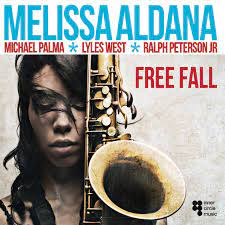
Melissa Aldana was born on December 3, 1988 in Santiago, Chile and began playing the saxophone when she was six under the influence and tuition of her father Marcos Aldana, also a professional saxophonist. She began with alto, influenced by Charlie Parker, Cannonball Adderley and Michael Brecker. However, upon first hearing the music of Sonny Rollins, she switched to tenor, picking up her grandfather’s Selmer Mark VI.
Performing around hometown jazz clubs while in her early teens, in 2005 she was invited by pianist Danilo Pérez to play at the Panama Jazz Festival as well as auditions at music schools in the USA. This resulted in Melissa attending the Berklee College of Music in Boston, Massachusetts studying under Joe Lovano, George Garzone, Frank Tiberi, Greg Osby, Hal Crook, Bill Pierce, and Ralph Peterson. After graduating she relocated to New York City to study with George Coleman.
Aldana recorded her debut album, Free Fall, released in 2010 on Greg Osby’s Inner Circle Music label. Two years later she released her sophomore project, Second Cycle, and by age 24, she was the first female and South American musician to win the Thelonious Monk International Jazz Saxophone Competition, in which her father had been a semi-finalist in 1991. The prize was a $25,000 scholarship, and a recording contract with Concord Jazz.
Aldana has been awarded the Altazor National Arts Award of Chile, and the Lincoln Center’s Martin E. Segal Award. She has played concerts alongside artists such as Peter Bernstein, Kevin Hays, Christian McBride, Jeff “Tain” Watts, Jimmy Heath and Wynton Marsalis.
She has formed the group, Melissa Aldana & Crash Trio, with Cuban drummer Francisco Mela and Chilean bassist Pablo Menares, and in addition her most recent configuration in 2017, the Melissa Aldana Quartet includes Aldana on tenor saxophone, pianist Sam Harris or guitarist Lage Lund, bassist Pablo Menares and drummer Kush Abadey.
Tenor saxophonist Melissa Aldana continues to explore and expand her vocabulary as she performs and records.
More Posts: bandleader,history,instrumental,jazz,music,saxophone

Daily Dose Of Jazz…
Ami Nakazono was born on October 6, 1986 in Kagoshima, Japan and began classical piano lessons at the age of 4. By 12 she was playing the alto saxophone and joined her school brass band. After two years, she won the “City Solo Instrumental Competition.” At the same time she was offered a full scholarship to study music at Fukuoka Daiichi High School in Fukuoka, Japan, where she studied classical music, theory, ear training, harmony, and brass band skills.
After graduation, she entered Senzoku Gakuen University, Japan’s most prestigious university, with a jazz major. During this time, Ami formed her own band and began playing gigs in and around Tokyo, Japan. Again two years later in 2007 she accepted a scholarship from Berklee College of Music, moved to Boston, Massachusetts and continued to perform and study under Walter Beasley, Dino Govoni, Bill Pierce, Shannon LeClaire and Jeff Harrington, and flute with Mia Olson. In 2008 with mentor and inspiration George W. Russell Jr., the two worked on several collaborations during this period at Berklee.
Nakazono began performing internationally with the acclaimed band, Violette, headed by French jazz singer~songwriter Violette De Bartillat. In 2010 she recorded for two critically praised albums, Joie de Vivre with Violette and Shine with George W Russell Jr.
Saxophonist Ami Nakazono is currently an active member of Boston’s entertainment group Raw Ambition and continues to perform at prestigious venues and festivals across the United States.

More Posts: bandleader,history,instrumental,jazz,music,saxophone
Daily Dose Of Jazz…
Olivia Meyer was born on July 15, 1990 in Rochester, New York and first encountered her father’s tenor saxophone when looking under his bedroom dresser. There she discovered a large black case covered with dust containing a Mark VI. Her fathe rnot only gifted her the saxophone but once she played it was smitten and the decision to pursue the saxophone was cemented. They would go to the public library, check out the maximum number of cds and listen to them together.
At the age of nine, Olivia played and studied in the programs provided by the inner city schools she attended. She began private lessons in classical and jazz piano and ultimately jazz and classical saxophone. By fifteen, she was splitting her time between the School of the Arts and the Eastman School of Music, studying music history, theory, jazz composition, and classical and jazz saxophone.
As a member of the Eastman Youth Jazz Orchestra, she also worked and studied regularly with visiting artists Eric Alexander, Peter Bernstein, Paquito D’Rivera, Victor Goines, Wycliffe Gordon, Vincent Herring, Pat Labarbera, Ralph Lalama, Joe Locke, Gerry Niewood, and Grant Stewart.
After graduating from the School of the Arts, she received a scholarship to attend the Berklee College of Music in Boston, Massachusetts. She has played gigs in and around Rochester, and while in Boston she headlined a quartet as a part of the new “Birth of La Femme” series at Wally’s Jazz Café in Boston. Tenor saxophonist Olivia Meyer, has yet to record her debut album, is currently a Brand, Sales and Marketing Associate at Jazz At Lincoln Center.
More Posts: bandleader,history,instrumental,jazz,music,saxophone