

The Quarantined Jazz Voyager
As the virus is continuing to evolve the Jazz Voyager is staying close to home, especially since the country has lifted the masking mandate and it appears that everything is “back to normal”, even though it is not yet. Supply chain is still limiting production and delivery of items. As you travel around your city, state, country, and internationally please continue to be careful and protect yourself and others.
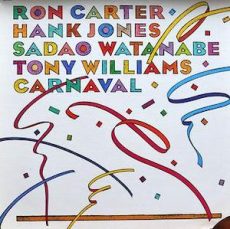
Carnaval is an album recorded Live Under The Sky in Denen Coliseum in Tokyo, Japan on July 30, 1978 by bassist Ron Carter, pianist Hank Jones, saxophonist Sadao Watanabe and drummer Tony Williams. The album was produced by Ed Michel and released five years later in 1983 on the Galaxy record label.
he art direction for the album was performed by Phil Carroll, the recording engineer was Jim Stern, mastered by George Horn, and the remix was done by Allen Sudduth.
Tracks | 43:18- Chelsea Bridge (Billy Strayhorn) ~ 10:12
- Manhã de Carnaval (Luiz Bonfá, Antônio Maria) ~ 9:01
- I’m Old Fashioned (Jerome Kern, Johnny Mercer) ~ 8:18
- Confirmation (Charlie Parker) ~ 6:40
- Moose the Mooche (Parker) ~ 8:05
- Ron Carter ~ bass
- Hank Jones ~ piano
- Sadao Watanabe ~ alto saxophone
- Tony Williams ~ drums

More Posts: adventure,album,bass,club,drums,genius,jazz,museum,music,piano,preserving,restaurant,saxophone,travel

Daily Dose Of Jazz…
Brandee Younger was born on July 1, 1983 in Hempstead, New York and grew up between her birth city and Uniondale, New York. She began her harp studies as a teen under the tutelage of Karen Strauss and continued with several harpists and bassist Nat Reeves. On to undergrad she earned degrees in Harp Performance and Music Business from The Hartt School of the University of Hartford. While at the latter she was mentored by Jackie McLean and the faculty of the Jackie McLean Institute of Jazz and African American Studies.
Off to New York University for grad school six months later with an impressive résumé, she opened for Slide Hampton as a member of Hartford-based collective The New Jazz Workshop. Younger then developed a working relationship with Grammy-nominated producer and artist Ryan Leslie and Grammy Award-winning producer Omen. Building upon that foundation, Younger began working with saxophonist Ravi Coltrane on a series of concerts honoring the music of his late mother, harpist Alice Coltrane.
Over time, Younger has built her career as an educator, concert curator, performer, and bandleader of the Brandee Younger Quartet. Her debut recording as a leader came with Prelude, released in 2011 with Dezron Douglas, E.J. Strickland and vocalist Niia. Since that auspicious moment she has performed with The Harlem Chamber Players, the Hartford Symphony Orchestra, Waterbury Symphony, Soulful Symphony, Ensemble Du Monde, Camerata New York and the Red Bull Artsehcro.
Younger is on the teaching artist faculty (harp) at New York University and The New School College of Performing Arts. She has taught at Adelphi University, Nassau Community College, The Hartt School Community Division at the University of Hartford and has lectured on both sides of the pond. As a leader she has released 6 albums and two compilations since her debut album Prelude in 2011. As a sidewoman/contributor since 2006 she has 38 albums to her credit with folks like E. J. Strickland, Ravi Coltrane, Jeremy Pelt, Common, Robert Glasper, Jane Monheit, Christian McBroide, Lauryn Hill, Drake, and more.
Harpist Brandee Younger infuses classical, jazz, soul, and funk influences to the harp tradition pioneered by her predecessors and idols Dorothy Ashby and Alice Coltrane. She continues to explore and expand her musical vocabulary.

More Posts: bandleader,educator,harp,history,instrumental,jazz,music
Requisites
Curtain Call ~ Hank Mobley | By Eddie Carter
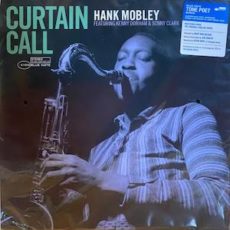
Hank Mobley was one of the most productive musicians on Blue Note during the fifties, recording as a leader and with some of the label’s best artists. This morning’s subject is a recent acquisition to the library that was originally recorded in 1957 but remained shelved until a 1984 Japanese release. Curtain Call (Blue Note BST 61006) is an excellent quintet session by the tenor saxophonist featuring Kenny Dorham on trumpet, Sonny Clark on piano, Jimmy Rowser on bass, and Art Taylor on drums. My copy used in this report is the 2022 Blue Note Tone Poet Series Stereo audiophile reissue, the first US vinyl release.
Side One starts with the first of four tunes by Hank Mobley. Don’t Get Too Hip is an easy-flowing midtempo blues that Clark introduces preceding the quintet’s collective theme. Sonny is up first with an easygoing attitude on the first statement. Kenny continues this pleasant exercise with a lengthy solo spot. Hank takes center stage next and sails smoothly through the third reading. Jimmy applies the finishing touch on a short statement ahead of the group’s reprise and ending. Curtain Call is off to the races on the ensemble’s speedy melody. Hank moves with astonishing velocity in the opening statement. Kenny drives the second reading with intense emotion, then Sonny takes an exhilarating turn. Art shares the final solo with the front line briefly before the close.
Deep In a Dream by Eddie DeLange and Jimmy Van Heusen is a gorgeous quartet performance illustrating Hank’s ability to interpret a ballad. Mobley and the trio begin with a delicately tasteful melody. He continues with an exquisitely beautiful opening statement. Clark expresses great warmth to the second solo, then Hank adds the exclamation point with sensitive delicacy into the foursome’s luscious ending. The quintet raises the curtain on Side Two with The Mobe. The ensemble begins the happy theme in unison, then Hank takes off on a terrifically agile first solo. Kenny takes over, feeling right at home on the second reading. Sonny spreads some joyful enthusiasm on the next statement. The front-line reappears to exchange a few final verses leading to the finish.
My Reverie by Claude Debussy and Larry Clinton is one of the delights of the set. Dorham has the spotlight to himself on the melody and first solo, handling both with equal effectiveness. Clark comes on next with an intriguing interpretation, followed by Mobley who delivers the next statement confidently. Dorham returns to take the song out with Mobley shadowing him in the background. On The Bright Side ends the album on a cheerful note beginning with the quintet’s brisk melody. Kenny draws us into the song with a lively opening statement. Sonny gives a sterling account on the second solo. Hank endows the third interpretation with a feisty spirit, and Taylor sparkles in a brief exchange with Dorham and Mobley into the closing theme.
Curtain Call was originally produced by Alfred Lion and Rudy Van Gelder was the man behind the dials. Joe Harley supervised this reissue and Kevin Gray did the mastering. The sound quality is breathtaking with a terrific soundstage that transports the musicians to your listening room as you enjoy the album. The cover’s worthy of hanging on your wall and the gatefold photos are gorgeous. The record is pressed on 180-gram audiophile vinyl and is incredibly quiet until the music starts. If you enjoy Hank Mobley and love good Hard-Bop, I invite you to check out Curtain Call on your next vinyl treasure hunt. In my opinion, it’s one of his best fifties recordings and one listen is sure to hook you, just as one listen sold me!
~ Hank Mobley Quintet Featuring Sonny Clark (Blue Note BNJ 61006) – Source: Discogs.com ~ My Reverie – Source: Wikipedia.org © 2022 by Edward Thomas Carter

More Posts: choice,classic,collectible,collector,history,instrumental,jazz,music,saxophone
The Quarantined Jazz Voyager
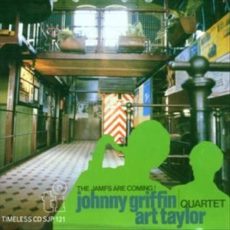
As we begin to explore more outings, the Jazz Voyager is still practicing social distancing and mask wearing at gatherings. That said, this week as we continue to see and gather information as to which venues have survived the pandemic, I am pulling from the library the 1981 recording of The Jamfs Are Coming by tenor saxophonist Johnny Griffin.
Recorded at a pair of sessions at a small nightclub in Wihelmshaven, Germany, The Blue Note in Pumpwerk provided the settings for these live performances. His explosive original blues, The Jamfs Are Coming, JAMF being an acronym for a well-known but unprintable expression, is a powerful opener recorded in October 1977.
Following an unaccompanied coda, Griffin rapidly shifts gears into a brief up-tempo rendition of Wee Dot, which unfortunately was faded out. The one-minute chorus of the December 1975 Wee is a complete performance that evidently closed a 1975 set. The LP wraps with an inspired December 1977 take of All the Things You Are, in which Griffin dodges the head initially then squeezes in a lick or two from Happy Birthday and a series of other humorous quotes throughout this frenzied 20-minute workout.
The artwork was by Don Diesveld, photography by AnkoWieringa and Hanz Harzheim and was produced by Wim Wigt Productions.
Track List | 38:15- The Jamfs Are Coming (Johnny Griffin) ~ 17:15
- Wee (Denzil Best) ~ 1:00
- All The Things You Are (Oscar Hammerstein II, Jerome Kern) ~ 20:00
- Johnny Griffin ~ Tenor Saxophone
- Rein de Graaff ~ Piano
- Koos Serierse, Henk Haverhoek ~ Bass
- Art Taylor ~ Drums
More Posts: adventure,album,club,genius,jazz,museum,music,preserving,restaurant,saxophone,travel
Requisites
Giant Steps (In Memory of John Coltrane) ~ Tommy Flanagan | By Eddie Carter
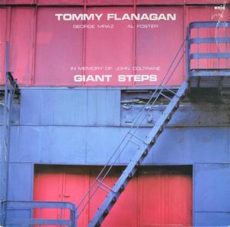
This morning’s choice from the library was recommended to me years ago because of my love of piano trios. I finally acquired a copy and am pleased to submit it for your approval. Giant Steps (Enja Records 4022) is a terrific 1982 album that’s a loving tribute to John Coltrane by pianist Tommy Flanagan. The tenor saxophonist composed all the tunes on this date and five of them appeared on his album Giant Steps (1960). Here, he’s working with an outstanding rhythm section, George Mraz on bass and Al Foster on drums. My copy used in this report is the original German Stereo release.
Side One opens with Mr. P.C., John’s tribute to bassist Paul Chambers who alongside Flanagan first recorded it with him. After the trio swings in unison on the melody, Tommy constructs the first solo vigorously. George gives an inspired statement next, then Al shares the spotlight with the leader on an energetic exchange into the reprise.
Central Park West is the first of two pretty ballads on the album and was first heard on Coltrane’s Sound (1964). Flanagan starts the song tenderly, then the rhythm section joins him to complete the melody. The pianist handles the opening chorus with great sensitivity and delicacy. Next up is Mraz who provides a brief thoughtful expression, then the pianist reappears for a concise comment preceding a gentle ending.
Syeeda’s Song Flute is Coltrane’s original written for his then ten-year-old daughter and returns the ensemble to an upbeat mood with a collective happy theme. Tommy captures the sheer joy of this tune in the opening statement. George responds with a cheerfully carefree interpretation that bounces along into Al’s zesty brushwork on the third performance. The pianist makes a few final points ahead of the ensemble’s culmination.
Side Two gets underway with Coltrane’s song about his Cousin Mary. The group is in perfect harmony on the melody. Flanagan starts it off with a vivaciously spirited solo that’s sure to have the listener tapping their toes to this irresistible beat. Mraz makes an indelible impression next, and Foster dazzles in an exchange with the leader ahead of the trio’s sprightly climax. Naima is John’s gorgeous tribute to his first wife and the trio opens with a heartfelt melody. Tommy paints a beautiful portrait as soft as an affectionate embrace on the song’s only solo with George and Al supplying the subtle support into an enchanting ending.
Giant Steps completes the album in high spirits from the start of the trio’s brisk theme. Flanagan leads off with an exhilarating reading, then Mraz greets the next solo enthusiastically. Foster and Flanagan share a lively exchange ahead of the closing chorus and finish.
Giant Steps was produced by Horst Weber and Matthias Winckelmann, and the album’s recording engineer was David Baker. The sound quality is excellent with superb fidelity across the highs, midrange, and low end that transports the trio to your listening room vividly. Tommy Flanagan was one of the most admired pianists in jazz and it might be easier for me to tell you who he didn’t play with because his discography is so extensive. Flanagan recorded forty albums as a leader, appeared on over two hundred more as a sideman and his career lasted over fifty years. He passed away on November 16, 2001, at the age of seventy-one. If you’re a fan of jazz piano, piano trios, or are new to the music of Tommy Flanagan, I invite you to seek out Giant Steps on your next vinyl hunt. It’s an exceptional album that’s worth checking out for a spot in your library!
~ Coltrane’s Sound (Atlantic 1419/SD 1419), Giant Steps (Atlantic 1311/SD 1311) – Source: Discogs.com ~ Giant Steps, Naima – Source: JazzStandards.com © 2022 by Edward Thomas Carter
More Posts: choice,classic,collectible,collector,history,instrumental,jazz,music,piano