

Daily Dose Of Jazz…
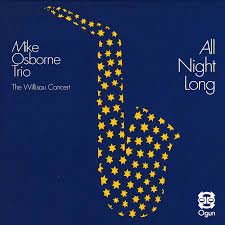
Michael Evans Osborne was born in Hereford, England on September 28, 1941 and attended Wycliffe College in Gloucestershire and the Guildhall School of Music.
From 1962 to 1972, Osborne was a bandmate in the Mike Westbrook band. During this period he also worked with Michael Gibbs, Mike Cooper, Stan Tracey, Kenny Wheeler, Humphrey Lyttelton, Alan Skidmore, John Surman, Harry Miller, Alan Jackson, John Mumford and Lionel Grigson.
During 1974–75, Osborne was part of the saxophone trio S.O.S. with John Surman and Alan Skidmore. They recorded an album, BBC radio and television sessions, and toured extensively in Europe.
Health issues hastened the end of his career in 1982, and returning to Hereford, alto saxophonist, pianist, and clarinetist Mike Osborne, who was a member of Brotherhood of Breath, transitioned while living under care at the time on September 19, 2007, aged 65.
More Posts: clarinet,history,instrumental,jazz,music,piano,saxophone
Daily Dose Of Jazz…
Michael Anthony Nock was born September 27, 1940 in Christchurch, New Zealand. He began studying piano at 11 and attended Nelson College for one term in 1955. By the age of 18, he was performing in Australia and in Sydney he played in The Three Out trio with Freddy Logan and Chris Karan. They toured England in 1961 before he left to attend Berklee College of Music.
Nock was a member of Yusef Lateef’s group from 1963 to 1965. Three years later he became involved with fusion, leading the Fourth Way band for two years. For a decade beginning in 1975 he was a studio musician in New York City, then returned to Australia.
His 1987 album Open Door with drummer Frank Gibson, Jr. was named that year’s Best Jazz Album in the New Zealand Music Awards. The 2003 New Year Honours saw Mike appointed an Officer of the New Zealand Order of Merit, for services to jazz.
Currently residing in New South Wales, pianist, composer and arranger Mike Nock, who taught at the Sydney Conservatorium of Music until 2018, continues to perform with his trio, big band, and various one-off ensembles.
More Posts: arranger,bandleader,composer,educator,history,instrumental,jazz,music,piano
Three Wishes
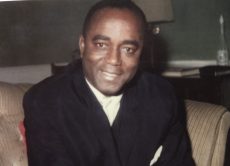
Al Timothy and the Baroness were talking one night when she asked him what his three wishes would be and responded with:
- “There’s one thing I wish I could be is a really great arranger, and a really great singing voice, and I’ll take care of the rest. I’ve been in this business over twenty years, you know, but if I had to start all over again, I’d do all the same things over again.”
*Excerpt from Three Wishes: An Intimate Look at Jazz Greats ~ Compiled and Photographed by Pannonica de Koenigswarter

More Posts: baroness,history,instrumental,jazz,music,pannonica,saxophone,three,wishes
Daily Dose Of Jazz…
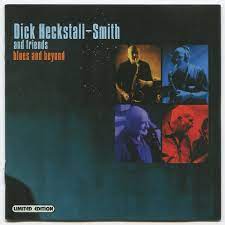
Richard Malden Heckstall-Smith was born on September 26, 1934 in the Royal Free Hospital, in Ludlow, Shropshire, England. Raised in Knighton, Radnorshire, he learned to play piano, clarinet and alto saxophone as a child. He attended a York boarding school but refused a second term there, instead enrolling in Gordonstoun, where his father had accepted a job as headmaster of the local grammar school.
Completing his education at Dartington Hall School, before co-leading the university jazz band at Sidney Sussex College, Cambridge, from 1953, by the age of 15 Dick had taken up the soprano sax while at Dartington. He was captivated by the sound of Sidney Bechet, then Lester Young and tenor saxophonist bebop jazzman Wardell Gray proved to be major influences for him.
An active member of the London jazz scene from the late 1950s, Heckstall-Smith did a six-month stint in 1957 with the Sandy Brown band. He joined Alexis Korner’s Blues Incorporated, a groundbreaking blues group in 1962, recording the album R&B from the Marquee.
The following year, he was a founding member of that band’s breakaway unit, The Graham Bond Organisation. Then in 1967, he joined guitarist-vocalist John Mayall’s blues rock band, Bluesbreakers. He went on to jazz rock with Colosseum until ‘71, then recorded a solo album and ventured into jazz fusion with several groups, which sustained most of his performing through the remainder of his career.
In 1984 he published his witty memoirs, The Safest Place in the World, with an expanded version, retitled Blowing the Blues, published in 2004.
Diagnosed with acute liver failure, tenor, soprano, and baritone saxophonist Dick Heckstall-Smith, who also played piano, clarinet and alto saxophone, transitioned on December 17, 2004 at 70 in Hampstead, London, England.
More Posts: bandleader,clarinet,history,instrumental,jazz,music,piano,saxophone
Daily Dose Of Jazz…
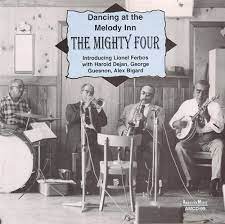
Alexander Louis Bigard, Jr. was born on September 25, 1899 in New Orleans, Louisiana into a musical family. His brother was Brney and his cousins were Natty Dominque and A.J. Piron. He studied drums under Louis Cottrell, Sr., and played at times with Cottrell in A.J. Piron’s band in the 1910s.
He played with the Excelsior Brass Band and Maple Leaf Orchestra, as well as with Peter DuConge, Buddy Petit, and Chris Kelly in the late 1910s and early Twenties. He was a member of Sidney Desvigne’s band in 1925, then with Kid Shots Madison. For much of the Thirties he worked with John Robichaux.
In the mid-1940s he was in Kid Rena’s band, then formed his own ensemble, the Mighty Four, in the 1950s.During the Dixieland revival period of the 1960s, he was a regular at Preservation Hall, and performed or recorded with Harold Dejan, Kid Howard, Punch Miller, De De Pierce, Billie Pierce.
Becoming deaf around 1967 he left active performance. Drummer Alex Bigard, who was involved for decades with the New Orleans jazz scene, transitioned on June 27, 1978 in his hometown.
More Posts: bandleader,drums,history,instrumental,jazz,music