


Daily Dose Of Jazz…
Leslie Bricusse was born on January 29, 1931 in Pinner, Middlesex, England. He was educated at University College School in London, England and then at Gonville and Caius College, Cambridge. While at Cambridge, he was Secretary then President of Footlights and during his college drama career he began working for actress, singer and comedian Beatrice Lillie.
In the 1960s and 1970s, Bricusse enjoyed a fruitful partnership with Anthony Newley. They wrote the musical Stop the World – I Want to Get Off in 1961,that became a film in 1966. In 1965 they wrote the show The Roar of the Greasepaint – The Smell of the Crowd and music for the film Willy Wonka & the Chocolate Factory in 1971. For the latter, they received an Academy Award nomination for Best Original Song Score.
Solely as a lyricist, Leslie collaborated with composer Cyril Ornadel on Pickwick, Henry Mancini on Victor/Victoria, Tom and Jerry: The Movie, and with John Williams on Hook. As composer and lyricist he scored the film, Doctor Dolittle and received a 1967 Academy Award for Best Original Song for Talk To The Animals, and Goodbye, Mr. Chips in 1969.
Of his many songs a few that have become jazz standards are What Kind of Fool Am I?, Who Can I Turn To?, Feeling Good, My Kind of Girl, Two For The Road, If I Ruled the World, Can You Read My Mind, When I Look in Your Eyes, and Pure Imagination.
In 2015, he released his memoir, Pure Imagination: A Sorta-Biography, with a foreword by Elton John. Composer, lyricist, and playwright Leslie Bricusse, who was awarded the Order of the British Empire, transitioned on October 19, 2021 in Saint-Paul-de-Vence, France at the age of 90.

More Posts: composer,history,instrumental,jazz,lyricist,music,playwright
Daily Dose Of Jazz…
Zilner Trenton Randolph was born in Dermott, Arkansas on January 28, 1899 and matriculated at Biddle University, the Kreuger Conservatory, and the Wisconsin Conservatory of Music.
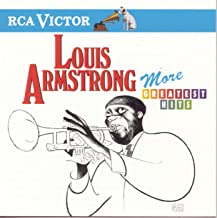
Randolph played in St. Louis, Missouri in the early 1920s, then in Bernie Young’s band in Milwaukee, Wisconsin from 1927 to 1930. A move to Chicago, Illinois in 1931 and was a trumpeter and arranger with Louis Armstrong until 1932 and again in 1933 and 1935.
He played trumpet on a number of Armstrong’s recordings and composed the tune Old Man Mose. In 1934 he played with Carroll Dickerson and Dave Peyton, and led his own Chicago band later in the decade. He arranged for bandleaders Earl Hines, Woody Herman, Fletcher Henderson, and Duke Ellington, and led a quartet in the 1940s.
From the 1940s Zilner devoted himself mainly to teaching, but recorded as a pianist in 1951. Trumpeter, arranger, composer and music educator Zilner Randolph, whose children Hattie and Lucious were part of Sun Ra’s band in the Fifties, transitioned on February 2, 1994.
More Posts: arranger,bandleader,composer,educator,history,instrumental,jazz,music,trumpet
The Quarantined Jazz Voyager
Do what you desire to or not protect your health but be responsible for the health of your fellow man. This is my request. The children are spreading this far more than adults as I continue to hear reports from friends that they caught Covid from children who have greater exposure.
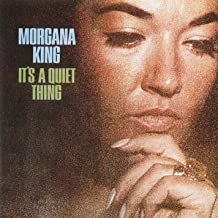
The album It’s A Quiet Thing from vocalist Morgana King is taken from the stacks representing the need for silence and reflection during this time of uneasiness. Produced by Jimmy Bowen, the album was recorded and released on the Reprise label in 1965 with arrangements by Torrie Zito brings us music reflective of the title.
Noise is not required to transport us to destinations that conjure memories. It’s class and sophistication that makes this an elegant compendium of songs. The arrangements and orchestration are equally soft and complimentary to her voice. Her incredible vocal range is backed by a menu of textured strings, guitar, French horn and bossa nova.
Artistry is something one has and when two purveyors connect we become privy to an excellent outcome. This happens to fill that order. So sit back, relax and listen.
Tracks | 31:27- It’s a Quiet Thing (Fred Ebb, John Kander) ~ 3:02
- Dindi (Ray Gilbert, Antonio Carlos Jobim, Aloysio de Oliveira) ~ 4:00
- Useless Landscape (Gilbert, Jobim, de Oliveira) ~ 3:12
- Gone with the Wind (Herbert Magidson, Allie Wrubel) ~ 2:58
- Little Girl Blue (Lorenz Hart, Richard Rodgers) ~ 3:35
- Mountain High, Valley Low (Bernie Hanighen, Raymond Scott) ~ 2:09
- How Insensitive (Norman Gimbel, Jobim, Vinícius de Moraes) ~ 3:14
- Here’s That Rainy Day (Johnny Burke, Jimmy Van Heusen) ~ 2:38
- Deep Song (George Cory, Douglass Cross) ~ 3:38
- If You Should Leave Me (E Se Domani) (Arthur Altman, Giorgio Calabrese, Al Stillman) ~ 3:01
- Morgana King ~ vocals
- Torrie Zito ~ arranger

More Posts: adventure,album,club,genius,jazz,museum,music,preserving,restaurant,travel,vocal
Daily Dose Of Jazz…
Alvin “Abe” Aaron was born on January 27, 1910 in Toronto, Canada on January 27, 1910. His father, a bandleader with a theater band in Milwaukee, Wisconsin, had him playing reeds in the band for more than ten years. Early in the 1940s he left this group to play alto saxophone in the big band of Jack Teagarden, with which he recorded in 1942.
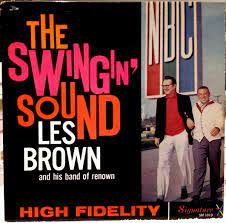
Moving to Hollywood, California in 1943, Abe played with Horace Heidt on radio. From 1945 to 1947 he played with Skinnay Ennis, then returned to work under Heidt through 1949. Through the 1950s he played in Les Brown’s Band of Renown, touring Europe and East Asia. He recorded often as a member of Brown’s band for Coral and Capitol record companies. In the band, he played clarinet and alto saxophone in the early 1950s, then switched to tenor and baritone. He also recorded on bass clarinet with Billy Usselton.
Clarinetist and saxophonist Abe Aaron transitioned on January 31, 1970.
More Posts: clarinet,history,instrumental,jazz,music,saxophone
Three Wishes
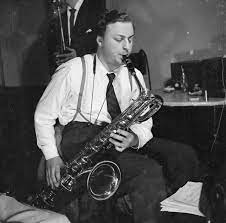
When the Baroness inquired of Benny Green if given what three things would he wish for he told her:
- “The first thing I would think of would be to have a little money bestowed upon me. Well, really, if that happened, that would be all. The rest I’d be able to bestow upon myself.”
*Excerpt from Three Wishes: An Intimate Look at Jazz Greats ~ Compiled and Photographed by Pannonica de Koenigswarter

More Posts: baroness,history,instrumental,jazz,music,pannonica,saxophone,three,wishes