

Daily Dose Of Jazz…
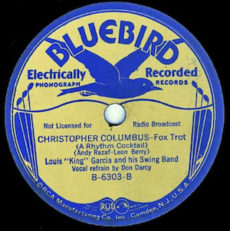
Louis “King” Garcia was born on August 25, 1905 in Juncos, Puerto Rico and played early in his life in the Municipal Band of San Juan, whose director was Juan Tizol’s uncle, Manuel Tizol. This led to some work with the Victor Recording Orchestra.
Moving to the United States in the early 1920s during the Jazz Age, he played with the Original Dixieland Jazz Band and the Emil Coleman Orchestra. The Thirties saw him increasingly working in the studios, including his most important association, Jimmy and Tommy Dorsey, which he recorded with both together and separately. He also played with the Vic Berton Orchestra, Richard Himber, Nat Brandwyne, Amanda Randolph, Louis Prima, and vocalist Amanda Randolph.
In the 1940s he returned to play with Coleman again, and led his own Latin ensemble that decade. By the 1960s he had moved to California and faded from the scene, essentially retiring due to failing health.
Trumpeter and bandleader King Garcia, who spent most of his career in the United States, passed away in Los Angeles, California on September 4, 1983.

More Posts: bandleader,history,instrumental,jazz,music,trumpet

Three Wishes
Kenny Dorham was asked what his three wishes were and he told Nica that he would wish for the following:
- “Money.”
- “Happiness’d take care of all that sh*t!”
- “To have the ecstasy granted to me of music.”

More Posts: baroness,history,instrumental,jazz,music,pannonica,three,trumpet,wishes
Daily Dose Of Jazz…
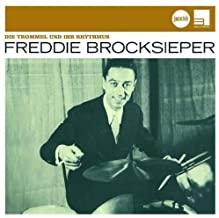
Fritz “Freddie” Brocksieper was born on August 24, 1912 in Constantinople, Turkey, the son of a Greek-speaking Jewish woman and a German engineer who was able to get through National-Socialism as an essential swing musician.
Considered a leading figure of early European big-band jazz, by 1930 was working in Nuremberg and Berlin in the 1930s. By World War II he was playing around Germany with different people, the Goldene Sieben (Golden Seven), Benny De Weille, Willy Berking, and the radio orchestra of Lutz Templin, just as in the National-Socialist propaganda band Charlie and His Orchestra.
After the war he led various bands in Stuttgart, Munich, and Berlin, Germany and also played in American officers’ clubs. With his bands Freddie made it to the front page of Stars and Stripes. Beginning in 1957 Bavarian radio regularly broadcast live concerts from his studio in Munich.
Brocksieper continued performing into the 1960s and 1970s, and was awarded a Deutscher Schallplattenpreis in 1980. From 1964 he played mainly in trios, and often with American soloists in Europe. His drumming style was influenced by Gene Krupa. He recorded with his own ensembles, both large and small, in the late 1940s. From 1964 he played mainly in trios and with visiting American soloists. Drummer Freddie Brocksieper passed away on January 17, 1990.
More Posts: drums,history,instrumental,music
Daily Dose Of Jazz…
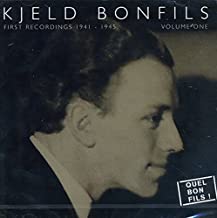
Kjeld Bonfils was born on August 23, 1918 in Copenhagen, Denmark. He was one of the figures involved in the Golden Age of Danish jazz in the 1930s.
During the Nazi occupation of Denmark from 1940 to 1945, jazz was discouraged by the regime, but Bonfils played with Svend Asmussen in Valdemar Eiberg’s band, as well as elsewhere. Jazz became a symbol of the underground and political protest.
Pianist and vibraphonist Kjeld Bonfils, who was hailed as one of the best soloists of his day, passed away on October 13, 1984 at age 66.
More Posts: bandleader,history,jazz,music,piano,vibraphone
Requisites
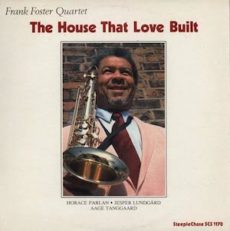
The House That Love Built ~ Frank Foster Quartet | By Eddie Carter
Frank Foster steps into the spotlight this morning with an underrated, exceptional album titled The House That Love Built (SteepleChase Records SCS-1170). Frank was adept as an arranger, bandleader, composer, and multi-instrumentalist. Horace Parlan on piano, Jesper Lundġard on bass, and Aage Tanggaard on drums complete the quartet. Foster wrote all five selections and my copy used in this report is the 1982 Danish Stereo album. Frank was born in Cincinnati, Ohio and educated at Central State College, and Wilberforce University. He led his own big band in the fifties and was a member of The Count Basie Orchestra. Several of his songs became huge hits for the band and are now jazz standards, and his resume reads like a Who’s Who of Jazz.
>Side One takes off with I Remember Sonny Stitt, an uptempo tribute to the saxophonist that gets underway with an enthusiastic melody by the foursome. Frank kicks off the solos with a vibrant statement of pure jubilation. Aage engages in a brisk exchange with Foster fueled by Horace and Jesper’s lively foundation preceding the closing chorus. The House That Love Built is a tender ballad with a quaint melody and the tenor sax providing a lead solo of graceful elegance. Horace marks the beginning of a beautiful romance on the next reading with an intimate conversation of beauty and warmth. The saxophonist returns, expressing a few final moments of thoughtfulness over the rhythm section’s delicate support into the soft climax.
A neatly paced toe-tapper titled John R and Garfield closes Side One with the quartet’s opening chorus in a light groove with everyone swinging easy. Horace opens with an exemplary performance on the lead solo. Frank is completely carefree on the second statement and Aage keeps perfect time with an impeccable swing on the closer. A concise drum introduction by Aage grows into a collective melody march to begin Side Two with Lightly Stroking. Jesper gets the first spot this time and executes an invigorating interpretation. Frank has the last word plenty to say on the next with a light, effervescent work that flows along efficiently. Horace gets the last word and ends with an exceptionally relaxing finale before the quartet’s exit.
Dunbar’s Delight cooks from the opening notes of the quartet’s vigorous theme and allows Foster a lengthy energetic first reading. Parlan meets the challenge with some high-voltage on the next solo followed by Tanggaard who supplies sharp brushwork for a propulsive showcase into ends on an upbeat note. The album was produced by Nils Winther and engineered by Niels Erik Lund. The album has a breathtaking soundstage with each instrument possessing remarkable clarity. If you’re in the mood for Hard-Bop on your next vinyl hunt, I invite you to check out The House That Love Built by The Frank Foster Quartet. It’s a very satisfying session from one of jazz’s best musicians and worthy of a spot in any library!
© 2021 by Edward Thomas Carter
More Posts: choice,classic,collectible,collector,history,instrumental,jazz,music,saxophone