

Daily Dose Of Jazz…
Joe Springer was born on May 22, 1916 in New York City, He played locally on Coney Island from about 1931. His first major gig was with Wingy Manone in 1935.
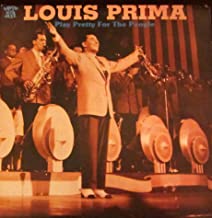
He first recorded in 1940 with Louis Prima and soon after worked with Buddy Rich in 1942, followed by a year with Gene Krupa until 1943. Joe went on to work with Oscar Pettiford, Tiny Grimes, Ben Webster, Charlie Barnet, Jimmy McPartland, Charlie Shavers, Roy Eldridge, and Raymond Scott.
Accompanying Billie Holiday regularly in the 1940s, Springer also worked with Anita O’Day. He continued working in New York City into the 1960s before retiring to Florida that decade.
Pianist Joe Springer passed away on October 24, 2004 in Miami, Florida.

More Posts: history,instrumental,jazz,music,piano

Daily Dose Of Jazz…
Billy Barber was born John William Barber on May 21, 1920 in Hornell, New York in 1920 and was known professionally as Bill or Billy. He started playing tuba in high school and studied at the Juilliard School of Music. After graduating, he travelled west to Kansas City, Missouri, where he played with the Kansas City Philharmonic and various ballet and theatre orchestras.
Joining the United States Army in 1942, he played in Patton’s 7th Army Band for three years. After the war, he started playing jazz, joining Claude Thornhill’s big band where he became friends with trombonist Al Langstaff, pianist Gil Evans and saxophone player Gerry Mulligan in 1947. Barber was one of the first tuba players to play in a modern jazz style, playing solos and participating in intricate ensemble pieces.
Becoming a founding member of Miles Davis’s nonet in 1949 in what became known as the Birth of the Cool recording sessions. He then worked in the theatre pit orchestras of The King and I, Paradiso, and the City Center Ballet. He joined up with Davis and Gil Evans in the late 1950s to record the albums Sketches of Spain, Miles Ahead and Porgy and Bess. Barber also played tuba on John Coltrane’s album Africa/Brass released in 1961.
Barber completed a master’s degree from the Manhattan School of Music and became an elementary school music teacher at Copiague, New York. He continued to play where possible including with the Goldman Band. In 1992, he recorded and toured with a nonet led by Gerry Mulligan, reworking material from Birth of the Cool. From 1998 to 2004 he was part of The Seatbelts, New York musicians who played the music of the Japanese anime Cowboy Bebop.
He is considered by many to be the first person to play tuba in modern jazz. Tubist Billy Barber passed away on June 18, 2007. of heart failure in Bronxville, New York.
More Posts: history,instrumental,jazz,music,tuba
The Quarantined Jazz Voyager
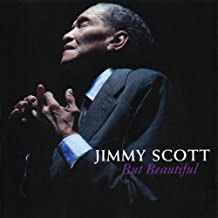
But Beautiful | Jimmy Scott
Society is taking another step towards mingling as governors are relaxing the mask requirement and several major cities are following their lead and people are celebrating. Thinking it too early and comfortable in my home I remain vigilant with my social distancing and trust you are doing the same.
So this week we take a trip down memory lane with Jimmy Scott and his 2002 recording titled But Beautiful. It was recorded at The Studio in New York City on August 16~19, 2001.released on the German label Milestone and was arranged by Freddy Cole (Track 7), Joe Beck (Track 8), Renee Rosnes (Track 1,4,6,7,9) and Robert Sadin (Track 5,10). The album was mixed by Dave Luke at Fantasy Studios in Berkeley, California. It was produced by Todd Barkan and recorded by Katherine Miller. Track Listing | 54:05
- You Don’t Know What Love Is (Gene DePaul/Don Raye) ~ 4:59
- Darn ThatDream (Edddie DeLange/James Van Heusen) ~ 6:35
- It Had To Be You (Isham Jones/Gus Kahn) ~ 4:17
- This Bitter Earth (Clyde Otis) ~ 5:21
- Please Send Me Someone To Love (Percy Mayfield) ~ 5:31
- But Beautiful (Johnny Burke/James Van Heusen) ~ 5:50
- When You Wish Upon A Star (Leigh Harline/Ned Washington) ~ 5:18
- Bye Bye Blackbird (Mort Dixon/Ray Henderson) ~ 5:18
- I’ll Be Seeing You (Sammy Fain/Irving Kahal) ~ 6:01
- Take My Hand, Precious Lord (Rev. Thomas A. Dorsey) ~ 4:37
- Jimmy Scott ~ vocal
- Freddy Cole ~ vocal (track 7)
- Renee Rosnes ~ piano
- George Mraz ~ bass
- Lewis Nash ~ drums
- Joe Beck ~ guitar (track 1,3,5,6, & 8)
- Wynton Marsalis ~trumpet (track 2)
- Lew Soloff ~ trumpet (track 8)
- Eric Alexander ~ tenor saxophone (track 3, 5 & 6)
- Bob Kindred ~ tenor saxophone (track 4 & 9)

More Posts: adventure,album,club,genius,jazz,museum,music,preserving,restaurant,travel,vocal
Daily Dose Of Jazz…
Edward Louis Smith was born on May 20, 1931 in Memphis, Tennessee. After graduating from Tennessee State University he attended graduate school at the University of Michigan. While studying at the University of Michigan, he played with visiting musicians such as Dizzy Gillespie, Miles Davis, Thad Jones and Billy Mitchell.
He went on to play with Sonny Stitt, Count Basie, Al McKibbon, Cannonball Adderley, Percy Heath, Philly Joe Jones, Lou Donaldson, Donald Byrd, Kenny Dorham and Zoot Sims. Deciding to forgo being a full-time musician to take a job as a director of Atlanta’s Booker T. Washington High School, where he recorded two albums for Blue Note.
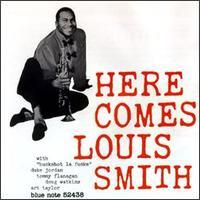
The first, Here Comes Louis Smith, originally recorded for the Boston-based Transition Records, featured Cannonball Adderley, then under contract to Mercury, played under the pseudonym Buckshot La Funke, Tommy Flanagan, Duke Jordan, Art Taylor and Doug Watkins. Replacing Donald Byrd for Horace Silver’s Live at the Newport 1958 set, and his playing was one of his best efforts and was described by one critic as monstrous.
He was a prolific composer and successful band director leaving Booker T. Washington to become director of the Jazz Ensemble at the University of Michigan and a teacher in Ann Arbor’s public school system. He would later record for the SteepleChase label.
Suffering a stroke in 2006, he enjoyed live jazz around the Detroit/Ann Arbor area, but did not return to performing. Trumpeter Louis Smith passed away on August 20, 2016 at age 85.
More Posts: band director,bandleader,composer,history,instrumental,jazz,music,tuba
Daily Dose Of Jazz…
Gregory Herbert was born on May 19, 1947 in Philadelphia, Pennsylvania and started on alto saxophone at age 12. In 1964 he did a short stint in the Duke Ellington Orchestra, then studied at Temple University from 1965 to 1971.
While a student Gregory recorded with Pat Martino in 1968. From 1971 to 1975 he toured with Woody Herman, then played with Harold Danko in 1975 and the Thad Jones/Mel Lewis Orchestra from 1975 to 1977.
After his tenure with the orchestra, he played briefly with Chuck Israels and Blood, Sweat and Tears. Additionally, Herbert appeared on Chet Baker’s Once Upon a Summertime in 1977 along with Harold Danko, Ron Carter and Mel Lewis.
Saxophonist and flautist Gregory Herbert passed away from a heroin overdose on January 31, 1978 in Amsterdam, Netherlands. He never recorded as a leader.