

Daily Dose Of Jazz…
Rashid Bakr was born Charles Downs on October 3, 1943 in Chicago, Illinois but grew up in Bronx, New York from the age of four. His decision to become a musician came from the profound influence of John Coltrane had on him, along with his uncle, drummer Papa Jo Jones. As a child surrounded by jazz musicians growing up, he was given his first set of sticks by Art Blakey and was soon sitting in with his uncle in a Dixieland band.
He attended Queens College studying chemistry and psychology and on to Brooklyn College grad school gaining a degree in clinical psychology. While in college he never missed a Coltrane or Miles Davis performance and his father bought him his first drum set.
During the Seventies, after college and a stint in the Army saxophonist Bobby Zankel took him to an auspicious audition for him with Cecil Taylor, becoming part of his big band. He was active in the New York City loft jazz scene, performing at venues such as Rashied Ali’s Ali’s Alley and Sam Rivers’ Studio Rivbea. He was a member of Ensemble Muntu with Jemeel Moondoc, among others.
In 1976, Bakr performed in a production of Adrienne Kennedy’s A Rat’s Mass directed by Cecil Taylor at La MaMa Experimental Theatre Club in the East Village of Manhattan. Also in the production were Jimmy Lyons, Andy Bey, Karen Borca, David S. Ware, and Raphe Malik. Taylor’s production combined the original script with a chorus of orchestrated voices used as instruments. 1981 saw him with Taylor touring Europe for three years before returning to New York City.
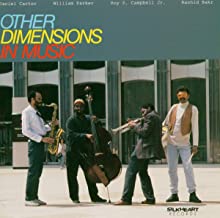
Free jazz drummer Rashid Bakr is a member of Other Dimensions in Music with Roy Campbell, Daniel Carter, and William Parker.

More Posts: drums,history,instrumental,jazz,music
Daily Dose Of Jazz…
Roy Powell was born on October 2, 1965 in Langham, Rutland, England. His mother was a historian, his father a scientist who moved the family to Canada. His father had given him piano lessons and had been playing the piano for five years. Returning to England when he was ten, he attended New Mills Grammar School at the same time as Lloyd Cole.
In the 1970s, Powell was listening to Duke Ellington and Miles Davis and buying albums through the mail from America. He attended the Royal Northern College of Music, studying piano and classical composition during the day and playing in Manchester jazz clubs at night. After departing school, he started a jazz fusion band and choreographed a ballet. In 1992 he was a member of the Creative Jazz Orchestra. Three years later he moved to Norway to teach.
Powell has been a member of the group InterStatic with Jacob Young, and Jarle Vespestad, and the group Naked Truth with Lorenzo Feliciati, Pat Mastelotto, and Graham Haynes. He recorded the album Mumpbeak with Feliciati, Mastelotto, Bill Laswell, Tony Levin, and Shanir Ezra Blumenkranz. Pianist, organist, composer, and educator Roy Powell has recorded fifteen albums as a leader and continues to perform and record.
More Posts: bandleader,composer,educator,history,instrumental,jazz,music,piano
The Quarantined Jazz Voyager
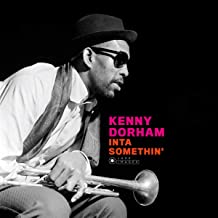
As we await the opening of the country this Quarantined Jazz Voyager presses on with his listening to great jazz by placing on the turntable the classic Kenny Dorham disc titled Inta Somethin’. This live album by the trumpeter features performances recorded at The Jazz Workshop in San Francisco, California on November 13, 1961. It was released in the first quarter of 1962 on the Pacific Jazz label. Dorham contributed two originals to the set, track #1 and track #6.
Track Listing | 38:31- Una Mas ~ 7:13
- It Could Happen to You (Johnny Burke, Jimmy Van Heusen) ~ 6:00
- Let’s Face the Music and Dance (Irving Berlin) ~ 6:06
- No Two People (Frank Loesser) ~ 6:59
- Lover Man (Jimmy Davis, Ram Ramirez, James Sherman) ~ 5:01
- San Francisco Beat ~ 7:12
- Kenny Dorham ~ trumpet (except tracks 3 and 5)
- Jackie McLean ~ alto saxophone (except track 2)
- Walter Bishop Jr. ~ piano
- Leroy Vinnegar – bass
- Art Taylor – drums
As you listen and enjoy this wonderful addition to the jazz catalogue, I emplore you follow your conscience to stay healthy and encourage you to remain vigilant in your social distancing. During this sabbatical from jet setting investigations of jazz around the globe, this voyager’s choices are ever-present. The world will be back and so will I.

More Posts: adventure,club,genius,jazz,museum,music,preserving,restaurant,travel,voyager
Daily Dose Of Jazz…
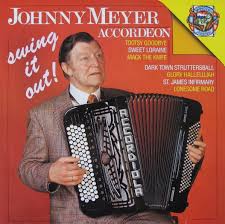
Johnny Meyer or Johnny Meijer was born Jan Cornelis Meijer on October 1, 1912 in Amsterdam, Netherlands. He began playing accordion as a child and before World War II was playing in Dutch big bands. The post-war years were fertile for him and the liberating sound of his swing accordion, opened opportunities for him to record many swing standards from 1952 to 1957.
He toured Europe but mainly performed in the Netherlands and for a time was known as a virtuoso jazz accordionist. Besides the popular songs, Meyer also played fast swing numbers, Romanian music and classical pieces. In 1974 he recorded the Dutch Swing College Band Johnny Goes Dixie LP, which went gold.
Typically seen during performances with a cigar in his mouth, his accordion showed several burn marks as a result of this. In the last years of his life, Johnny Meyer was rarely invited to play large performances, mainly in connection with his short temper and his drinking, and thus the King of the Accordion saw out his final days mostly in silence, reduced to occasionally playing weddings and parties.
Accordionist Johnny Meyer, who played jazz, swing, classical, folk and was the subject of a film, passed away on January 8, 1992 in Amsterdam.
More Posts: accordion,history,instrumental,jazz,music
Daily Dose Of Jazz…Trumpet
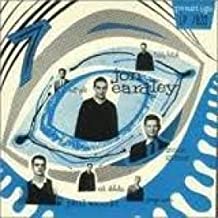
Jon Eardley was born on September 30, 1928 in Altoona, Pennsylvania and first started on trumpet at the age of 11. His father played in the Paul Whiteman Orchestra. From the age of eighteen, he played1946 to 1949 he played in the Air Force Band in Washington, D.C., then led with his own quartet in D.C. from 1950 to 1953.
A move to New York City in 1953 got him introduced to the jazz scene. The following year he played with Phil Woods, then left for Gerry Mulligan for three years, and during that time played with Hal McIntyre. Returning to his hometown, Jon played there until 1963, when he moved to Europe and settled for a time in Belgium.
1969 saw his next residency in Cologne, Germany where he played with Harald Banter and Chet Baker and working through the 1980s. The last years before death he played in the WDR Big Band Cologne, Germany. Trumpeter Jon Eardley passed away on April 1, 1991 in Lambermont, near Verviers, Belgium.

More Posts: bandleader,history,instrumental,jazz,music,trumpet