

Daily Dose Of Jazz…
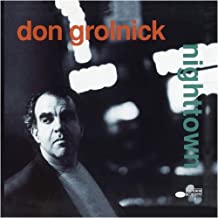
Don Grolnick was born on September 23, 1947 in Brooklyn, New York and grew up in Levittown, New York. Musical life for him started on accordion but later he switched to piano. A childhood Count Basie concert sparked his interest in jazz and soon after they also saw Erroll Garner perform at Carnegie Hall. Attending Tufts University he opted for a major in philosophy rather than music.
After he left Tufts, he formed the jazz-rock band Fire & Ice with guitarist Ken Melville and bassist Stuart Schulman, his friend since childhood. They opened for B.B. King, The Jeff Beck Group, and the Velvet Underground at Boston clubs like the Boston Tea Party and The Ark. This was Grolnick’s first foray into rock and blues as a performer, and began writing within the medium.
Moving back to New York City in 1969 he joined Melville in the jazz fusion band “D”. Pianist Don Grolnick passed away at the age of 48 on June 1, 1996 from non-hodgkin lymphoma.

More Posts: bandleader,composer,history,instrumental,jazz,music,piano
Daily Dose Of Jazz…
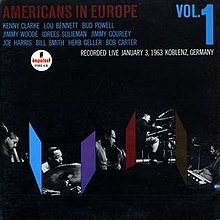
William Overton Smith was born on September 22, 1926 in Sacramento, California and grew up in Oakland, California where he began playing clarinet at the age of ten. Putting together a jazz group to play for dances at 13, by 15 he joined the Oakland Symphony. Idolizing Benny Goodman, after high school and a brief cross-country tour with a dance band, he ended his romance for the road. Giving notice when the band reached Washington, D.C., he was encouraged by an older band member to get the best education he could, so he headed to New York.
He started his formal music studies at the Juilliard School of Music, playing in New York jazz clubs at night. Uninspired at Juilliard, he returned to California after hearing the music of Darius Milhaud, who was then teaching at Mills College in Oakland. At Mills, Smith met pianist Dave Brubeck, with whom he often played, was a member of the Dave Brubeck Octet, and later occasionally subbed for saxophonist Paul Desmond in the Dave Brubeck Quartet. Brubeck’s 1960 album Brubeck à la mode that featured ten of his own compositions. Rejoining Brubeck’s group in the 1990s.
Bill went on to study composition with Roger Sessions at the University of California, Berkeley, where he was graduated with a bachelor’s and a master’s degree. He won the Prix de Paris, study at the Paris Conservatory, was awarded the prestigious Prix de Rome in 1957, and spent six years in Italy. After a teaching stint at the University of Southern California, he went on to a thirty-year career at the University of Washington School of Music in Seattle, Washington. He co-led the forward-thinking Contemporary Group, first with Robert Suderburg, and then with trombonist Stuart Dempster, from 1966 to 1997.
Clarinetist and composer Bill Smith, who recorded in jazz, classical and third stream genres, passed away at age 93 in his home from complications of prostate cancer on February 29, 2020.
More Posts: bandleader,clarinet,educator,history,instrumental,jazz,music
Daily Dose Of Jazz
Fred Hunt was born Herbert Frederick Hunt was born in London, England on September 21, 1923. As the younger son of a pianist mother and a cellist father, he enjoyed thorough musical education from his distinguished parents. A self-taught pianist, he started playing piano at the age of 13 and played local gigs before joining the Royal Air Force.
After his discharge, Hunt began his musical career playing semi-professionally with Mike Daniels and the Cy Laurie Four in 1951. Becoming professional and went on to join Alex Welsh’s band from 1954 to 1962 and again from 1964 to 1974.
As Welsh’s primary pianist, and often a featured soloist, he became one of Britain’s leading trad jazz musicians and recorded with Eddie Davis, Bud Freeman, Eddie Miller, and Ben Webster in 1967. Accompanying visiting Americans, he recorded with the four-tenor group, Tenor Of Jazz, featuring Webster and Eddie “Lockjaw” Davis, which toured in the late 60s.
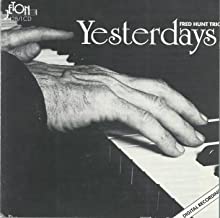
Departing Welsh in 1974, he played in Copenhagen and South Africa, however, after 1976 he split his time between Britain, Denmark, and Germany. He led a trio featuring drummer Lennie Hastings beginning in 1978 and the following year the German label Erus Records released a direct cut LP called Yesterdays which featured his trio with bassist Brian Mursell and drummer Roger Nobes in front of a live audience.
He toured with Wild Bill Davison in the latter part of the 1970s and played with Welsh once more in the early 1980s before retiring due to failing health after being incapacitated and confined to a wheelchair. He worked frequently at London’s PizzaExpress Jazz Club until 1986. Pianist Fred Hunt, who became a top pianist in both modern jazz and trad jazz musical settings, passed away on April 25, 1986. in Weybridge, Surrey aged 62.
More Posts: history,instrumental,jazz,music,piano
Requisites
Pure Getz ~ The Stan Getz Quartet | By Eddie Carter
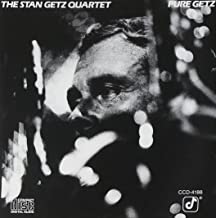
I enjoy listening to jazz when I’m reading and one of my favorite musicians to hear is Stan Getz. He became a favorite of mine after hearing The Girl From Ipanema and Corcovado from the 1964 album, Getz/Gilberto. I also got to see him perform live as a member of the 1972 Newport Jazz Festival All-Stars at Music Hall on July 6, 1972, in New York City. This morning’s choice from the library is Pure Getz (Concord Jazz CJ-188) featuring his quartet at the time, Jim McNeely on piano; Marc Johnson on bass; Billy Hart (tracks: A3, B1, B2) and Victor Lewis (tracks: A1, A2, A4, B3) on drums. My copy used in this report is the 1982 US Stereo release.
The album opens with an uptempo tune by Jim McNeely, On The Up and Up. The ensemble starts with an invigorating melody, then Stan moves right into a sizzling lead statement. Jim swings hard on the next solo with a bouncy effervescence and spirited lyricism. Marc responds with an impressive presentation that appeals at every turn, and Victor keeps the rock-solid beat flowing into a quick climax.
The pace slows down for Blood Count by Billy Strayhorn, originally written as a three-part work for Duke Ellington titled Blue Cloud. It was Strayhorn’s final composition for Duke before succumbing to cancer on May 31, 1967. Ellington himself only performed the tune twice after Billy’s passing. First at a Carnegie Hall concert later that year in August and on his touching 1968 tribute album in memory of Strayhorn, And His Mother Called Him Bill. The quartet delivers an evocatively moving melody and Getz blows a passionately delicate performance culminating with a compassionate coda.
Very Early by Bill Evans is a pretty tune written early in the pianist’s career that was featured on his 1962 album, Moon Beams. The quartet presents this song at an easy, relaxing tempo with Billy Hart on drums. Marc opens with a tenderly expressive solo, then Jim turns in an enchanting interpretation next. Stan weaves a gentle spell of tenderness on the closing statement with a wonderful warmth and presence.
Sipping at Bell’s by Miles Davis begins with a three-instrument chat between Getz, Johnson, and Lewis. McNeely joins the discussion for the informal melody, then Johnson carves out a clever opening reading. Getz is formidable on the next presentation with a sharp, crisp attack. McNeely permits his fingers full sway on an effectively swift performance, and Lewis connects with a lightness of touch on a brief statement that’s exceptionally smooth.
Side Two starts with I Wish I Knew, written in 1945 by Harry Warren and Mack Gordon. This is a very enjoyable rendition taken at midtempo with the solo order, Getz, McNeely, and Johnson with Hart behind the drums. Stan swings into a soulful tenor solo sticking close to the melody. Jim comes next for a delightfully pleasant reading, then Marc makes an indelible impression on the finale with an inspired statement.
Come Rain or Come Shine by Harold Arlen and Johnny Mercer was written in 1946 for the Broadway musical, St. Louis Woman and is a jazz and pop favorite with numerous recordings since its inception. The trio opens with a gentle introduction evolving into an emotional communication on the melody. Getz’s sound is perfectly suited to this ballad as he demonstrates on the lead solo with a beautiful tone and thoughtful musicality. McNeely handles the next interpretation with meticulous care, and Johnson closes with a gorgeous bass solo ahead of the leader’s sensuous ending.
Tempus Fugit, aka Tempus Fugue-it, was written in 1949 by Bud Powell and is a play on words meaning “time flies”. The quartet takes off at a torrid tempo on the opening chorus, Jim swings at a ferocious pace on the scintillating first solo. Stan exemplifies boundless energy on the second reading with breakneck speed, then Marc gives the third reading a serious jolt of electrical energy. Victor wraps up the album with some bouncy brushwork before the quartet makes a spirited sprint to the finish line.
The album was recorded by Ed Trabanco and Phil Edwards, and the more I listened, the more I became impressed with the record’s soundstage. The instruments leap out of your speakers with outstanding detail. Stan Getz was one of the master tenor men with a career spanning nearly five decades from the forties to 1990. If you’re a fan of Bebop and Cool Jazz, I offer for your consideration, Pure Getz by The Stan Getz Quartet. An entertaining album that any jazz fan would appreciate!
~ And His Mother Called Him Bill (RCA LSP-3906); Getz/Gilberto (Verve Records V-8545/V6-8545); Moon Beams (Riverside RLP 428/RLP 9428) – Source: Discogs.com
~ Come Rain or Come Shine – Source: JazzStandards.com
~ Blood Count, Tempus Fugit – Source: Wikipedia.org
© 2020 by Edward Thomas Carter

More Posts: choice,classic,collectible,collector,history,instrumental,jazz,music,saxophone
Daily Dose Of Jazz…
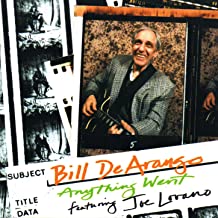
Bill DeArango was born William Louis DeArango on September 20, 1921 in Cleveland, Ohio. A self-taught on guitar, while attending Ohio State University, he played with Dixieland bands at night. After serving in the Army from 1942–44, he moved to New York City and worked first with Don Byas and Ben Webster.
A year later, Bill was playing on an album with Sarah Vaughan, Charlie Parker, and Dizzy Gillespie. Working as a sideman with Eddie “Lockjaw” Davis, Ike Quebec, Slam Stewart, he then led his own band with Terry Gibbs.
In 1947, DeArango returned to Cleveland and performed locally for two decades, recorded an album with pianist John Williams in 1954. By the 1960s had opened up a guitar store, taught guitar lessons, and late in the decade, he managed the rock band Henry Tree. Performing regularly in the Seventies at Cleveland’s Smiling Dog Saloon working with Ernie Krivda and Skip Hadden, mixing hard rock and free jazz.
His next recording was on the album Another Time/Another Place by Barry Altschul, then 298 Bridge Street by Kenny Werner, and Names by Jamey Haddad. In 1993, he released his second solo album, Anything Went, with Joe Lovano.
He entered a nursing home in 1999 and suffered dementia until his death seven years later, although he continued performing locally until late 2001. Guitarist William DeArango passed away on December 26, 2005 in his hometown.
More Posts: arranger,bandleader,composer,guitar,history,instrumental,jazz,music