

Daily Dose Of Jazz…
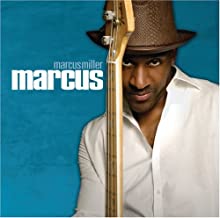
Marcus Miller, born William Henry Marcus Miller Jr. on June 14, 1959 in Brooklyn, New York and raised in a musical family. Classically trained as a clarinetist, he also plays keyboards, saxophone and guitar. He began to work regularly in New York City, eventually playing bass and writing music for jazz flutist Bobbi Humphrey and keyboardist Lonnie Liston Smith.
Spending 15 years as a session musician, he arranged and produced frequently, was a member of the Saturday Night Live band from 1979 to 1981, and co-wrote Aretha Franklin’s Jump To It along with Luther Vandross. He has played bass on over 500 recordings, appearing on over 500 albums by such artists as Herbie Hancock, The Crusaders, Wayne Shorter, McCoy Tyner, Frank Sinatra, George Benson, Michael Jackson, Beyoncé, Mariah Carey, Eric Clapton, Dr. John, Aretha Franklin, Elton John, Joe Walsh, Jean-Michel Jarre, Grover Washington Jr., Donald Fagen, Bill Withers, Bernard Wright, Kazumi Watanabe, Chaka Khan, LL Cool J, and Flavio Sala.
He won the Most Valuable Player award given by NARAS to recognize studio musicians three years in a row and was subsequently awarded Player Emeritus status and retired from eligibility. In the nineties, Miller began to write his own music and make his own records, putting a band together and touring regularly.
Between 1988 and 1990 he appeared regularly both as a musical director and as the house band bass player in the Sunday Night Band during two seasons of Sunday Night on NBC late-night television, hosted by David Sanborn.
As a composer, Miller co-wrote and produced several songs on the Miles Davis album Tutu, including its title track. He also composed Chicago Song for David Sanborn and co-wrote ‘Til My Baby Comes Home, It’s Over Now, For You To Love, and Power of Love for Luther Vandross and wrote Da Butt, which was featured in Spike Lee’s School Daze.
Miller hosts a jazz history show called Miller Time with Marcus Miller, is a film score composer, was nominated and won several Grammy Awards. Bassist Marcus Miller continues to perform, record and tour.
More Posts: bass,clarinetist,guitar,history,instrumental,jazz,keyboards,music,saxophone,vocal
Daily Dose Of Jazz…
Philip L. Bodner was born June 13, 1917 in Waterbury, Connecticut and played in the Forties and 1950s as a sideman for studio recordings in New York City. He played on jazz sessions with Benny Goodman, with Miles Davis and Gil Evans in 1958.
Organizing The Brass Ring, a group modeled after Herb Alpert, in the mid-1960s they had popular success. Bodner also played with Oliver Nelson and J.J. Johnson during that decade. His associations in the 1970s included Oscar Peterson, Yusef Lateef, Peanuts Hucko, Wild Bill Davison, Ralph Sutton and he also played the signature piccolo part on the disco hit The Hustle by Van McCoy. Other work in the 1970s included playing with Ralph Sutton and Johnny Varro, working with Mingus Epitaph, and arranging Louie Bellson’s tribute to Duke Ellington’s Black, Brown and Beige.
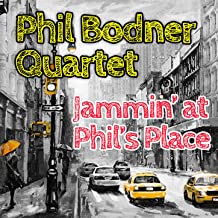
The 1980s saw him working in a swing style with Marty Napoleon, Mel Lewis, George Duvivier, Maxine Sullivan, and Barbara Carroll. He released an album under his own name, Jammin’ at Phil’s Place, on Jazzmania Records in 1990, with Milt Hinton, Bobby Rosengarden, and Derek Smith as sidemen.
Multi-instrumentalist and studio musician Philip Bodner, active in jazz and popular music idioms. Best known as a reedist, he played clarinet, saxophone, oboe, English horn, piccolo, flute, conductor and arranger passed away on February 24, 2008 at age 90 in New York City.
More Posts: clarinet,english horn,flute,history,instrumental,jazz,music,oboe,piccolo,saxophone
Daily Dose Of Jazz…
Rubin “Zeke” Zarchy was born on June 12, 1915 in New York City. He first learned the violin, but after a stint as a bugler with his Boy Scout troop, he switched permanently to trumpet while in his early teens.
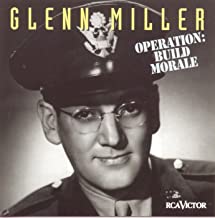
In 1935 Zarchy was working with the Joe Haymes Orchestra, followed by Benny Goodman, and then Artie Shaw. He went on to work through the end of the decade with Bob Crosby and Red Norvo, Tommy Dorsey, and Glenn Miller.
Between 1942 and 1945 he played in US Army bands: he was part of what became Miller’s Army Air Force Band (officially, the 418th Army Band), playing lead trumpet as Master First Sergeant. Zeke’s trumpet can be heard on recordings as Benny Goodman’s Bugle Call Rag, Glenn Miller’s Moonlight Cocktail, and Bob Crosby’s South Rampart Street Parade.
After the war, Frank Sinatra invited Zarchy to move to Los Angeles, California where he became a first-call studio musician. He played on numerous recordings, including those led by Boyd Raeburn, Jerry Gray, Sarah Vaughan, and Frank Capp. He appeared in film in The Glenn Miller Story in 1954.
During the 1960s and 1970s, Zeke played in the CBS house bands of several television variety shows, including The Smothers Brothers Comedy Hour, The Danny Kaye Show and The Jonathan Winters Show, and was a member of the NBC Staff Orchestras in New York and Los Angeles.
In his later years, he made many music tours of Europe, South America, and Australia, as well as thirty-two concert trips to Japan. He tutored several young trumpet players who became successful performers and studio musicians. Trumpeter Zeke Zarchy passed away in Irvine, California, on April 11, 2009.
More Posts: history,instrumental,jazz,music,trumpet
The Quarantined Jazz Voyager
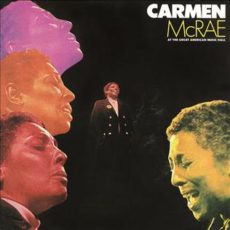
The Quarantined Jazz Voyager has pulled from his stacks his latest selection to place on the turntable is another timeless classic, At The Great American Music Hall by Carmen McRae. It is a 1976 live album recorded in San Francisco, California and released in 1977 on the Blue Note Record label.
The album was nominated for the Grammy Award for Best Jazz Vocal Album at the 19th Annual Grammy Awards for her performance on this album. The band on the date was Carmen McRae – vocals, piano, trumpeter Dizzy Gillespie, pianist Marshall Otwell, double bassist Ed Bennett, and drummer Joey Baron.
The concert was 1:20:54 and consisted of nineteen songs ~ Them There Eyes, Paint Your Pretty Picture, On Green Dolphin Street, A Song For You, On A Clear Day (You Can See Forever), Miss Otis Regrets (She’s Unable To Lunch Today), Too Close For Comfort, Old Folks, Time After Time, I’m Always Drunk In San Francisco, Don’t Misunderstand, A Beautiful Friendship, Star Eyes, Dindi, Never Let Me Go, ‘Tain’t Nobody’s Bizness If I Do, Only Women Bleed, No More Blues (Chega de Saudade), and The Folks Who Live On The Hill.
Remain diligent my fellow voyagers in staying healthy, continue to practice social distancing, and don’t be so anxious to rush back to the new normal. It has been said that music soothes the savage beast, so listen to great music. I share that music to give you a little insight into the choices this voyager has made over the years during this sabbatical from jet setting investigations of jazz around the globe.

More Posts: adventure,club,genius,jazz,museum,music,preserving,restaurant,travel,vocal,voyager
Daily Dose Of Jazz…
Bob Gordon was born in St. Louis, Missouri on June 11, 1928. Moving to Los Angeles, California in 1948 he studied at Westlake College of Music. Becoming a part of the West Coast jazz scene he was best known as a sideman for musicians like Stan Kenton, Shelly Manne, Chet Baker, Maynard Ferguson, Shorty Rogers, Spud Murphy, Red Norvo, Bill Holman, Dave Pell, Herbie Harper, and Jack Montrose.
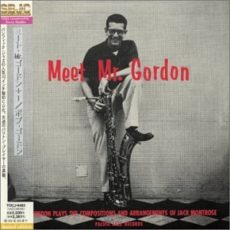
In May 1954, only a few weeks before the sessions with Clifford Brown, Gordon recorded as a leader for Pacific Jazz titled Meet Mr. Gordon. As a co-leader, he recorded another five during his short career,
Cool jazz baritone saxophonist Bob Gordon passed away in a car accident on his way to playing at a Pete Rugolo concert in San Diego, California on August 28, 1955. He was 27.
More Posts: bandleader,history,instrumental,jazz,music,saxophone