

Daily Dose Of Jazz…
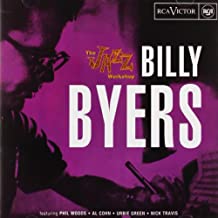
Billy Byers was born on William Mitchell Byers on May 1, 1927 in Los Angeles, California. He picked up the trombone and played with Karl Kiffle before serving in the Army in 1944–45. In the second half of the 1940s, he arranged and played trombone for Georgie Auld, Buddy Rich, Benny Goodman, Charlie Ventura, and Teddy Powell.
Following this period of playing, Byers composed for WMGM (AM) radio and television in New York City. During the mid-1950s, he was living and arranging in Paris, France where he also led a session as a leader, released as Jazz on the Left Bank, at this time. Later in the 1950s in Europe, he played with Harold Arlen (1959–1960) and with the Quincy Jones Orchestra. Becoming Quincy’s assistant at Mercury Records in the Sixties, he arranged for Count Basie albums.
He also led some recording sessions of Duke Ellington standards, toured Europe and Japan alongside Frank Sinatra in 1974, and had extensive credits arranging and conducting for film. Billy won the Drama Desk Award for Outstanding Orchestrations for the City of Angels.
He recorded with Count Basie, Bob Brookmeyer, Al Cohn, Billy Eckstine, Coleman Hawkins, J. J. Johnson, Lee Konitz, Jack McDuff, Gary McFarland, Hal McKusick, Carmen McRae, Joe Newman, Lalo Schifrin, Bud Shank, Charlie Shavers, Julius Watkins, Andy Williams, Cootie Williams, Kai Winding, and Frank Zappa. With four albums as a leader and another twenty-eight as a sideman, trombonist Billy Byers, passed away in Malibu, California, on May 1, 1996.

More Posts: arranger,bandleader,history,instrumental,jazz,music,trombone
The Quarantined Jazz Voyager
The Quarantined Jazz Voyager wants you to be safe and encourages your diligence in staying healthy by not rushing to get back to normal. As we continue to practice social distancing by staying home, we can listen to great music and share that music with each other weekly to give you a little insight into the music choices during this sabbatical from jet setting investigations of jazz around the globe.
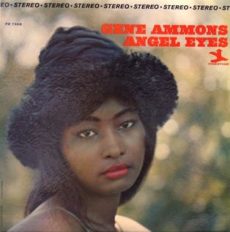
The world will be back and so will I. Until that outcome comes to fruition, this week’s entry is the 1965 album Angel Eyes by tenor saxophonist Gene Ammons.

More Posts: choice,classic,collectible,collector,history,instrumental,jazz,music,saxophone
Daily Dose Of Jazz…
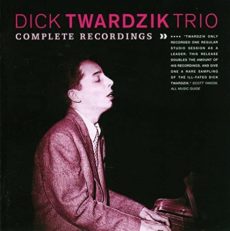
Dick Twardzik was born Richard Henryk Twardzik on April 30, 1931 in Danvers, Massachusetts. He trained in classical piano as a child and made his professional debut at the age of fourteen. He was taught by Margaret Chaloff, the mother of baritone saxophone player Serge Chaloff.
Twardzik recorded with Serge Chaloff and with Charlie Mariano. He worked with Charlie Parker on several occasions toward the end of Parker’s life. He played with Chet Baker and Lionel Hampton and recorded with Baker and Chaloff in 1954 and 1955.
It was during his teen years, that he became addicted to heroin. Bebop pianist Dick Twardzik who worked in Boston for most of his short career passed away from a heroin overdose while on tour with Chet Baker in Europe on October 21, 1955 in Paris, France. He was 24.
More Posts: bandleader,history,instrumental,jazz,music,piano
Daily Dose Of Jazz…
Errol Leslie Buddle was born on April 29, 1928 and raised in Adelaide, Australia. He first learned the banjo and mandolin and began learning jazz after listening to a Bobby Limb performance in 1944. He attended the Elder Conservatorium of Music as well as the Sydney Conservatorium of Music.
Influenced by the sound of the bassoon in Igor Stravinsky’s The Rite of Spring and The Firebird, he began playing the instrument. Over the course of his career, Buddle played fourteen reed instruments and several others. Moving to Melbourne in 1946 he began playing the radio circuit.
Relocating to Sydney by 1951 and performed weekly at the nightclub Chequers’. Another move to Windsor, Ontario in 1952 had him joining the Windsor Symphony Orchestra.
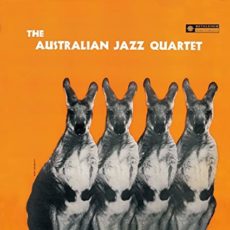
Often performing in Detroit, Michigan, he met and collaborated with Elvin Jones and Johnnie Davis. Errol performed at the jazz club Klein’s and eventually led what later became the Errol Buddle Quartet. He also founded The Australian Jazz Quartet with Jack Brokensha, Bryce Rohde and Dick Healey. The group served as the backing band to several musicians and later played throughout North America before touring Australia in 1958, then disbanded.
He also put together a quintet in various configurations with Bryce Rohde, piano; Dick Healy, flute and alto sax; Jack Brokensha, vibes; Jimmy Gannon, bass; and Frank Capp, drums. After 1958 he performed occasionally.
Bassoon and tenor saxophonist Errol Buddle, who over the course of his career played fourteen reed instruments and several others, passed away at his home in Potts Point, New South Wales on February 22, 2018, aged 89.
More Posts: bandleader,bassoon,history,instrumental,jazz,music,saxophone
Daily Dose Of Jazz…
Everett Barksdale, born April 28, 1910 in Detroit, Michigan, played bass and banjo before settling on guitar. During early 1930 he moved to Chicago, Illinois where he joined Erskine Tate’s band. He recorded for the first time with violinist Eddie South in 1931, who he remained with until 1939.
A move to New York City saw Everett become a member of the Benny Carter Big Band. Around that same time, he recorded with Sidney Bechet and during the 1940s, he worked for CBS as a session musician.
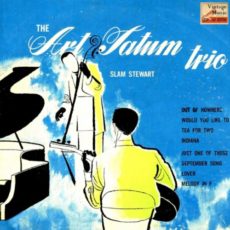
As a sideman, Barksdale played guitar in many genres, working with vocalists Dean Barlow, Maxine Sullivan, the Blenders, and the Clovers. He played on the hit Love Is Strange by Mickey & Sylvia, was the music director for the Ink Spots, and beginning in 1949, he worked with pianist Art Tatum until Tatum died in 1956.
During the Fifties and Sixties, he was part of the ABC house band and played on recordings with a who’s who list of vocalists and musicians not limited to Lena Horne, Sammy Davis Jr., Dinah Washington, Sarah Vaughan, Milt Hinton, Buddy Tate, Chet Baker, Red Allen, Harold Vick, Oscar Brown Jr., J. J. Johnson, Clark Terry, Kai Winding, Louis Armstrong, The Drifters and Ben E. King. He also played guitar in the studio for pop and soul musicians such as.
Guitarist and session musician Everett Barksdale retired from active performance in the 1970s, moved to the West Coast and passed away in Inglewood, California on January 29, 1986.
More Posts: guitar,history,instrumental,jazz,music