

Requisites
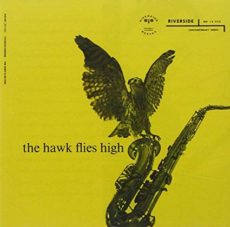
The Hawk Flies High is an album by jazz tenor saxophonist Coleman Hawkins. Apart from Barry Galbraith and Jo Jones on guitar and drums, the line-up of his accompanying sextet had a bebop background. The year is 1957, the dates, March 12th, and 15th, and Reeves Sound Studios at 304 East 44th Street is the destination.
Track Listing | 39:02
- Chant (Hank Jones) – 5:08
- Juicy Fruit (Idrees Sulieman) – 11:16
- Think Deep (William O. Smith) -3:24
- Laura (David Raksin, Johnny Mercer) -4:34
- Blue Lights (Gigi Gryce) -5:44
- Sancticity (Hawkins) -9:10
- Coleman Hawkins – tenor saxophone
- Hank Jones – piano
- Oscar Pettiford – bass
- Jo Jones – drums
- Barry Galbraith – guitar
- J.J. Johnson – trombone
- Idrees Sulieman – trumpet
Coleman Hawkins ~ The Hawk Flies High | by Eddie Carter
Tenor saxophonist Coleman Hawkins steps into the spotlight with his only album as a leader for Riverside Records, The Hawk Flies High (Riverside Contemporary Series 12-233). Originally recorded and released in 1957, this album and the other five he would record for Prestige; Soul (PRLP 7149) and Blues Groove with Tiny Grimes (PRLP 7138/PRST 7753) in 1958; Very Saxy with Eddie “Lockjaw” Davis, Buddy Tate, Arnett Cobb (PRLP 7167); Hawk Eyes (PRLP 7156) and Coleman Hawkins with The Red Garland Trio (Prestige Swingville SVLP 2001) in 1959 became essential parts of his impressive discography. Also, reviving his career as one of the perennial jazz musicians in the world until his death from liver disease on May 19, 1969. My copy used in this report is the 2007 Mobile Fidelity Sound Lab Limited Edition, Half-Speed Mastered Mono Audiophile Reissue (MFSL 1-290). Producer Orrin Keepnews gave Bean (as he was also known) the freedom to choose the personnel he wanted, and he picked a dream lineup to share the date; Idrees Sulieman on trumpet; J.J. Johnson on trombone; Hank Jones on piano; Barry Galbraith on guitar; Oscar Pettiford on bass and Jo Jones on drums.
Side One opens with Hank Jones’ Chant; a midtempo original tailor-made for tuneful blowing by the septet on the melody and five sprightly solos by Hawk, Julie, J.J., Hank, and Oscar. Bean takes charge first, telling a great story with a captivating opening chorus. Sulieman’s trumpet is deliciously appetizing on the next reading, then Johnson fills the third solo with an ecstatic swing. Jones’ ideas flow with finesse on the next performance, and Pettiford swings with light agility on the closing statement before the coda. Idrees Sulieman’s Juicy Fruit is a blues that gradually rises from a march-like introduction to the mid-tempo melody. The trumpeter sustains a single note for nearly a minute (fifty-seconds to be exact) before settling into some bluesy smooth sailing on the lead solo. Coleman endows the next reading with long, flowing mellow lines that are enjoyable. J.J. conjures up some especially inventive playing that develops subtly over the easy, relaxing beat. Hank solos next cultivating an irresistible warmth over the gently rocking groundwork of the rhythm section. Oscar comes in behind him maintaining a relaxed attitude with poise and self-assurance before the ensemble takes the song out.
Think Deep by jazz clarinetist William Smith begins leisurely with Hawk leading the septet on the hauntingly beautiful melody and closing chorus. As the song’s only soloist, the venerable tenor man turns in a very satisfying intimate performance reminiscent of the spontaneously perfect solo he performed on Body and Soul for Bluebird Records (10523) in 1939. Side Two starts with Laura by David Raskin who composed it for the 1944 film of the same name. This classic jazz standard is featured throughout the film noir drama and has been recorded over four-hundred times. Lyricist Johnny Mercer created the words for Laura in 1945 after the film became a huge hit, later admitting he never saw the film before writing them. Raskin also founded a little-known label called Capitol Records and has written over fifteen-hundred lyrics. Sulieman lays out of this version, therefore showcasing Coleman and J.J. who clearly make two convincing cases for interpreting a ballad. The graceful mood is established by the rhythm section for the song’s introduction. Bean states the theme with passionate tenderness, then impresses on an expressively gentle first solo. J.J. adds notes of dreamlike beauty that’s beautifully captured on the closing chorus leading to a subtle climax by Hawk.
Blue Lights by multi-instrumentalist Gigi Gryce made its debut on the 1957 album When Farmer Met Gryce (Prestige PRLP 7085) while he was a member of The Art Farmer Quintet. The septet presents the song at a medium tempo like the original, giving Barry his first solo opportunity for a brief bit that’s inspired. Idrees is particularly intriguing on the third solo; Hank is also in top form on a short statement that’s rhythmically assured. J.J. mixes a bit of grace and fire on the following reading; Oscar and Jo Jones split the next interpretation with a few crisply executed exchanges. Coleman delivers the finale with a smoldering fire emerging from his horn that burns slowly into the closing theme. The album ends with the leader’s joyful original, Sancticity. The rhythm section lays down a swinging line to introduce this jaunty tune, preceding the ensemble’s frolic on the melody. Johnson opens with a carefree, light-hearted opening statement that’s perfectly in step like a street march through the French Quarter in New Orleans. Hawk leads the septet into the bridge between his and the trombonist’s solo statement, then settles in for a deliciously spry and merry reading of his own. Sulieman is firing on all cylinders with a frisky performance that’s a sure attention-grabber. Jones gives the final solo a happy send-off with a bright, breezy interpretation bringing this entertaining forty-minutes of jazz to a close.
I defy anyone to listen to this record with its deliciously smooth sound and punchy rhythms, and not find themselves moving to the music. The six songs that make up The Hawk Flies High offers a refreshing spirit of Cool Jazz, Hard-Bop, and Swing. Bean and his associates bring their talents to the mix with solid performances, superb solos, and vivid ensemble work for an album that you’ll want to add to your library! The original recording by Jack Higgins of Reeves Sound Studios is marvelously remastered by Mobile Fidelity Sound Lab with absolute sonic purity for a riveting soundstage that places you in the studio among the musicians as they work. If you’re a fan of good sax, I recommend for your consideration, The Hawk Flies High by Coleman Hawkins. An LP by one of jazz’s prominent musicians who not only made the tenor sax a jazz instrument but made art with it throughout a distinguished career spanning forty-five years!
~ Laura – Source: JazzStandards.com ~ © 2020 by Edward Thomas Carter

More Posts: choice,classic,collectible,collector,history,instrumental,jazz,music,saxophone
Daily Dose Of Jazz…
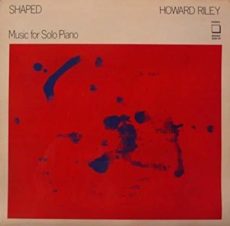
Howard Riley was born on John Howard Riley on February 16, 1943 in Huddersfield, Yorkshire, England. He began learning the piano at the age of six and started playing jazz as early as the age of 13. He studied at the University of Wales from 1961 to 1966, then Indiana University, and finishing up at York University in 1970). While studying he played jazz professionally, with Evan Parker (1966) and then with his own trio (1967–76), with Barry Guy on bass and Alan Jackson, Jon Hiseman, and Tony Oxley for periods on drums.
He worked with John McLaughlin in the late Sixties, the London Jazz Composers Orchestra and Oxley’s ensemble through the Seventies to 1981. He and Guy worked in a trio with Phil Wachsmann from 1976 well into the 1980s and played solo piano throughout North America and Europe. He played in a quartet, with Guy, Trevor Watts, and John Stevens, did duo work with Keith Tippett, with Jaki Byard, and with Elton Dean. From 1985 he worked in a trio with Jeff Clyne and Tony Levin.
Pianist and composer Howard Riley who worked in jazz and experimental music idioms continues to teach at the Guildhall School of Music and Drama and Goldsmiths, University of London, where he has taught since the 1970s.

More Posts: bandleader,educator,history,instrumental,jazz,music,piano
Daily Dose Of Jazz…
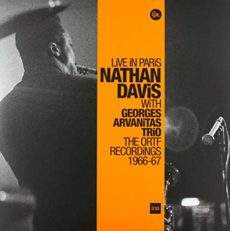
Nathan Tate Davis was born on February 15, 1937 in Kansas City, Kansas and eventually would travel extensively around Europe after World War II. He moved to Paris in 1962 but would return to the U.S. by 1969, holding a Ph.D. in Ethnomusicology from Wesleyan University and was a professor of music and director of jazz studies at the University of Pittsburgh, an academic program that he helped initiate.
He was the founder and director of the University of Pittsburgh Annual Jazz Seminar and Concert, the first academic jazz event of its kind in the United States. He also helped to found the university’s William Robinson Recording Studio as well as establish the International Academy of Jazz Hall of Fame located in the school’s William Pitt Union and the University of Pittsburgh-Sonny Rollins International Jazz Archives.
One of Davis’ best known musical associations was heading the Paris Reunion Band from 1985 to1989, which at different times included Nat Adderley, Kenny Drew, Johnny Griffin, Slide Hampton, Joe Henderson, Idris Muhammad, Dizzy Reece, Woody Shaw, and Jimmy Woode. He also toured and recorded with the post-bop ensemble leading Roots which he formed in 1991. He composed various pieces, including a 2004 opera entitled Just Above My Head.
He retired as director of the Jazz Studies Program at Pitt in 2013. Davis also served as the editor of the International Jazz Archives Journal. Over the course of his career, he recorded eighteen albums as a leader.
Multi-instrumentalist Nathan Davis, who played the tenor saxophone, soprano saxophone, bass clarinet, and flute, and was awarded the Mid-Atlantic Arts Foundation’s BNY Mellon Jazz Living Legacy Award at the Kennedy Center for the Performing Arts, passed away in Palm Beach, Florida on April 8, 2018 at the age of 81.
More Posts: clarinet,educator,flute,history,instrumental,jazz,music,saxophone
Daily Dose Of Jazz…
Dwike Mitchell was born Ivory Mitchell Jr. on February 14, 1930 and raised in Dunedin, Florida. He began playing piano around the age of three after his father, who had a job driving a garbage truck, brought home an old piano discarded by its owner. With the help of his mother, who made him play exercises and scales, and a cousin, who had been taking piano lessons herself, he soon displayed an exceptional aptitude for the instrument. He began performing in public at the age of five. His mother, a soloist in her church choir, needed an accompanist and gave the job to her young son. Before long he was playing for the entire Sunday morning service, a role he would continue to perform through the age of seventeen while attending Pinellas High School.
In 1946, Mitchell enlisted and was stationed at Lockbourne Air Force Base, at that time an all-black facility renowned for its excellent music program, where he was assigned to the band. It was here that he heard the music of Rachmaninoff that impacted his piano style development. Post-discharge from the Army, he went to the Philadelphia Musical Academy, where he studied under pianist Agi Jambor. After graduation, he joined Lionel Hampton and changed his name from Ivory to Dwike, at his mother’s suggestion, based on several family names.
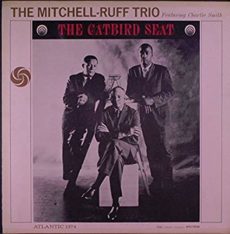
By the mid-Fifties, he reunited with French horn player Willie Ruff, when he joined the Hampton orchestra. In 1955 the two men left the orchestra to form the Mitchell-Ruff jazz duo. The duo placed an emphasis on introducing American jazz music in parts of the world unfamiliar with the idiom. Among these, were visits to the Soviet Union in 1959 and to China in 1981. Throughout his duo and trio career they recorded fourteen albums, he also taught piano. In 2012, after becoming ill, he returned to his native South, spending his last months in Jacksonville, Florida. On April 7, 2013 pianist Dwike Mitchell passed away from pancreatic disease.
More Posts: bandleader,educator,history,instrumental,jazz,music,piano
Daily Dose Of Jazz…
Arthur Francis Rollini was born February 13, 1912 in New York City into a musical family of Italian descent and grew up in Larchmont, New York with his multi-instrumentalist older brother Adrian. In 1929 he played in England for Fred Elizalde and worked for the California Ramblers and big band pioneer Paul Whiteman.
From 1934 to 1939 he was a member of the Benny Goodman Orchestra. The highlight of that period was a breakout performance for big band jazz at Carnegie Hall in 1938. He worked with Richard Himber and from 1941-1942 with Will Bradley. From 1943 to 1958 he worked as a studio musician for the American Broadcasting Company.
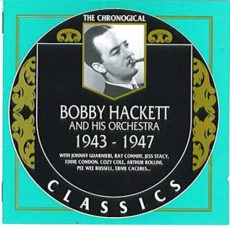
Rollini’s work can be found on recordings with the bands of Wingy Manone, Adrian Rollini, Benny Goodman, Joe Venuti, Bobby Hackett, Lionel Hampton, Harry James, Louis Armstrong and Brad Gowans. In 1939, he starred in an Allstar band of Goodman, Bunny Berigan and Jack Teagarden with Blue Lu.
In 1987, he published his autobiography Thirty Years With the Big Bands. Arthur Rollini, who played tenor saxophone and clarinet, and was nicknamed Schneeze, passed away on December 30, 1993 in Florida.
More Posts: clarinet,history,instrumental,jazz,music,saxophone