Daily Dose Of Jazz…
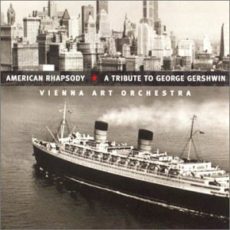
Mathias Rüegg was born on December 8, 1952 in Zurich, Switzerland and began playing jazz in secondary school. Trained as a schoolteacher, he taught for a while in special-needs schools. From 1973 to 1975 he attended the Musikhochschule in Graz, Austria, studying classical composition and jazz piano. In Vienna, Austria he performed in a nightclub as a solo jazz pianist, joined later by saxophonist Wolfgang Puschnig. The duo formed the core of an ensemble that became the Vienna Art Orchestra in 1977.
Rüegg’s distinctive, often humorous compositions have drawn on a range of influences from traditional folk music to classics. He has also led the VAO to explore the big band repertory of American jazz composers such as Duke Ellington. Beyond the traditional big-band complement, his orchestrations have prominently featured such instruments as the tuba, piccolo, bass clarinet, alphorn, exotic percussion, and wordless vocals.
Mathia has composed hundreds of pieces for the Vienna Art Orchestra, other European big bands, and classical orchestras, as well as theatre music and film music. Since 1994 he has composed several works for soloist and chamber orchestra.
Besides managing the VAO, Rüegg has conducted workshops in Europe, worked as artistic director for music festivals, and headed multimedia and music-related projects. From 1983 to 1987 he was the director of the Vienna Art Choir. He founded the Porgy & Bess music club in Vienna and the Hans Koller Prize for Austrian jazz.
Pianist, composer, director and bandleader Mathias Rüegg continues to pursue his career in a variety of musical endeavors.

More Posts: piano
Daily Dose Of Jazz…
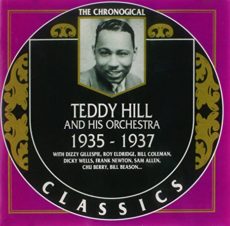
Teddy Hill was was born on December 7, 1909 in Birmingham, Alabama. After moving to New York City, he had early gigs with the Whitman Sisters, George Howe and Luis Russell’s orchestra in the Twenties. He later put together his own band in 1934, which found steady work over the NBC radio network.
Over several years it featured such major young musicians as Dizzy Gillespie, Bill Coleman, Roy Eldridge, Bill Dillard, Dicky Wells, Russell Procope, Howard E. Johnson, Chu Berry, Sam Allen, John Smith, Richard Fullbright, Bill Beason, Shad Collins, Bill Dillard, Frank Newton, Kenneth Hollon, Cecil Scott, Beatrice Douglas and Robert Carroll.
They played at the Savoy Ballroom regularly, and toured England and France in the summer of 1937. In 1935, he recorded a four song session for the American Record Corporation. In 1936, he recorded two sessions for Vocalion, then signed with Bluebird the following year and recorded 18 songs over three sessions.
After leaving the band business, Hill began managing Minton’s Playhouse in 1940, which became a Harlem hub for the bebop style, featuring such major musicians as Thelonious Monk and Kenny Clarke. Leaving Minton’s in 1969, long after its musical significance had waned, he then became the manager of Baron’s Lounge.
Married twice, Teddy had two daughters, Gwendolyn and Beatrice, one by each wife. Beatrice would later emerge as the successful actress and singer known by her stage name, Melba Moore.
Drummer, clarinetist, soprano and tenor saxophonist Teddy Hill, who was also a big band leader and the manager of Minton’s Playhouse in Harlem, passed away on May 19, 1978 in Cleveland, Ohio.

Daily Dose Of Jazz…
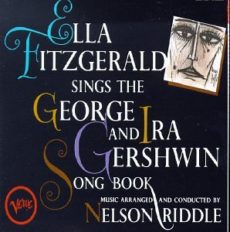
Ira Gershwin was born on December 6, 1896 in New York City, the oldest of four children of Moishe and Rose Gershovitz, who were Russian Jews, born in St Petersburg, and emigrated to the US in 1891. Shy in his youth, Ira spent much of his time at home reading, but from grammar school through college he played a prominent part in several school newspapers and magazines. Graduating in 1914 from Townsend Harris High School where he had met Yip Harburg, they enjoyed a lifelong friendship and a love of Gilbert and Sullivan. He went on to attend City College of New York but dropped out.
His brother George began composing and plugging in Tin Pan Alley from the age of 18, while Ira worked as a cashier in his father’s Turkish baths. It was not until 1921 that Ira became involved in the music business when Alex Aarons signed Ira to write the songs for his next show, Two Little Girls in Blue. Not to appear to trade off George’s growing reputation, he wrote under the pseudonym Arthur Francis, after his youngest two siblings. His lyrics were well received, allowing him successfully to enter the show-business world with just one show.
Later the same year, the Gershwins collaborated for the first time on a score of A Dangerous Maid, which played in Atlantic City and on tour. 1924 saw Ira officially teaming with George to write the music for what became their first Broadway hit Lady, Be Good. Once the brothers joined forces, their combined talents became one of the most influential forces in the history of American Musical Theatre. Together, they wrote the music for more than 12 shows and four films.
Their partnership continued until George’s sudden death from a brain tumor in 1937 and he waited nearly three years before writing again. Returning from this hiatus, Ira teamed up with composers Jerome Kern, Kurt Weill and Harold Arlen among others. Over the next 14 years, Ira gave his farewell to Broadway with the failure of Park Avenue in 1946. In 1947, he took 11 songs George had written but never used, added lyrics, and incorporated them into the film The Shocking Miss Pilgrim.
For the next four decades he would continue to write lyrics leaving such memorable classics as Embraceable You, I Can’t Get Started, Let’s Call the Whole Thing Off, My Ship and They Can’t Take That Away from Me, among numerous others. Lyricist Ira Gershwin passed away on August 17, 1983 at the age of 86 in Beverly Hills, California.

More Posts: lyrics
Daily Dose Of Jazz…
Egberto Amin Gismonti was born December 5, 1947 in Carmo, Rio de Janeiro, Brazil into a musical family. His mother was from Sicily and his father was from Beirut, Lebanon. At the age of six, he started learning the piano at Conservatório Brasileiro de Música. After 15 years of studying the classical repertoire, he went to Paris to delve into modern music under Nadia Boulanger and composer Jean Barraqué encouraged him to write the collective Brazilian experience into his music.
An autodidact guitarist, Egberto returned to Brazil and designed guitars with more than six strings, expanding the possibilities of the instrument. Approaching the fretboard as if it were a keyboard, he gives the impression that there is more than a single guitar player.
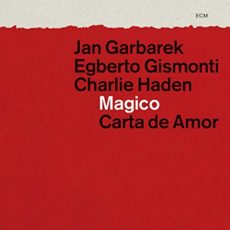
His musical career spans five decades of composing, recording and performing with his Brazilian group Academia de Danças, that included Mauro Senise on saxophone and flutes, Zeca Assumpção on bass and Nenê Realcino Lima Filho on drums and percussion. He also performs in a duo setting with percussionist Naná Vasconcelos, and a trio configuration with the late bassist Charlie Haden and saxophonist Jan Garbarek. Dança das Cabecas, the first ECM record, was nominated by Stereo Review for Album of the Year and was awarded the 1977 Großer Deutscher Schallplattenpreis.
He has recorded more than three dozen albums as a leader, produced and arranged Vasconcelos Saudades album and guested on others. Composer, guitarist and pianist Egberto Gismonti continues to perform, compose and record.

More Posts: guitar
Daily Dose Of Jazz…
Ernie Carson was born December 4, 1937 in Portland, Oregon. He played trumpet from elementary school, and played with the Castle Jazz Band in the mid-1950s prior to a stint in the U.S. Marines.
Following his discharge Ernie moved to and worked in Los Angeles, California with Dave Wierbach, Jig Adams, Ray Bauduc, Pat Yankee, and Turk Murphy. He led several of his own groups from the 1970s, including the Capital City Jazz Band and a new version of the Castle Jazz Band.
After more than twenty years of playing based in Atlanta, Georgia he moved back to his hometown in 1995. Dixieland jazz revival cornetist, pianist and singer Ernie Carson, who left a small catalogue of music as his legacy, passed away on January 9, 2012 in Portland, Oregon.