

Daily Dose Of Jazz…
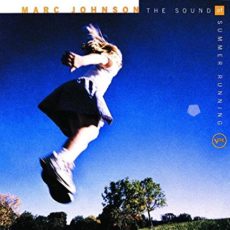
Marc Alan Johnson was born on October 21, 1953 in Omaha, Nebraska but grew up in Texas. By the age of 19, he was working professionally with the Fort Worth Symphony, and during his matriculation at the University of North Texas, he played in the One O’Clock Lab Band and was also the principal bassist in the NTSU Symphony.
1978 saw Johnson joining pianist Bill Evans in what would be Evans’s last trio. He toured and recorded with Evans until the pianist’s death in 1980. In 2007 together with his wife Eliane Elias, he released an Evans tribute album, Something For You.
Marc has recorded albums with Joe Lovano, Michael Brecker, Stan Getz, Bob Brookmeyer, Gary Burton, John Abercrombie, Bill Frisell, Pat Metheny, Eliane Elias, Enrico Pieranunzi, Charles Lloyd, Joey Baron, Philly Joe Jones, Jack DeJohnette, Peter Erskine, Lee Konitz, Paul Motian, Joe Lovano, Toots Thielemans and the list goes on.
As a leader he led Bass Desires, a quartet with Bill Frisell, John Scofield and Peter Erskine, recording several albums for JMT, Verve and ECM record labels. He has received the Danish Music Award for Best Foreign Release, and bassist Marc Johnson continues to collaborate with Eliane as well as compose, record, perform and tour.

More Posts: bass
Daily Dose Of Jazz…
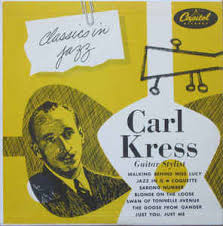
Carl Kress was born on October 20, 1907 in Newark, New Jersey and started on piano before picking up the banjo. Beginning in 1926, he played guitar during his brief time as a member of the Paul Whiteman orchestra. For most of his career, he was a studio musician and sideman buried in large orchestras, and his name was little known.
During the 1920s and 1930s Carl worked recording sessions with The Boswell Sisters, The Dorsey Brothers, Bix Beiderbecke, Hoagy Carmichael, Miff Mole, Red Nichols, Adrian Rollini, and Frankie Trumbauer.
Outside of orchestras, Kress played in several guitar duets with Eddie Lang and Dick McDonough in the Thirties, Tony Mottola in 1941, and George Barnes in the Sixties. The late Thirties saw him recording as a solo with Peg Leg Shuffle, Helena, Love Song, Sutton Mutton and Afterthoughts. During the 1940s, he played Dixieland jazz with Bobby Hackett, Pee Wee Russell, and Muggsy Spanier.
Moving to New York City with his wife Helen who sang with the Satisifiers, Perry Como, Frank Sinatra and Jo Stafford. Guitarist Carl Kress continued a career as a bandleader and session player until his passing away of a heart attack on June 10, 1967 while he was on tour in Reno, Nevada.

More Posts: guitar
Daily Dose Of Jazz…
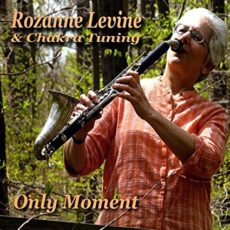
Rozanne Levine was born October 19, 1945 in New York City and grew up in the Bronx. She studied clarinet and guitar as a youth, performing with the school orchestra as a clarinetist. She went on to matriculate through the New York University College of Arts and Sciences with a degree in Psychology. During the same period she took clarinet lessons with Perry Robinson.
By the end of the 1970s she was clarinetist in William Parker’s and Patricia Nicholson Parker ‘s Centering Music / Dance Ensemble. Since the early 1980s, she has also worked with saxophonist Mark Whitecage in his Glass House Ensemble. In 1993 she again joined William Parker and became a member of the Improvisors Collective. At the same time, she founded her group, Christal Clarinets, with Perry Robinson, Anthony Braxton and Joe Fonda.
Levine also worked with Jemeel Moondoc, Theo Jörgensmann, Steve Swell, Gerry Hemingway, Billy Bang, Polly Bradfield, Tristan Honsinger, Dennis Charles, Charles Brackeen, Jemeel Moondoc among others. In the duo RoMarkable with Mark Whitcage, she improvises to his sound sculptures. She composes chakra tuning for her ensemble and uses her own photographs as a starting point for collective imprints. In 1989, she received the commission Grant From The Painted Bride Art Center for her musical and photographic work.
Improvisational clarinetist, composer and photographer Rozanne Levine passed away on June 18, 2013.
More Posts: clarinet
Daily Dose Of Jazz…
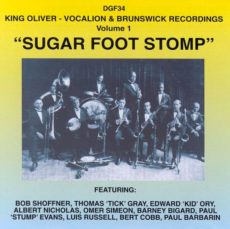
Paul Evans was born on October 18, 1904 in Lawrence, Kansas. Picking up the nickname Stump, originated in his petite size, he was largely taught music by his father, an alto horn player named Clarence Evans. He started out on the same instrument, stretching into trombone for a position in the Lawrence High School Band.
Switching back to alto saxophone not too far into his professional career, he soon became known as one of the better baritone sax players on the scene. He had a reputation for brandishing the full array of saxophones through his many band jobs, even playing the justifiably obscure C-Melody saxophone.
A move to Chicago saw him gigging with a variety of groups including King Oliver’s Original Creole Orchestra, Jelly Roll Morton, Kid Ory and Erskine Tate. He had to quit the latter band due to tuberculosis. Saxophonist Stump Evans passed away from tuberculosis at age 24 on August 29, 1928 in Douglas County, Kansas.

More Posts: saxophone
Daily Dose Of Jazz…
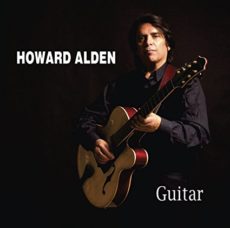
Howard Vincent Alden was born in Newport Beach, California on October 17, 1958. Growing up in Huntington Beach, he played piano, harmonica, the four-string tenor guitar, and then four-string banjo at age ten. After hearing recordings of Barney Kessel, Charlie Christian, Django Reinhardt and other jazz guitar greats, he got a six-string guitar and started teaching himself to play.
As a teenager he played both instruments at venues in the Los Angeles area and studied guitar with Jimmy Wyble when he was 16. In 1977 he studied jazz guitar for a year at the Guitar Institute of Technology (GIT) in Hollywood with Herb Ellis, Joe Pass, and Howard Roberts. While there he assisted Roberts in organizing and preparing curriculum materials, then conducted some of his own classes at GIT.
Making his first trip to the east coast in the summer of 1979, he played in the trio led by vibraphonist Red Norvo for 3 months at Resorts International in Atlantic City. Moving to New York City in 1982, Howard played an extended e engagement at Café Carlyle with jazz pianist/songwriter Joe Bushkin. Soon afterwards, he was discovered by Joe Williams and Woody Herman. 1983 saw him collaborating with Dick Hyman, appearing with him and a host of other musicians at Eubie Blake’s 100th birthday concert.
With Dan Barrett he formed the Alden-Barrett Quintet in 1985 which played in the swing idiom, as he has done for most of his career. He also began partnerships with Kenny Davern and Jack Lesberg, joined George Van Eps, innovator of the seven-string guitar, on tour and recorded albums with him, switching to the seven-string himself in 1992.
Alden has recorded the guitar performances for Sean Penn’s character Emmet Ray in the Woody Allen 1999 film Sweet and Lowdown, and taught Penn how to mime the performances for the film. He has received Best Emerging Guitar Talent by JazzTimes, Talent Deserving Wider Recognition, from Down Beat four times, named Guitar Player of the Year by American Guitar Museum and included on the Down Beat list of Top 75 Guitarists. He continues to perform and compose.

More Posts: guitar