

Daily Dose Of Jazz…
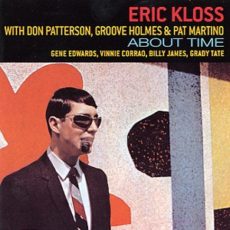
Eric Kloss was born on April 3, 1949 in Greenville, Pennsylvania near Pittsburgh. Blind from birth he attended the Western Pennsylvania School for the Blind, which was run by his father. At 10 he started learning to play the alto saxophone, and two years later he was playing in nightclubs with professional musicians such as Bobby Negri, Charles Bell, and Sonny Stitt. By the age of 16 he had recorded his debut album, Introducing Eric Kloss on the Prestige label in 1965 with Don Patterson and Pat Martino.
His third album as a leader saw him enlist the talents of musicians over twice his age: Jaki Byard, Richard Davis, and Alan Dawson. He continued recording and performing while a student at Duquesne University and being a fan of Elvis Presley and the Ventures, Kloss was attracted to the growth of jazz fusion in the 1960s and ’70s. He would eventually play with fusion musicians Chick Corea, Dave Holland, and Jack DeJohnette.
Eric also collaborated with Richie Cole and Gil Goldstein, and did sessions with Cedar Walton, Jimmy Owens, Kenny Barron, Booker Ervin, Barry Miles, and Terry Silverlight.
In the 1980s, he taught at Rutgers University, then Duquesne and Carnegie Mellon. He collaborated with his vocalist wife Candee in a group called Quiet Fire. Alto saxophonist Eric Kloss has performed and recorded rarely since the 1980s due to health problems.
Sponsored By
Voices From The Community

#preserving genius
More Posts: saxophone
Daily Dose Of Jazz…
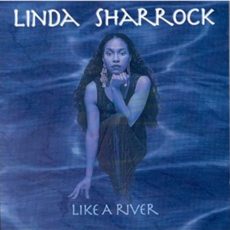
Linda Sharrock was born Linda Chambers on April 2, 1947 in Philadelphia, Pennsylvania and began singing in church choirs as a child. Interested in both folk music and jazz, she studied art while in college and became interested in avant-garde music.
She performed with Pharoah Sanders in the mid-1960s and late in 1966 she married Sonny Sharrock and professionally began using the spelling Lynda. She worked with him and Sanders into the early 1970s, as well as with Herbie Mann.
One of her best-known performances is on the 1969 Sonny Sharrock album Black Woman, released on Vortex Records. She toured Istanbul, Turkey in 1973 and recorded with Joe Bonner in 1974. After her divorce in 1978 she returned to using Linda, though she kept his surname.
A move to Vienna, Austria saw Sharrock working with Franz Koglmann, Eric Watson, and Wolfgang Puschnig well into the 1990s. She worked with ensembles such as the Pat Brothers, Red Sun, and AM4 in the 1980s, and with Harry Pepl in 1992.
Suffering a stroke in 2009 which left her partially disabled and aphasic, she briefly withdrew from the scene before returning in 2012. Since then the avant-garde and free jazz vocalist Linda Sharrock has appeared and recorded in France, Austria, the United Kingdom, the Netherlands, Slovenia, with various ensembles under the Linda Sharrock Network label.
Sponsored By
www.whatissuitetabu.com
#preserving genius
More Posts: vocal
Daily Dose Of Jazz…
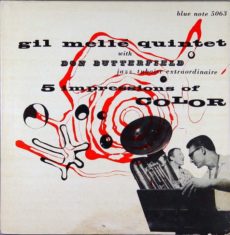
Don Butterfield was born on April 1, 1923 in Centralia, Washington and though he wanted to play trumpet in high school, the band director assigned him to tuba instead. After serving in the U.S. Military from 1942-46 he went on to study the instrument at the Juilliard School.
Butterfield started his professional career in the late 1940s playing for the CBS and NBC radio networks. He played in orchestras, including the American Symphony and on albums by Jackie Gleason until he became a full time member at the Radio City Music Hall.
By the 1950s, Don had switched to jazz, backing such artists as Dizzy Gillespie, Frank Sinatra, Charles Mingus, Rahsaan Roland Kirk, Jimmy Smith, and Moondog. He fronted his own sextet for a 1955 album on Atlantic Records and played the 1958 Newport Jazz Festival.
The mid 1960s saw him taking a temporary, nearly unpaid, position conducting an amateur group of musicians known as the Gloria Concert Band, located in upstate New Jersey. In the Seventies he worked as a session musician playing on recordings for a variety of artists, and on television and film soundtracks, including The Godfather Part II.
As a sideman he recorded with Cannonball Adderley, Nat Adderley, David Amram, Bob Brookmeyer, Kenny Burrell, Donald Byrd, Teddy Charles, Jimmy Cleveland, Bill Evans, Art Farmer, Maynard Ferguson, Dizzy Gillespie, Jimmy Heath, Roland Kirk, John Lewis, Arif Mardin, Gil Mellé, Charles Mingus, Modern Jazz Quartet, James Moody, Wes Montgomery, Lee Morgan, Oliver Nelson, Oscar Peterson, Sonny Rollins, Lalo Schifrin, Jimmy Smith, Billy Taylor, Clark Terry, The Thad Jones / Mel Lewis Orchestra and Stanley Turrentine
Suffering a stroke in 2005 left him unable to no longer play the tuba and on November 27, 2006 tubist Don Butterfield passed away in Clifton, New Jersey from a stroke-related illness.
Sponsored By
Bronze Lens
#preserving genius
More Posts: tuba
Daily Dose Of Jazz…
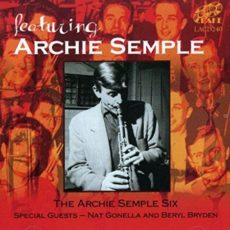
Archie Semple was born Archibald Stuart Nisbet Semple on March 31, 1928 in Edinburgh, Scotland and played locally in Edinburgh at the start of his career, often with his trumpeter brother John.
Semple led several of his own bands before joining Mick Mulligan in 1952. He then worked with Freddy Randall in 1953-54, Roy Crimmins and Alex Welsh from 1955 to 1963, becoming one of Welsh’s most important sidemen.
He recorded as a leader in the late 1950s and early 1960s as well, but retired due to an encroaching drinking problem that led to health issues in the middle of the decade.
A very distinctive player with a rich and quirky musical imagination, Semple was one of the most strikingly individualistic musicians to emerge from the sometimes predictable British trad scene. His presence in the already formidable Welsh band helped to create much memorable music.
Clarinetist Archie Semple, whose influences included Edmond Hall and Pee Wee Russell passed away on January 26, 1974 in London, England.
Sponsored By

#preserving genius
More Posts: clarinet
Daily Dose OF Jazz…
George Edward “Ted” Heath was born March 30, 1902 in Wandsworth, England. After playing tenor saxophone at the age of six, encouraged by his father and leader of the Wandsworth Town Brass Band, he later switched to trombone.
Earning a living for his family in the post-war years Ted formed a band along with his brother Harold and three other musicians, played to commuters outside London Bridge Station and outside the Queen’s Hall Gardens venue. It was here that he was spotted and asked to play with the Jack Hylton Band who had a residence there. Though not having the experience required he did not last long, his professional career began and he went on to pursue a career as a professional musician.
His first real band gig was in the 1920s touring Europe with the American band called the Southern Syncopation Orchestra, followed by the Metro-Gnomes, a small band fronted by Ennis Parkes, then again joined Hylton’s theatre band. Heath played with the Kit Cat Club band led by American Al Starita, and heard Bunny Berrigan, Tommy and Jimmy Dorsey, and Paul Whiteman when they toured Europe.
By 1928 he joined Bert Ambrose’s orchestra at London’s Mayfair Hotel and stayed until 1935 when he moved on to Sydney Lipton’s orchestra at the Grosvenor House. But it was Ambrose who taught Heath how to be a bandleader during a time that Heath became the most prominent trombone player in Britain, renowned for his perfect tone. He played on numerous recordings. During the late ’30s and early ’40s, he played as a sideman on several Benny Carter sessions.
In 1940, Heath joined Geraldo’s orchestra and played numerous concerts and broadcasts and became one of the “boys” in Geraldo’s vocal group, ‘Three Boys and a Girl’. His composition That Lovely Weekend with Dorothy Carless on vocal became an immediate wartime hit. The royalties from this song and another composition Gonna Love That Guy allowed Heath to form his own band.
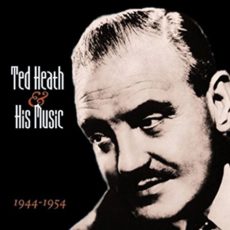
On D-Day 1944, the Ted Heath & His Music band was officially formed and played on the BBC radio. He went on to provide music for film, performed dates with Lena Horne and Ella Fitzgerald, toured Scandinavia, were regular Poll Winners in the Melody Maker and the New Musical Express and performed twice for King George VI. He held Sunday Night Swing Sessions at the London Palladium from 1947 to 1955.
During the Fifties he toured the U.S. that contracted to play Nat King Cole, June Christy and the Four Freshmen and consisted of 43 concerts in 30 cities in 31 days climaxing in a Carnegie Hall. So successful was the tour that after so many encore calls at the Carnegie Hall performance that Nat King Cole had to come out on stage and ask people to leave. Ted would later successfully tour the US again and also toured Australia and Europe.
In addition to Cole, Heath established close personal and professional relationships with Woody Herman, Count Basie, Marlene Dietrich, Johnny Mathis and Tony Bennett. He worked with Sarah Vaughan, Mel Torme, Donna Hightower and others. His band members included Ronnie Scott, Stan Tracey, Kenny Baker, Duncan Campbell, Don Rendell, Tommy Whittle, Don Lusher, Wally Smith, Jack Parnell, Ronnie Verrell, Johnny Hawksworth and singers Dickie Valentine, Lita Roza and Dennis Lotis. in the ’50s gave the band more teenage appeal.
He commissioned over 800 original scores and arrangements from Tadd Dameron, George Shearing, Reg Owen, John Keating, Kenny Graham, Ken Moule, Robert Farnon, Woolf Phillips, Ron Roullier, Bill Russo, Johnny Douglas, Ron Goodwin and Ralph Dollimore.
Trombonist, composer and bandleader Ted Heath, who led the greatest post-war big band and recording over 100 albums, passed away on November 18, 1969 at the age of 67.
Sponsored By
#preserving genius
More Posts: trombone