

Daily Dose Of Jazz…
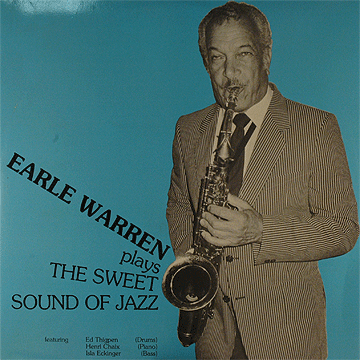
Earle Warren was born on July 1, 1914 in Springfield, Ohio. He was the primary alto saxophonist and occasional singer in the Basie orchestra in its formative years and its heyday, from 1937 to the end of the 1940s. After the break-up of Basie’s 1940s band, in 1949, he worked with former Basie trumpeter, Buck Clayton.
Earle also played some rock´n roll working for Alan Freed in Alan Freed’s Christmas Jubilee, December 1959, which was the very last big Alan Freed show before payola put an end to the legendary Freed. He also appeared in the 1970s jazz film of Count Basie and his band, “Born to Swing”.
In his later years, Warren performed often at the West End jazz club at 116th and Broadway in New York City, helming a band called The Countsmen, which also featured fellow former Basie-ite Dicky Wells on trombone and Peck Morrison on bass. He lived part of the time in Switzerland where he fathered a child in a May/September romance. Alto saxophonist Earle Warren passed away on June 4, 1994.

Put A Dose In Your Pocket
Daily Dose Of Jazz…
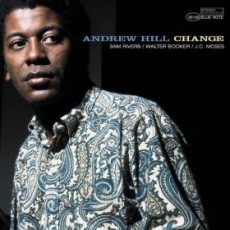
Andrew Hill was born June 30, 1931 in Chicago, Illinois and took up the piano at the age of thirteen, and was encouraged by Earl Hines. He studied informally until 1952. While a teenager he performed in rhythm and blues bands and toured with jazz musicians, including Charlie Parker and Miles Davis.
Hill first recorded as a sideman in 1954, but made his reputation recording as a leader for Blue Note from 1963 to 1970, featuring important post-bop musicians including Joe Chambers, Richard Davis, Eric Dolphy, Bobby Hutcherson, Joe Henderson, Freddie Hubbard, Elvin Jones, Woody Shaw and Tony Williams.
Hill is recognized as one of the most important innovators of jazz piano in the 1960s but rarely worked as a sideman after the 1960s, preferring to play his own compositions, which may have limited his public exposure.
As an educator he held positions at Portland State University, held residencies at Colgate University of Hamilton, Wesleyan University, University of Michigan, University of Toronto, Harvard University and Bennington College.
Returning to New York City in 1990, composer and pianist Andrew Hill, whose unique idiom of chromatic, modal and free improvisation, made his final public appearance on March 29, 2007 at Trinity Church. Suffering from lung cancer during his later years he died in his home on April 20, 2007. In May 2007, he became the first person to receive a posthumous honorary doctorate from Berklee College of Music.
Give The Gift Of Knowledge
Daily Dose Of Jazz…
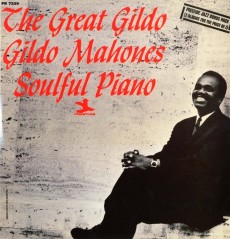
Gildo Mahones was born on June 29, 1929 in New York City and early in his career the pianist played with Joe Morris and Milt Jackson in the late Forties. After serving in the Army during the Korean War, he played with Lester Young from 1953 to 1956, where he made his recording debut.
By the late 50s he was touring with the Jazz Modes comprised of Charlie Rouse, Julius Watkins, Sonny Stitt and Benny Green. From 1959 to 1964 he played behind Lambert, Hendricks and Ross. When LHR split, Mahones relocated to Los Angeles working both as a studio musician and as a jazz sideman. Yet he would labor in obscurity for many years.
During this time he led his own trio, and as a mainstay in the West Coast jazz world, he appeared on recordings with such luminaries as O.C. Smith, Lou Rawls, James Moody, Harold Land, Frank Wess, Coleman Hawkins, Blue Mitchell, Leon Thomas, Jim Hall, Big Joe Turner, Lorez Alexandria, Benny Carter, Kenny Burrell, Pony Poindexter, Booker Ervin and Jimmy Witherspoon.
He led two record dates for Prestige in 1963 and 1964 and another for Interplay Records in 1990. For many years he was Lou Rawls music director, worked regularly at the Lighthouse and in 2013 played Berkeley’s Jazzschool. He continues to seek work and be active on the jazz scene.
Take A Dose On The Road
More Posts: piano
Hollywood On 52nd Street
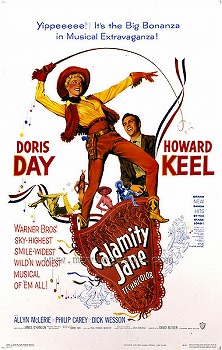
Secret Love, a popular song written in 1953 with music by Sammy Fain and lyrics by Paul Francis Webster was first performed by Doris Day in the film Calamity Jane that also starred Howard keel. It received an Academy Award for Best Original Song and Day recorded the best-selling record of the song, which reached #1 on both the Billboard and Cash Box charts in 1954.
Calamity Jane is a Wild West themed film musical released in 1953 devised by Warner Brothers in response to Annie Get Your Gun. It was loosely based on the life of the real Wild West heroine and explores an alleged romance between her and Wild Bill Hickok. The film starred Doris Day as the title character and Howard Keel as Hickok.
Secret Love won the Academy Award for Best Original and was also nominated for Scoring of a Musical Picture and Best Sound Recording.
Daily Dose Of Jazz…
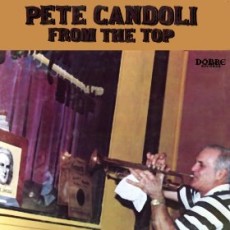
Pete Candoli was born Walter Joseph Candoli in Mishawaka, Indiana on June 28, 1923. And his professional career began 13 years later when he became a member of the American Federation of Musicians. Quickly finding a spot as lead trumpeter, by 1940 had become a member of Sonny Dunham’s band, a year later in Tommy Dorsey’s band and during this time from ’41 to ’43 he performed in three films – Las Vegas Nights, Girl Crazy and Upbeat In Music. By 1944 he was playing with the Teddy Powell and bringing his younger brother Conte into the major leagues of big band.
After 1945, Candoli worked with several bands including Stan Kenton’s, then drifted into the West Coast jazz and studio scenes. Despite his range, he rarely played lead, reserved instead for feature roles and became a sought after studio musician and favorite collaborator of many influential musicians and performers, including Peggy Lee, Henry Mancini and Frank Sinatra.
Pete was inducted into The International Jazz Hall of Fame in 1997, the “Big Band Hall of Fame” in 2003 and won the Down Beat, Metronome and Esquire “All American Band Trumpet Bronze Award”, and Look magazine named him one of the seven all-time outstanding jazz trumpet players—the others being Louis Armstrong, Bix Biederbecke, Harry James, Bunny Berigan, Dizzy Gillespie and Bobby Hackett.
Candoli’s solo work is notable for his eloquent roles, supportive of the efforts of others, was adroit in the use of staccato and had a reputation for his high-note ability, that was used in West Side Story’s Dance at the Gym sequence. Trumpeter Pete Candoli passed away from complications due to prostate cancer on January 11, 2008.
Dose A Day – Blues Away
More Posts: trumpet