

Daily Dose Of Jazz…
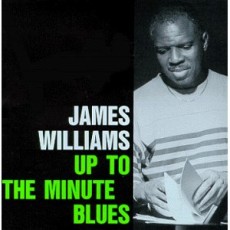
James Williams was born on March 8, 1951 in Memphis, Tennessee and grew up listening to the sounds of Ray Charles, Stevie Wonder, Marvin Gaye and King Curtis. He started playing piano at age 13 and hometown hero Phineas Newborn was his primary influences of jazz piano. He served as organist at the Eastern Star Baptist Church for six years early in his career. He went on to matriculate through Memphis State University with fellow piano students Mulgrew Miller and Donald Brown. It was here that he began playing jazz.
After graduating he immersed himself in the city’s jazz community, performing with Frank Strozier, Jamil Nasser, George Coleman, Harold Mabern, Jr., and other local greats. In 1973 he became a faculty member at the Berklee College of Music, played with Alan Dawson’s group alongside visiting musicians such as Milt Jackson, Art Farmer and Sonny Stitt. His first album as a leader came in 1977 and the next year he joined Art Blakey’s Jazz Messengers, remaining there for four years.
In the early 1980s in Boston he played with Thad Jones, Joe Henderson, Clark Terry, Chet Baker and Benny Carter but by 1984 James was in New York City gigging with Dizzy Gillespie, Freddie Hubbard and Kenny Burrell, Ray Brown, Tony Williams, Elvin Jones and Art Farmer, to name a few.
He would form his own group, the “Intensive Care Unit”, with Christian McBride, Billy Pierce and Tony Reedus. It was during this period in 1984 that he penned and recorded one of his most famous jazz compositions on the Sunnyside label is “Alter Ego”.
By 1999 he was Director of Jazz Studies at William Paterson University, where he remained until his death of liver cancer on July 20, 2004, age 53.
More Posts: piano
Daily Dose Of Jazz…
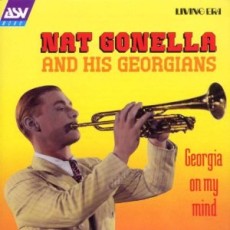
Nathaniel Charles Gonella was born March 7, 1908 in East London, England and took up cornet as a child while at St. Mary’s Guardian School, an institution for underprivileged children. His first professional job interrupted his stint as a furrier’s apprentice when he joined Archie Pitt’s Busby Boy’s Band in 1924. He remained with the band until 1928, and it was during this period that he became acquainted with the early recordings of Louis Armstrong and the New Orleans jazz style.
Nat played and recorded with many prominent jazz musicians, including Billy Cotton, Archie Alexander, Digby Fairweather, Lew Stone, Bob Bryden and Roy Fox. His distinctive vocal style was reminiscent of his idol, Louis Armstrong, though his voice was often eclipsed by his achievements as a bandleader and trumpeter.
Gonella’s standing grew even more quickly after the formation of his own band, “The Georgians”, in 1935, taking the name from his highly popular recording of “Georgia On My Mind” in 1932. He later formed a big band and quickly became a headliner on the variety circuit.
Nat flirted briefly with bebop but returned to the variety stage until a revival of tradition jazz came in the late Fifties. His performing and recording success lasted until the advent of The Beatles in the Sixties, however he toured the northern club circuit and over the next thirty years he continued to sing occasionally with various bands until his death in Gosport on August 6, 1998 at age 90.
More Posts: bandleader,mellophone,trumpet,vocal
Daily Dose Of Jazz…
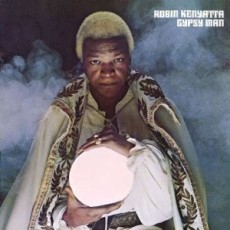
Robin Kenyatta was born Robert Prince Haynes on March 6, 1942 in Moncks Corner, South Carolina but grew up in New York City, learning to play the alto saxophone. He played with Bill Dixon in the 1960s and playing with his project “The October Revolution in Jazz”. Later that decade he played with Jazz Composer’s Orchestra, Roswell Rudd, Sonny Stitt, Archie Shepp and Buddy Miles among others.
By the 1970s he was playing with Alan Silva and Andrew Hill; for a brief time he experimented with instrumental pop music during this decade as well. He moved to Europe during the Seventies, finding it easier to make a living as a jazz musician.
Later in his career he would play with musicians such as Dizzy Gillespie, B. B. King, Dr. John and George Benson; played the Montreux Jazz Festival and went with his own groups on a European tour.
Kenyatta would go on to lead a jazz school in Lausanne, Switzerland during this period. In 2002 Kenyatta returned to the USA becoming active as a director of music in Boston. He died on October 28, 2004 at the age of 62 in Lausanne, leaving behind a catalogue of thirteen albums as a leader and eight as a sideman.
More Posts: saxophone
Daily Dose Of Jazz…
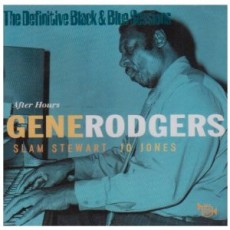
Gene Rodgers was born on March 5, 1910 in New York City. He worked professionally as a pianist from the mid-1920s and over the next few years made recordings with Clarence Williams and King Oliver while also playing with Chick Webb and Teddy Hill.
Rodgers started his own variety show in the 1930s, doing tours of Australia and England recording with Benny Carter in 1936 while in the latter. Upon his return to the States in ‘39 he played with Coleman Hawkins, Zutty Singleton and Erskine Hawkins into the early 40s. During the Forties he worked in Hollywood appearing in the film Sensations of 1945 with Cab Calloway and Dorothy Donegan. After this he worked mainly in New York, leading a trio for many years.
Rodgers appears, with opening title credits, in the 1947 film “Shoot To Kill”, and appearing in the film are two of his compositions “Ballad of the Bayou” and later is “Rajah’s Blues”.
Rodgers recorded sparingly as a leader; he did two sides for Vocalion in 1936, four in a session for Joe Davis in 1945, and albums as a trio leader for EmArcy, Black & Blue Records and 88 Up Right. He played with the Harlem Blues and Jazz Band in 1981-82.
Gene Rodgers, pianist and arranger, best known for his contributions on Coleman Hawkins’ 1939 recording of “Body and Soul”, passed away on October 23, 1987 in New York City.
More Posts: piano
Daily Dose Of Jazz…
Jason Marsalis was born on March 4, 1977 in New Orleans, Louisiana and is the youngest son of pianist Ellis Marsalis. Inheriting the virtuosity and compositional skills associated with the Marsalis family, Jason developed a distinctive, polyrhythmic drumming style. His first professional gig was with his father at the age of twelve, he studied classical percussion at Loyola University in New Orleans, and has worked as a sideman with straight-ahead combos, funk fusion bands, with Casa Samba, a Brazilian percussion ensemble and even a Celtic group.
Jason introduced percussionist Bill Summers to trumpeter Irvin Mayfield and together they co-founded the wildly successful Los Hombres Calientes. Then, at the height of that band’s popularity he left to join up with acclaimed pianist Marcus Roberts.
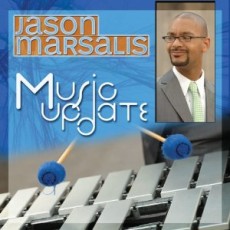
Most recently, Jason has been playing vibraphone, releasing his first album as a leader on vibes in 2009 titled “Music Update”. Earning 4.5 out of 5 stars in Downbeat Magazine, it showcases Jason playing the vibes with his working quartet as well as several over-dubbed drum ensembles titled the “Disciplines”.
Jason also continues to work as a sideman with among others Marcus Roberts, Ellis and Delfeayo Marsalis, John Ellis, Dr. Michael White and Shannon Powell. Along with his father and brothers, he is a recipient of the 2011 NEA Jazz Masters Award and is featured in the non-fiction film on New Orleans jazz culture, “Tradition Is A Temple”.
More Posts: drums,vibraphone