

Daily Dose Of Jazz…
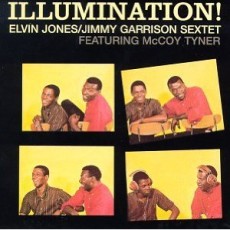
Jimmy Garrison was born on March 3, 1933 in Miami, Florida but grew up in Philadelphia where he learned to play the bass, coming of age during that city’s thriving jazz scene that including McCoy Tyner, Reggie Workman, Henry Grimes and Lee Morgan. He played around Philadelphia with local groups until 1958 when Philly Joe Jones brought him to New York City.
During the time he would freelance with Lennie Tristano, Benny Golson, Bill Evans and Kenny Dorham but got seriously noticed when he joined Ornette Coleman at the Five Spot. Garrison’s long association with Ornette Coleman produced his first recording with him on “Ornette on Tenor” and “Art of the Improvisers”.
Jimmy would go on to play and record with Archie Shepp and Pharoah Sanders but his greatest collaboration was his six-year collaboration with the John Coltrane Quartet when he replaced Reggie Workman. In concert with Trane he would play unaccompanied solos, sometimes as a prelude to a song before the other musicians joined in.
He and drummer Elvin Jones have been credited with eliciting more forceful playing than usual from Coleman on the albums “New York Is Now” and “Love Call”. Before his passing he would play with Kenny Dorham, Curtis Fuller, Jackie McLean, Lee Konitz, Hampton Hawes, Benny Golson and Tony Scott. Bassist Jimmy Garrison passed away on April 7, 1976.
More Posts: bass
Daily Dose Of Jazz…
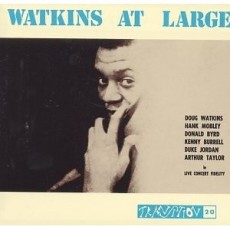
Douglas Watkins was born on March 2, 1934 in Detroit Michigan. After gaining experience and a reputation as one of many very talented jazzmen on the local Detroit scene, Watkins began touring with James Moody in 1953 followed by a stint with the Barry Harris Trio. In 1954 he settled in New York City and was an original member of the Jazz Messengers from 1955 – 56.
Doug went on to spend a year with Horace Silver and then freelanced with a who’s who list of the hard boppers such as Art Farmer, Kenny Burrell, Phil Woods and Hank Mobley. In 1956 at just 21 years old he was a sideman on Sonny Rollins’ “Saxophone Colossus” alongside Max Roach and Tommy Flanagan, showcasing examples of his fine work on Blue 7 and St. Thomas.
In 1958 Watkins joined Donald Byrd for a European tour, taking up extended residence at Le Chat Qui Peche, a jazz club on Paris’ Left Bank. Along with Byrd, tenor saxophonist Bobby Jaspar, pianist Walter Davis, Jr. and drummer Art Taylor, Watkins made two albums with Byrd during this period, one recorded in the club and another at a formal concert featuring Byrd’s quintet. In 1961 he joined Charles Mingus’ group when Mingus temporarily ventured onto the piano stool, producing such gems as “Oh Yeah!!!” and “Tonight At Noon”.
Doug was known for his superb walking tone and distinct phrasing that was right on the beat, forming an organic, indivisible relationship with his instrument as he swayed with it in perfect time. Throughout his short but prolific career Watkins produced only two sessions as a leader but became the bassist of choice when his cousin by marriage, Paul Chambers was unavailable. He appeared on over 350 recordings working with Red Garland, Yusef Lateef, Philly Joe Jones, Bill Hardman, Gene Ammons and Lee Morgan just to name a few giants.
The hard bop jazz bassist Doug Watkins died in a head-on automobile crash on February 5, 1962 when he fell asleep behind the wheel while driving from Arizona to San Francisco to play a gig with Philly Joe Jones. He was just 27 years old but his legacy as a superb musician, unselfish and enabling ensemble player and a bassist-walker with few peers remains today.
More Posts: bass
From Broadway To 52nd Street
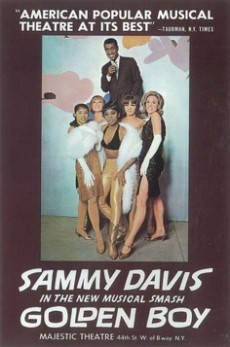
Golden Boy opened the Majestic Theatre on October 20, 1964 starring Sammy Davis Jr., Billy Daniels, Paula Wayne, Johnny Brown, Lola Falana and Lou Gossett. Charles Strouse & Lee Adams composed the music from which Night Song was plucked to become a jazz standard for a show that ran 568 performances.
The Story: The play reflects the struggle of an ambitious young black man in America and focuses on Joe Wellington, a young man from Harlem who, despite his family’s objections, turns to prizefighting as a means of escaping his ghetto roots to find fame and fortune. He crosses paths with a Mephistopheles-like promoter Eddie Satin and eventually betrays his manager Tom Moody when he becomes romantically involved with Moody’s girlfriend Lorna Moon. In his quest for glory loses his soul and his life.
Broadway History: These innovations in lighting also made advertising on Broadway much more effective. The world’s first electrically lit large commercial billboard was erected over Madison Square in 1892. It read, “Buy Homes On Long Island/Swept By Ocean Breezes” and was paid for by the Long Island Rail Road. Though the sign had disappeared from the New York skyline by 1895, its brief exposure caught the eye of every business owner on Broadway, which by then included the square intersection at W. 42nd, Broadway, and 7th Avenue (the tourist-glutted hotspot we all know and love, “Times Square”, which was named after The New York Times in 1904, when the publication moved into its new headquarters building there, had decided to advertise with the new “spectaculars,” so called because of their large, complex light displays and intricate designs, some flashed, and some even had animated sections that moved.
Sponsored By

www.whatissuitetabu.com
Daily Dose Of Jazz…
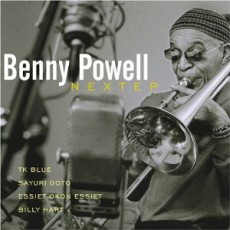
Benjamin Gordon Powell Jr. was born on March 1, 1930 in New Orleans, Louisiana. He first played professionally at age 14 and by 18 he was playing with Lionel Hampton. In 1951 he left Hampton’s band and joined Count Basie, where he remained until 1963. Powell takes the trombone solo in the bridge of Basie’s 1955 recording of “April In Paris”.
After leaving Basie, Benny freelanced in New York City and from 1966 to 1970 he was a member of the Thad Jones-Mel Lewis Jazz Orchestra, playing Monday nights at the Village Vanguard. Among other engagements, he played in the house band of the Merv Griffin Show, relocating to Los Angeles, California when the show moved to the West Coast in 1970.
During this period Powell did extensive work as a session musician working with Abdullah Ibrahim, John Carter and Randy Weston. In the 80s he moved back to New York and added educator to his resume becoming part of the Jazzmobile and later, in 1994 teaching at the New School for Jazz and Contemporary Music.
Benny Powell, tenor and bass trombonist, died following back surgery on June 26, 2010 in Manhattan, New York City. He was 80 years old.
More Posts: trombone
Daily Dose Of Jazz…
Donald Rafael Garrett was born on February 28, 1932 in El Dorado, Arkansas but was raised in Chicago, Illinois. While in high school he first studied clarinet and then bass under Captain Walter Dyett. By the late 50s he was working closely with Muhal Richard Abrams, becoming a member of his Experimental Band in the Sixties.
It was during this time that he worked with Ira Sullivan, Eddie Harris, Dewey Redman and Rahsaan Roland Kirk but by the mid-sixties he relocated to San Francisco and formed a band called Sound Circus. He stayed on the West coast into the 70s working with such jazz greats as Archie Shepp, Sonny Rollins, Pharoah Sanders and numerous more including performing and recording on four John Coltrane albums – Om, Kulu Se Mama, Selflessness and Live In Seattle.
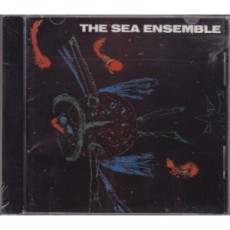
In 1971 he formed the Sea Ensemble with Zusaan Kali Fasteau and embarked on a world tour for the next several years, the duo funding their travels with Fasteau giving music lessons and Garrett skillfully making bamboo flutes. Throughout his career he studied Turkish music, added flute to his instrumental repertoire, became an educator, writer, researcher and continued to perform and record with Johnny Griffin, Sonny Stitt, Joe Henderson, Billy Bang and other great jazz musicians.
Donald Garrett, multi-instrumentalist best known for his work with John Coltrane and the free jazz musicians and improvisers of the 60s and 70s, passed away on August 17, 1989.
More Posts: saxophone