

Daily Dose Of Jazz…
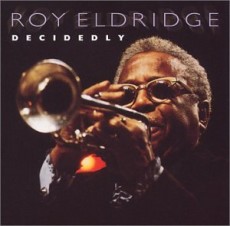
Roy Eldridge was born David Roy Eldridge on January 30, 1911 on the North Side of Pittsburgh, Pennsylvania. His mother was a gifted pianist with a talent for reproducing music by ear, a talent inherited from her. He began playing piano at age five, took up drums at six, played bugle in church and by eleven began seriously honing the instrument, especially the upper register. Though lacking a proficiency at sight-reading, he could replicate melodies by ear effectively.
Eldridge’s early years had him leading and playing in a number of Midwest bands and absorbed the influence of saxophonists Benny Carter and Coleman Hawkins in developing an equivalent trumpet style. Leaving home after expulsion from high school in ninth grade he joined a traveling show at sixteen until it folded in Youngstown, Ohio. He then joined a carnival, returned home and found work in another traveling show. By 20, he led an orchestra, auditioned for Horace Henderson, played in a number of territory bands, formed his own short-lived band once again, moved to Milwaukee and took part in a cutting contest with Cladys “Jabbo” Smith.
Eldridge moved to New York in 1930, playing in Harlem dance bands, and got the nickname “Little Jazz” from Ellington saxophonist Otto Hardwick. He laid down his first recorded solos with Teddy Hill in 1935, led his own band at the reputed Famous Door nightclub and recorded a number of small group sides with singer Billie Holiday. He would join Fletcher Henderson’s band, becoming his featured soloist because of his ability to swing a band. He would move to Chicago to form a band with his older brother, playing saxophone and arranging. In the 40s he joined the Gene Krupa Orchestra, staying until the band broke up after Krupa was jailed for marijuana possession.
Over the course of his career, Little Jazz would play with Anita O’Day, Jazz At The Philharmonic, Coleman Hawkins, Ella Fitzgerald, Earl Hines, Abbey Lincoln, Charles Mingus, Eric Dolphy, Kenny Dorham, Max Roach, Count Basie, Artie Shaw and the list goes on and on. His sophisticated use of harmony, including the use of triton substitutions, his virtuosic solos exhibiting a departure from the smooth and lyrical style of earlier jazz trumpet innovator Louis Armstrong, and his strong impact on Dizzy Gillespie mark him as one of the most influential musicians of the swing era and a precursor of bebop.
In 1971 trumpeter Roy Eldridge was inducted into the Down Beat Jazz Hall of Fame. After suffering a heart attack in 1980, he gave up playing. He died at the age of 78 on February 26, 1989 at the Franklin General Hospital in Valley Stream, New York, three weeks after the death of his wife, Viola.

Give The Gift Of Knowledge
More Posts: trumpet
Daily Dose Of Jazz…
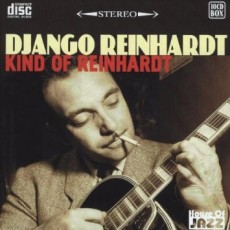
Jean Reinhardt better known as “Django” was born on January 23, 1910 in Liberchies, Pont-a-Celles, Belgium into a French family of Manouche Romani descent. His family made cane furniture for a living but it was comprised of several good amateur musicians. He spent most of his youth in Romani encampments close to Paris, where he started playing violin, banjo and guitar.
Reinhardt was attracted to music at an early age, first playing the violin. At age 12, he received a banjo-guitar as a gift and quickly learned to play by mimicking the fingerings of musicians he watched. By age 13, Reinhardt was able to make a living playing music. He received little formal education and acquired the rudiments of literacy only in adult life. His first known recordings, made in 1928, were of him playing the banjo.
At age 18 in 1928 Reinhardt was injured in a fire started by a knocked over candle. Over half his body suffered burns, two fingers and one leg were paralyzed and it was thought he would never walk or play again. But with therapy and practice he re-learned to play differently and walked with a cane.
The years between 1929 and 1933 were formative musically for Django when he became attracted to jazz listening to Louis Armstrong. Shortly thereafter he met Stephane Grappelli who had similar interests. The two became musical partners. In 1934, with an invitation by Hot Club de France secretary Pierre Nourry, he and Grappelli formed the Quintette du Hot Club de France. Over the years it hosted different players and adding a singer but for the most part allowed only stringed instruments.
In 1933, Reinhardt recorded two takes each of vocal numbers “Parce-que je vous aime” and “Si, j’aime Suzy”, continued to record into 1934, and in 1935 he and Stephane recorded sides for Decca Records. He played and recorded with Adelaide Hall, Coleman Hawkins, Benny Carter, Rex Stewart, Louis Armstrong, Dizzy Gillespie, and Duke Ellington.
By 1946, he was debuting at the Cleveland Music Hall as a special guest soloist with Duke Ellington and His Orchestra. As part of the U.S. tour Django also played two nights at Carnegie Hall, then secured an engagement at Café Society Uptown, where he played four solos a day, backed by the resident band drawing large audiences.
Returning to France in ’47, Reinhardt became re-immersed in Gypsy life, finding it difficult to adjust to the postwar world. Missing sold-out concerts, showing up without guitar or amplifier and wandering off were commonplace. However, during this period he continued to attend the R-26 artistic salon in Montmartre, improvising with his devoted collaborator, Stéphane Grappelli.
From 1951 until his death at age 43 on May 16, 1953 of a brain hemorrhage, Reinhardt retired to Samois-sur-Seine near Fontainbleau. He had continued to play in Paris jazz clubs and began playing electric guitar. (He often used a Selmer fitted with an electric pickup, despite his initial hesitation about the instrument.) His final recordings made with his “Nouvelle Quintette” in the last few months of his life show him moving in a new musical direction; he had assimilated the vocabulary of bebop and fused it with his own melodic style.
Give The Gift Of Knowledge
More Posts: guitar
Daily Dose Of Jazz…
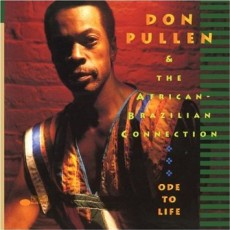
Don Pullen was born on December 25, 1941 and was raised outside Roanoke, Virginia and learned to play the piano at an early age. He played with the choir in his local church, was heavily influenced by his jazz pianist cousin, Clyde “Fats” Wright and took some lessons in classical piano. He knew little of jazz, concentrating mainly on church music and the blues.
Leaving Roanoke for Johnson C. Smith University in North Carolina to study for a medical career, Pullen soon realized that his true vocation was music. After playing with local musicians and being exposed for the first time to albums of the major jazz musicians and composers he abandoned medical studies for music.
By 1964 he was in Chicago with Muhal Richard Abrams, then moved to New York City and immersed in the avant-garde recording with Giuseppi Logan. Along with band mate Milford Graves formed a duo, started a small label and recorded his first sessions that did great in Europe. He turned to more profitable organ and during the 60’s and 70s played trio dates and backed such vocalists as Arthur Prysock, Irene Reid, Ruth Brown, Jimmy Rushing and Nina Simone. He held a brief position with Art Blakey and the Jazz Messengers in 1972.
Over the course of his career he would play with Charles Mingus, lead his own groups, form the George Adams/Don Pullen Quartet, put together the African Brazilian Connection, worked with Native American drummers and choir, and played with Nilson Matta, Carlos Ward, Gary Peacock, Tony Williams, Hamiet Bluiett, Bill Cosby, Jack Walrath, Maceo Parker, Roy Brooks, Jane Bunnett and David Murray among others.
Don Pullen jazz pianist, organist and composer of blues to bebop, who recorded over 30 albums as a leader and more than three dozen as a sideman, passed away of lymphoma on April 22, 1995.
Put A Dose In Your Pocket
Daily Dose Of Jazz…
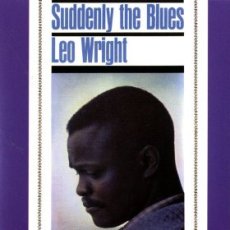
Leo Wright was born on December 14, 1933 in Wichita Falls, Texas and studied saxophone under the tutelage of his father. His first recording was made in 1958 with vibist Dave Pike and the next year played the Newport Festival with bassist Charles Mingus’ group. He followed this joining Dizzy Gillespie’s band in 1959, remaining until 1962.
In addition to his sideman work, Wright established himself as a leader in the early ’60s, leading New York-based bands that included the likes of Ron Carter, Junior Mance, Charlie Persip and Kenny Burrell, among others. In 1960 he signed with Atlantic Records and recorded “Blues Shout” with Mance, Persip, Art Davis and Richard Williams.
After leaving Gillespie’s band, Leo went on to play and record with Lalo Schifrin, Jack McDuff, Antonio Carlos Jobim, Johnny Coles, Gloria Coleman and Jimmy Witherspoon. Moving to Europe he spent time working with George Gruntz, Carmell Jones and Lee Konitz in the group Alto Summit. Eventually he moved to Berlin playing in a studio band and freelancing.
Back in New York by 1978, Wright co-led a studio session Red Garland for Muse Records and then retired from music around 1979. He re-emerged in the mid-’80s and was playing gigs in Paris by 1986, working with Grachan Moncur, Kenny Drew Sr. and Nat Adderley. In the years before his death Leo would perform and record with his wife Elly Wright, making his final recording with her titled “Listen To My lea”.
Leo Wright, bop alto saxophonist and one of the finest flutists jazz has known, passed away on January 4, 1991 in Vienna, Austria.
Inspire A Young Mind
Daily Dose Of Jazz…
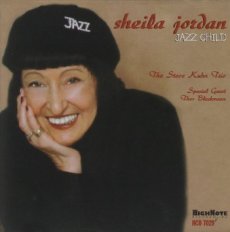
Sheila Jordan was born Sheila Jeanette Dawson on November 18, 1928 in Detroit, Michigan but grew up in Summerhill, Pennsylvania. By the age of 28 she returned to Detroit and began playing piano and singing semi-professionally in jazz clubs. She worked a trio that composed lyrics to Charlie Parker’s arrangements, who influenced her greatly.
In 1951, she moved to New York and started studying harmony and music theory with Lennie Tristano and Charles Mingus and married pianist Duke Jordan a year later. By the 60s she was gigging and doing session work in Greenwich Village and around town in various clubs; and in 1962 was discovered and recorded by George Russell on his album The Outer View. That led to her recording Portrait of Sheila in 1962 that was sold to Blue Note.
Over the next decade Sheila withdrew from music, supported herself as a legal secretary but by the mid 70s was working again with musicians like Don Heckman, Roswell Rudd, Lee Konitz and Steve Kuhn. She has had a notable career as a solo artist since then with her ability to improvise entire lyrics, although success has been limited.
Jordan has been an Artist In Residence teaching at City College, worked in an advertising agency, recorded for Steeplechase, ECM, Home Eastwind, Grapevine, Palo Alto, Blackhawk and Muse record labels. She has performed and recorded with George Gruntz, Steve Swallow, Carla Bley, Harvie Swartz and Bob Moses among others and as a songwriter continues to work in both bebop and free jazz mediums.
Give The Gift Of Knowledge