

Daily Dose Of Jazz…
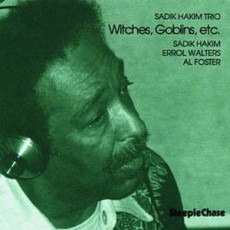
Sadik Hakim was born Argonne Thornton on July 15, 1919 in Duluth, Minnesota and was taught piano by his grandfather and started playing professionally about 1939. In 1944 he moved to New York City and was hired by Ben Webster. A participant in the emergence of bebop, he shared piano duties with Dizzy Gillespie on Charlie Parker’s famous “Ko-Ko” session.
He recorded with Dexter Gordon and Lester Young, heard on the latter’s I’m Confessin’, also credited with co-writing Thelonious Monk’s standard “Eronel” and is rumored to have written a few famous bop tunes credited to other composers. He adopted his Muslim name in 1947.
Hakim moved to Montreal after visiting in 1949 and was a big fish on the small bebop scene there, working with Louis Metcalf’s International Band. Compelled to leave Canada following a drug bust in 1950 he returned to New York and through the decade worked with James Moody and George Holmes Tate.
He returned to Montreal from 1966 to 1976, leading bands and recording with Charles Biddle. He led a few recording dates from 1976–1980 and cut an album with Sonny Stitt in 1978. Hakim played “Round Midnight” at Monk’s funeral in 1982, and the pianist and composer passed away himself the following year on June 20, 1983.

Give The Gift Of Knowledge
Daily Dose Of Jazz…
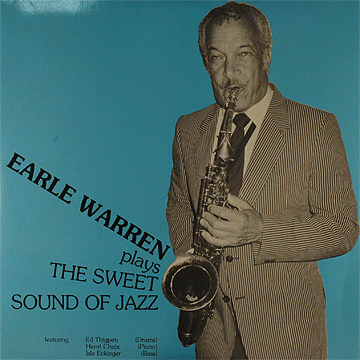
Earle Warren was born on July 1, 1914 in Springfield, Ohio. He was the primary alto saxophonist and occasional singer in the Basie orchestra in its formative years and its heyday, from 1937 to the end of the 1940s. After the break-up of Basie’s 1940s band, in 1949, he worked with former Basie trumpeter, Buck Clayton.
Earle also played some rock´n roll working for Alan Freed in Alan Freed’s Christmas Jubilee, December 1959, which was the very last big Alan Freed show before payola put an end to the legendary Freed. He also appeared in the 1970s jazz film of Count Basie and his band, “Born to Swing”.
In his later years, Warren performed often at the West End jazz club at 116th and Broadway in New York City, helming a band called The Countsmen, which also featured fellow former Basie-ite Dicky Wells on trombone and Peck Morrison on bass. He lived part of the time in Switzerland where he fathered a child in a May/September romance. Alto saxophonist Earle Warren passed away on June 4, 1994.
Put A Dose In Your Pocket
Daily Dose Of Jazz…
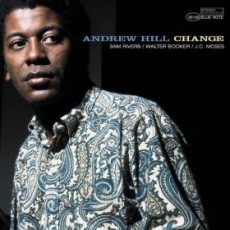
Andrew Hill was born June 30, 1931 in Chicago, Illinois and took up the piano at the age of thirteen, and was encouraged by Earl Hines. He studied informally until 1952. While a teenager he performed in rhythm and blues bands and toured with jazz musicians, including Charlie Parker and Miles Davis.
Hill first recorded as a sideman in 1954, but made his reputation recording as a leader for Blue Note from 1963 to 1970, featuring important post-bop musicians including Joe Chambers, Richard Davis, Eric Dolphy, Bobby Hutcherson, Joe Henderson, Freddie Hubbard, Elvin Jones, Woody Shaw and Tony Williams.
Hill is recognized as one of the most important innovators of jazz piano in the 1960s but rarely worked as a sideman after the 1960s, preferring to play his own compositions, which may have limited his public exposure.
As an educator he held positions at Portland State University, held residencies at Colgate University of Hamilton, Wesleyan University, University of Michigan, University of Toronto, Harvard University and Bennington College.
Returning to New York City in 1990, composer and pianist Andrew Hill, whose unique idiom of chromatic, modal and free improvisation, made his final public appearance on March 29, 2007 at Trinity Church. Suffering from lung cancer during his later years he died in his home on April 20, 2007. In May 2007, he became the first person to receive a posthumous honorary doctorate from Berklee College of Music.
Give The Gift Of Knowledge
Daily Dose Of Jazz…
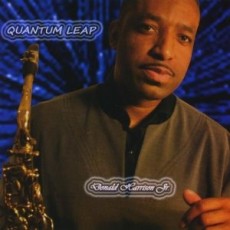
Donald Harrison, Jr. was born June 23, 1960 in New Orleans, Louisiana. He studied at the New Orleans Center for Creative Arts, and then went on to study at Berklee College of Music. In the 80s he became a Jazz Messenger, played with Roy Haynes, Jack McDuff, Terence Blanchard and Don Pullen, and was part of the re-formed Headhunters band in the Nineties.
By1991 Don had recorded “Indian Blues” capturing the sound and culture of New Orleans’ Congo Square in a jazz context and by mid-decade created the “Nouveau Swing” jazz style, merging the swing beat with many of today’s popular dance styles of music as well as those prominent from his cultural experiences in his hometown.
Harrison has performed in the smooth jazz arena, is a producer, singer and rapper in the traditional Afro-New Orleans Culture and hip-hop genres with his group, The New Sounds of Mardi Gras and is the Big Chief of the Congo Nation Afro-New Orleans Cultural Group that keeps alive the traditions of Congo Square.
Not limited by his music crossing genres in his compositions and playing, Don has created large orchestral pieces, was featured in Spike Lee’s HBO documentary “When The Levees Broke”, directed the New Jazz School for the Isidore Newman School, is the director of Tipitina’s Intern Program and has nurtured a number of young musicians including his nephew and Grammy-nominated trumpeter Christian Scott, Mark Whitfield, Cyrus Chestnut, Christian McBride and the Notorious B.I.G.
Give The Gift Of Knowledge
More Posts: saxophone

Daily Dose Of Jazz…
Raymond Mantilla was born on June 22, 1934 in New York City and his early drumming inspiration came from Afro-Cuban jazz. He played with a number of Latin jazz ensembles from the 1950s including the La Playa Sextet, Xavier Cugat, Lou Perez, Rene Touzet, Miguelito Valdez and Monguito Conjunto.
He played behind Eartha Kitt in 1955 and by 1960 was touring with Herbie Mann and recording with Max Roach. He recorded with Al Cohn, Freddie Hubbard, Buddy Rich and Larry Coryell in the early Sixties and then led his own band in Puerto Rico from ’63 to ’69. This was followed with Ray becoming a founding member of Max Roach’s M’Boom percussion ensemble in 1970.
Mantilla was a member of Art Blakey’s Jazz Messengers in the 70s and toured the U.S., Europe, and Japan. He then recorded with Gato Barbieri, Joe Farrell, Richie Cole, Don Pullen, Charles Mingus, Walter Bishop, Jr., and Morgana King and toured Cuba with Dizzy Gillespie.
By the end of the decade he once again founded his own ensemble, the Ray Mantilla Space Station, and through the 1980s toured or recorded with Muhal Richard Abrams, Kenny Burrell, Shirley Scott and Warren Chiasson. In 1991 the noted session player and bandleader put together a new ensemble, the Jazz Tribe and has been recording, performing and touring ever since.
Take A Dose On The Road
More Posts: drums