Daily Dose Of Jazz…
Harold “Doc” West was born on August 12, 1915 in Wolford, North Dakota. He learned to play piano and cello as a child before switching to drums. By the 1930s he was playing in Chicago with Tiny Parham, Erskine Tate and Roy Eldridge. Towards the end of the decade he filled in for Chick Webb when he was unable to lead his own orchestra.
The early 1940s Doc played with Hot Lips Page and on the emerging bebop scene at Minton’s Playhouse in New York City alongside Dizzy Gillespie, Charlie Parker, Tiny Grimes and Don Byas. He played with Oscar Pettiford in 1944 and stood in for Jo Jones occasionally in Count Basie’s orchestra.
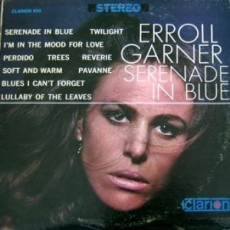
He appears on recordings led by Slam Stewart, Leo Watson, Wardell Gray, Billie Holiday, Big Joe Turner, Jay McShann and Erroll Garner, leaving a small but impressive catalogue as a sideman. Drummer Doc West passed away on May 4, 1951 in Cleveland, Ohio while on tour with Roy Eldridge.

Take A Dose On The Road
Daily Dose Of Jazz…
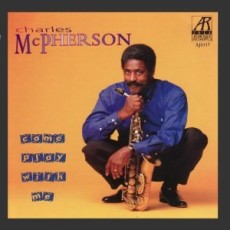
Charles McPherson was born on July 24, 1939 in Joplin, Missouri but grew up in Detroit, Michigan. As a teenager he played with Barry Harris, played the Detroit scene through the Fifties and in 1959 moved to New York City. Along with his Detroit partner Lonnie Hillyer joined Charles Mingus in 1960, a relationship that lasted until 1972.
The alto saxophonist, had a short-lived quintet with Hillyer in ’66, and then broke out on his own after leaving Mingus to become a full-time leader. A move to San Diego in 1978 became home while recording for such labels as Prestige, Mainstream, Xanadu, Discovery and Arabesque during his prolific career.
McPherson, a Charlie Parker disciple, who brought his own lyricism to the bebop idiom, was commissioned to help record ensemble renditions of pieces from Charlie Parker used on the 1988 “Bird” film soundtrack. To date he has 25 albums as a leader to his credit and another sixteen as a sideman working with the likes of Toshiko Akiyoshi, Kenny Drew, Charles Tolliver, Clint Eastwood, Art Farmer and Sam Jones. The saxophonist has remained a stable figure in modern mainstream jazz.
Jazz Is Global – Share
More Posts: saxophone
Daily Dose Of Jazz…
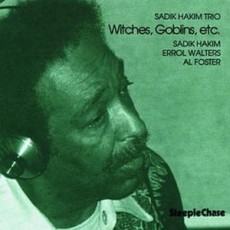
Sadik Hakim was born Argonne Thornton on July 15, 1919 in Duluth, Minnesota and was taught piano by his grandfather and started playing professionally about 1939. In 1944 he moved to New York City and was hired by Ben Webster. A participant in the emergence of bebop, he shared piano duties with Dizzy Gillespie on Charlie Parker’s famous “Ko-Ko” session.
He recorded with Dexter Gordon and Lester Young, heard on the latter’s I’m Confessin’, also credited with co-writing Thelonious Monk’s standard “Eronel” and is rumored to have written a few famous bop tunes credited to other composers. He adopted his Muslim name in 1947.
Hakim moved to Montreal after visiting in 1949 and was a big fish on the small bebop scene there, working with Louis Metcalf’s International Band. Compelled to leave Canada following a drug bust in 1950 he returned to New York and through the decade worked with James Moody and George Holmes Tate.
He returned to Montreal from 1966 to 1976, leading bands and recording with Charles Biddle. He led a few recording dates from 1976–1980 and cut an album with Sonny Stitt in 1978. Hakim played “Round Midnight” at Monk’s funeral in 1982, and the pianist and composer passed away himself the following year on June 20, 1983.
Give The Gift Of Knowledge
Daily Dose Of Jazz…
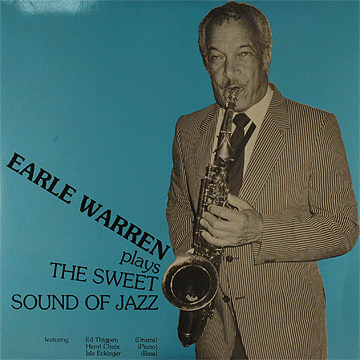
Earle Warren was born on July 1, 1914 in Springfield, Ohio. He was the primary alto saxophonist and occasional singer in the Basie orchestra in its formative years and its heyday, from 1937 to the end of the 1940s. After the break-up of Basie’s 1940s band, in 1949, he worked with former Basie trumpeter, Buck Clayton.
Earle also played some rock´n roll working for Alan Freed in Alan Freed’s Christmas Jubilee, December 1959, which was the very last big Alan Freed show before payola put an end to the legendary Freed. He also appeared in the 1970s jazz film of Count Basie and his band, “Born to Swing”.
In his later years, Warren performed often at the West End jazz club at 116th and Broadway in New York City, helming a band called The Countsmen, which also featured fellow former Basie-ite Dicky Wells on trombone and Peck Morrison on bass. He lived part of the time in Switzerland where he fathered a child in a May/September romance. Alto saxophonist Earle Warren passed away on June 4, 1994.
Put A Dose In Your Pocket
Daily Dose Of Jazz…
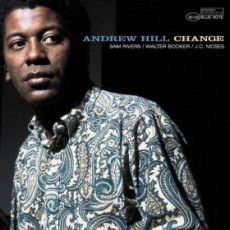
Andrew Hill was born June 30, 1931 in Chicago, Illinois and took up the piano at the age of thirteen, and was encouraged by Earl Hines. He studied informally until 1952. While a teenager he performed in rhythm and blues bands and toured with jazz musicians, including Charlie Parker and Miles Davis.
Hill first recorded as a sideman in 1954, but made his reputation recording as a leader for Blue Note from 1963 to 1970, featuring important post-bop musicians including Joe Chambers, Richard Davis, Eric Dolphy, Bobby Hutcherson, Joe Henderson, Freddie Hubbard, Elvin Jones, Woody Shaw and Tony Williams.
Hill is recognized as one of the most important innovators of jazz piano in the 1960s but rarely worked as a sideman after the 1960s, preferring to play his own compositions, which may have limited his public exposure.
As an educator he held positions at Portland State University, held residencies at Colgate University of Hamilton, Wesleyan University, University of Michigan, University of Toronto, Harvard University and Bennington College.
Returning to New York City in 1990, composer and pianist Andrew Hill, whose unique idiom of chromatic, modal and free improvisation, made his final public appearance on March 29, 2007 at Trinity Church. Suffering from lung cancer during his later years he died in his home on April 20, 2007. In May 2007, he became the first person to receive a posthumous honorary doctorate from Berklee College of Music.
Give The Gift Of Knowledge