

Daily Dose Of Jazz…
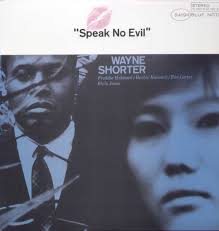
Wayne Shorter was born August 25, 1933 in Newark, New Jersey and attended Newark Arts High School where his love of music flourished under the encouragement of his father to take up the saxophone. In his youth Shorter had acquired the nickname “Mr. Gone”, which later became an album title for Weather Report.
Graduating in 1952, he matriculated through New York University in 1956, spent two years in the Army, during which he briefly played with Horace Silver and after his discharge, he played with Maynard Ferguson.
In 1959, Shorter became a Messenger joining Art Blakey, stayed five years and became the bands musical director. When Coltrane left Miles Davis’ band he proposed Wayne, as his replacement but his unavailability di not release him from Blakey until 1964. Along with Herbie Hancock, Ron Carter and Tony Williams, the Second Great Quintet was born.
During his tenure with Miles, Wayne would compose “Prince of Darkness”, “E.S.P.”, “Footprints”, “Sanctuary”, “Nefertiti”, and many others; often providing half of the compositions on an album, typically hard bop workouts with long, spaced-out melody lines above the beat. He remained in Davis’s band after the breakup of the quintet in 1968, playing on the early jazz-fusion recordings including “In A Silent Way” and “Bitches Brew”.
Until 1968, he played the tenor saxophone exclusively but the next year he put down the tenor after his final Davis recording of Filles de Kilimanjaro and began playing the soprano, which he used on his own Super Nova release with Chick Corea and John McLaughlin. By the early 1970s, however, he chiefly played soprano.
Shorter recorded eleven albums for Blue Note Records featuring almost exclusively his own compositions, with a variety of line-ups, quartets and larger groups. He would enlist the talents of Freddie Hubbard, Lee Morgan, McCoy Tyner, Reggie Workman and Elvin Jones.
Juju, Speak No Evil and Adam’s Apple The All Seeing Eye and Schizophrenia played in the spaces between free-jazz and carefully constructed melodies. Hey incorporated old friends like Hancock, Carter, Curtis Fuller and Joe Chambers. He recorded occasionally in the sideman slot with Donald Byrd, McCoy tyner, Grachan Moncur III, Hubbard, Morgan, Hancock and Williams.
In 1970, Shorter formed the fusion group Weather Report with Joe Zawinul and Miroslav Vitous, Airto Moreira and Alphonse Mouzon. They lasted until 1985. One of the most notable alumni included revolutionary bassist Jaco Pastorious and the band produced funk, bebop, Latin jazz, ethnic music and futuristic recordings.
He would record with Milton Nascimento, Carlos Santana, V.S.O.P Quintet, Joni Mitchell, Steely Dan’s Aja, Terri Lynne Carrington, Marilyn Mazur, Jim Beard, Don Henley, Wallace Roney, and can be heard on the Harrison Ford film soundtrack of The Fugitive. By the mid 90s Wayne released his Verve Records debut High Life and received a Grammy for Best Contemporary Jazz Album in 1997.
Into the millennium Shorter has continued to receive wide acclaim working with Hancock once again in 1997, on the much acclaimed and heralded album 1+1. The song “Aung San Suu Kyithem won them both a Grammy Award. He continues to work in a number of group configurations and winning Grammys for his Beyond The Sound Barrier & Alegria – Best Instrumental Jazz Album amongst his 10 Grammy Awards, and has been a Down Beat reigning critics’ poll winner for ten consecutive years and the readers’ for 18. The soprano saxophonist has amassed an impressive discography and continues to compose, reinvent his music, perform and tour.

Dose A Day – Blues Away
More Posts: saxophone
Daily Dose Of Jazz…
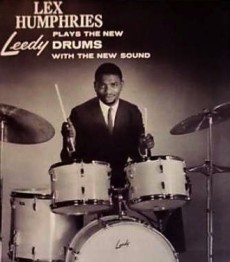
Lex Humphries was born on August 22, 1936 in New York City and passed away on July 11, 1994 in his hometown. A jazz drummer, he worked with two musicians known for mixing world music with jazz: Sun Ra and Yusef Lateef. As a member of Sun Ra’s “Arkestra” he appeared in the film Space Is The Place.
Humphries played on the Giant Steps sessions with John Coltrane. The renditions he and Cedar Walton recorded with Coltrane were released as alternative tracks in 1974. He was also the first drummer in the Art Farmer and Benny Golson Jazztet, appearing on their first album titled Meet The Jazztet in 1960.
Between 1959 and 1973 Lex also played and recorded albums with Donald Byrd, John Coltrane including The Heavyweight Champion: The Complete Atlantic Recordings, Dizzy Gillespie, Yusef Lateef, Wes Montgomery, Duke Pearson, Sonny Red, Chet Baker, Junior Mance, Sonny Stitt, McCoy Tyner and Doug Watkins among numerous others.
The understated drummer and solid bebopper cited Philly Joe Jones as his only influence. He was also a member of the band that accompanied Leon Thomas, and amassed a catalogue of over 70 sessions and was a steady collaborator. Though his reputation was firmly established, Lex Humphries, however, only rated a mere five lines in Leonard Feather’s Encyclopedia of Jazz.
Jazz Is Global – Share
More Posts: drums
Daily Dose Of Jazz…
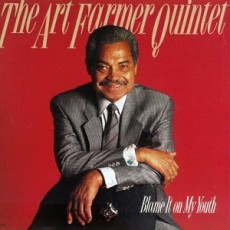
Arthur Stewart Farmer was born August 21, 1928, an hour before his twin brother, in Council Bluffs, Iowa. Their parents, James Arthur Farmer and Hazel Stewart Farmer, divorced when the boys were four, and their steelworker father was killed in a work accident not long after. He moved with his grandfather, grandmother, mother, brother and sister to Phoenix, Arizona when he was still four. He began playing piano while in elementary school, then moved on to bass tuba and violin before settling on cornet and then trumpet at the age of thirteen. He taught himself to read music and practiced his new main instrument, the trumpet.
Farmer and his brother moved to Los Angeles in 1945, attending the music-oriented Jefferson High School where they got music instruction and hung out with other developing musicians such as Sonny Criss, Ernie Andrews, Big Jay McNeely and Ed Thigpen. By sixteen he was playing trumpet professionally, performing in the Horace Henderson, Jimmy Mundy and Floyd Ray bands, among others.
Art left school to tour with a group led by Johnny Otis, but this job lasted for only four months, as Farmer’s lip gave out, becoming lacerated through underdevelopment of his technique. He then received technique training in New York, auditioned unsuccessfully for Dizzy Gillespie and returned to the West Coast in 1948 as a member of Jay McShann’s outfit.
Farmer played and toured with Benny Carter, Wardell Gray, Roy Porter and Gerald Wilson in the early 50s.He would record his first studio session with Big Joe Turner and Pete Johnson, and gained great attention with his piece titled “Farmer’s Market”. He joined Lionel Hampton’s orchestra, toured Europe, became a member of Teddy Charles’ New Directions band, relocated to New York and in 1953, had his first recording session as leader for Prestige titled The Art Farmer Septet.
Over the course of his career he has worked with Quincy Jones, Gigi Gryce, Horace Silver, Gerry Mulligan, Thelonious Monk, and Charles Mingus, appeared on the Steve Allen show, Newport Jazz Festival, and two films – I Want To Live and The Subterraneans. As a member of Jazz at the Philharmonic he toured Europe again, that helped him gain an international reputation. He formed the Jazztet with Benny Golson, assited the careers of McCoy Tyner and Granchan Moncur, appeared in the photo Great Day In Harlem, recorded prolifically and led groups through the Sixties, and took a job in the orchestra pit on Broadway as jobs in jazz dried up.
He would settle in Vienna and divide his time between Europe and New york, revive the Jazztet with Golson, form a quintet with Clifford Jordan as a member, lost 30 pounds, quit smoking and drinking, avoided drugs, performed regularly, was awarded the Austrian Gold Medal of Merit, and was selected as a National Endowment for the Arts Jazz Master in 1999. A few months later on October 4, 1999 bebop trumpeter, flugelhorn and flumpet player and bandleader Art Farmer passed away of a heart attack at his New York Manhattan home. He was 71.
Jazz Is Global – Share
More Posts: flugelhorn,flumpet,trumpet
Daily Dose Of Jazz…
Harold “Doc” West was born on August 12, 1915 in Wolford, North Dakota. He learned to play piano and cello as a child before switching to drums. By the 1930s he was playing in Chicago with Tiny Parham, Erskine Tate and Roy Eldridge. Towards the end of the decade he filled in for Chick Webb when he was unable to lead his own orchestra.
The early 1940s Doc played with Hot Lips Page and on the emerging bebop scene at Minton’s Playhouse in New York City alongside Dizzy Gillespie, Charlie Parker, Tiny Grimes and Don Byas. He played with Oscar Pettiford in 1944 and stood in for Jo Jones occasionally in Count Basie’s orchestra.
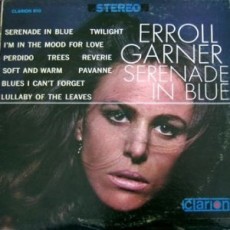
He appears on recordings led by Slam Stewart, Leo Watson, Wardell Gray, Billie Holiday, Big Joe Turner, Jay McShann and Erroll Garner, leaving a small but impressive catalogue as a sideman. Drummer Doc West passed away on May 4, 1951 in Cleveland, Ohio while on tour with Roy Eldridge.
Take A Dose On The Road
Daily Dose Of Jazz…
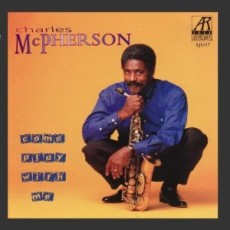
Charles McPherson was born on July 24, 1939 in Joplin, Missouri but grew up in Detroit, Michigan. As a teenager he played with Barry Harris, played the Detroit scene through the Fifties and in 1959 moved to New York City. Along with his Detroit partner Lonnie Hillyer joined Charles Mingus in 1960, a relationship that lasted until 1972.
The alto saxophonist, had a short-lived quintet with Hillyer in ’66, and then broke out on his own after leaving Mingus to become a full-time leader. A move to San Diego in 1978 became home while recording for such labels as Prestige, Mainstream, Xanadu, Discovery and Arabesque during his prolific career.
McPherson, a Charlie Parker disciple, who brought his own lyricism to the bebop idiom, was commissioned to help record ensemble renditions of pieces from Charlie Parker used on the 1988 “Bird” film soundtrack. To date he has 25 albums as a leader to his credit and another sixteen as a sideman working with the likes of Toshiko Akiyoshi, Kenny Drew, Charles Tolliver, Clint Eastwood, Art Farmer and Sam Jones. The saxophonist has remained a stable figure in modern mainstream jazz.
Jazz Is Global – Share
More Posts: saxophone