

Daily Dose Of Jazz…
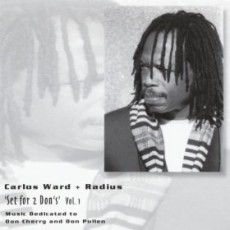
Carlos Ward was born on May 1, 1940 in Ancon, Panama and was raised in Panama City. His first instrument was the ukulele and by age 12 he took to the clarinet. His early influences were his aunt and uncle, both pianist, the former classical. He listened to Bob Crosby’s Dixieland clarinet on the radio as were as calypso.
By 1952 his family relocated to Seattle, Washington where his friend Marion Evans introduced him to the alto saxophone. Through high school he hung out with drummer Doug Robinson and the rock group The Playboys. Ward would go on to attend the Navy School of Music and worked with Albert Mangelsdorff when he was stationed in Germany.
He listened to Monk and Coltrane but it was Ornette Coleman’s “The Shape of Jazz to Come” that made the greatest impression on him. After a prophetic meeting with John Coltrane, in 1965 he took his advice and moved to New York. This led to his first major effort was his work with John Coltrane’s unrecorded octet in the period between 1965-66. He had a long-lasting association with Don Cherry from 1973 to 1980 and beyond. His duet association with pianist Abdullah Ibrahim has also been significant to his career.
Ward was a member of Cecil Taylor’s group in the period immediately after altoist Jimmy Lyons death in 1986. He also was a member of The Ed Blackwell Project and led his own quartet in 1987.
Alto saxophonist and flautist Carlos Ward has four albums as a leader and has some 15 as a sideman while working with Carla Bley, Roswell Rudd and the Jazz Composers Orchestra, Karl Berger, Abdullah Ibrahim, Paul Motian, Sunny Murray, Sam Rivers, Rashied Ali and Don Pullen & The African-Brazilian Connection.
It is unfortunate for the industry that an injury to his playing hand has sidelined this musician for many years. However, Ward is readying himself for a return to the scene and hopefully we will hear from future generations of players who will partake of the opportunity to glean knowledge from this master.

Put A Dose In Your Pocket
Daily Dose OF Jazz…
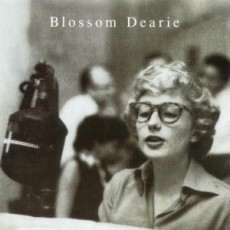
Blossom Dearie was born April 28, 1924 in East Durham, New York and as a child she studied Western classical piano but switched to jazz in her teens. After high school Dearie moved to New York City to pursue a music career and began to sing in groups such as the Blue Flames with the Woody Herman Orchestra and the Alvino Rey’s Blue Reys before starting her solo career.
She moved to Paris in 1952 and formed a vocal group, the Blue Stars of Paris, which included Michel Legrand’s sister Christine and Bob Dorough. In 1954 the group had a hit in France with a French version of “Lullaby of Birdland”. The Blue Stars would later evolve into the Swingle Sisters. Interestingly, on her first solo album released two years later, she plays the piano but does not sing.
After returning to the U.S. Blossom, Dearie made her first six American albums as a solo singer and pianist for Verve Records in the late 1950s and early 1960s, mostly in a small trio or quartet setting. In 1962, she recorded a radio commercial for Hires Root Beer. Through the Sixties she recorded with orchestra, performed in supper clubs around New York, appeared at Ronnie Scott’s in London and recorded four albums in the UK.
After a period of inactivity, by the ‘’70s she established her own label, Daffodil Records, lent her voice to “Mother Necessity” and “Figure Eight” on “Schoolhouse Rock!” and she collaborated with Johnny Mercer on one of his final songs “My New Celebrity Is You”. Her voice and songs have been featured in such films as Kissing Jessica Stein, The Squid and the Whale, My Life Without Me and The Adventures of Felix.
Blossom Dearie, vocalist, pianist and one of the last remaining supper-club performers, continued to perform in clubs until shortly before she passed away on February 7, 2006 at age 84 in Greenwich Village, New York.
Dose A Day-Blues Away
Daily Dose Of Jazz…
Jimmy “Spanky” DeBrest was born on April 24, 1937 in Philadelphia, Pennsylvania. He took up the bass and during his early years in Philadelphia he played with Lee Morgan’s earliest band while the virtuoso trumpeter was still a teenager. In 1957 he was a member of Ray Draper’s Quintet, Jackie McLean, pianist Mal Waldron and drummer Ben Dixon.
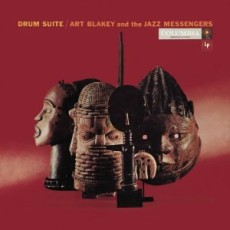
Spanky’s most famous affiliation was with master drummer Art Blakey until 1958 on a series of recordings that includes a spellbinding collaboration with pianist and composer Thelonious Monk. His performance credits include work with John Coltrane, Clifford Jordan and J. J. Johnson. He continually recorded until 1971.
Bassist Spanky DeBrest passed away on March 2, 1973 leaving the world his legacy of seventeen recording sessions as a sideman predominately with Art Blakey and the Jazz Messengers.
Put A Dose In Your Pocket
More Posts: bass
Daily Dose Of Jazz…
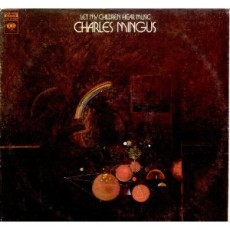
Charles Mingus Jr. was born on April 22, 1922 in Nogales, Arizona of Chinese, English, African and Swedish heritage. His mother allowed only church-related music in their home, but Mingus developed an early love for jazz, especially the music of Duke Ellington. He first studied trombone, later adding cello, which prepared him for the double bass in high school. He studied five years with H. Rheinshagen, principal bassist of the New York Philharmonic and compositional techniques with Lloyd Reese.
Beginning in his teen years, Mingus was writing quite advanced pieces incorporating elements of classical music. A number of them were recorded in 1960 with conductor Gunther Schuller and released as “Pre-Bird”, referring to Charlie “Bird” Parker. Mingus was one of many musicians whose perspectives on music were altered by Parker into “pre- and post-Bird” eras.
Gaining a reputation as a bass prodigy, his first major professional job was playing with former Ellington clarinetist Barney Bigard. This followed by a tour with Louis Armstrong in 1943 that led to his recording in a band led by Russell Jacquet that included Teddy Edwards and Chico Hamilton. He went onto record with Howard McGhee and into the late ‘40s played with Lionel Hampton’s band performing several of his pieces.
A popular Mingus trio had Red Norvo and Tal Farlow in tow in the early 50s with considerable acclaim but his mixed heritage caused problems with club owners and he left the group. Charles was briefly a member of Ellington’s band until his temper got him fired. He went on to record and play with Max Roach, Bud Powell, Dizzy Gillespie, Charlie Parker, Pepper Adams, Jaki Byard, Horace Parlan, Booker Ervin, John Handy, Charles McPherson, Eric Dolphy and Johnny Coles among others through the Sixties and into the next decade. By the mid-1970s, Mingus was suffering from Lou Gehrig’s disease that eventually stopped his playing, leaving him to continue composing and supervising recordings prior to his death on January 5, 1979 at age 56 in Cuernavaca, Mexico.
Composer, bandleader, bassist and civil rights activist Charles Mingus left a legacy of an autobiography, Mingus Big Band, Mingus Dynasty, Mingus Orchestra, the Charles Mingus High School Competition, the catalogue of Mingus compositions in the Music Division of the New York Public Library and the collected papers of Charles Mingus housed at the Library of Congress in Washington, DC.
Take A Dose On The Road
More Posts: bandleader,bass,composer
Daily Dose Of Jazz…
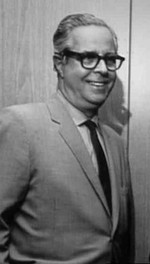
Alfred Lion was born in Berlin, Germany on April 21, 1908. His fascination and lifelong pursuit of jazz began at age 16 when he witnessed a jazz concert with Sam Wooding’s Orchestra. In 1929 he migrated to the U.S., went back to Germany, and returned to New York in ’38 where he attended a Carnegie Hall concert that inspired him to start his record label, Blue Note in 1939.
The label debuted with Albert Ammons and Meade Lux Lewis but their first hit was Sidney Bechet’s “Summertime”. By this time childhood friend Francis Wolff joined and sustained the label while Lion served in the Army. He recorded many of the biggest names in jazz throughout the 1940s, 50s, and 60s including but not limited to Grant Green, Dexter Gordon, John Coltrane, Tina Brooks, John Patton, Miles Davis, Eric Dolphy, Lou Donaldson, Andrew Hill, Cecil Taylor, Ike Quebec, and the list goes on and on.
Lion had recruited Ike Quebec as the label’s A&R man and at his insistence Lion began to explore more modern developments in jazz bringing in Thelonious Monk as the first modern jazz musician. What became known as the “hard bop” style would predominate in Blue Note’s output during the 1950s and 1960’s. Musicians like Art Blakey and Horace Silver, among others epitomized this style. Duke Pearson took over A&R duties after Quebec’s death in 1963 ensuring the label’s roster remained fresh as a whole. Three significant elements made Blue Note releases stand out: the work of recording engineer Rudy Van Gelder, the photographs of Francis Wolff and the cover designs principally by Reid Miles.
Suffering from heart problems for some years, Lion sold the Blue Note label and catalogue to Liberty Records and retired to Mexico in 1967. Towards the end of his life, the record producer respected by musicians for his straight dealing and for ‘hanging out’ in the jazz scene, gained the recognition he had often been denied. Alfred Lion passed away on February 2, 1987 in San Diego, California.
Dose A Day-Blues Away
More Posts: producer,record executive