

Daily Dose Of Jazz…
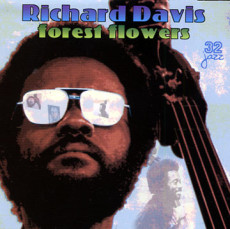
Richard Davis was born in Chicago, Illinois on April 15, 1930 who began his musical career as a singer with his brothers. Davis sang bass in his family vocal trio in addition he began studying the double bass in high school with his music theory and band director, Captain Walter Dyett. After graduation, he went on to study the double bass with Rudolf Fahsbender of the Chicago Symphony Orchestra while attending Vandercook College.
After college, Davis performed in dance bands making a name for himself around Chicago, making connections that led him to pianist Don Shirley. In 1954 he and Shirley moved to New York City, performed together until 1956, when he began playing with the Sauter-Finegan Orchestra.
Richard then toured and recorded as part of Sarah Vaighan’s band, worked with Dorothy Ashby, Jaki Byard, Booker Ervin, Charles Lloyd, Candido Camero, Jimmy Forrest and Thad Jones/Mel Lewis Jazz Orchestra among others. Some of his most famous contributions were Eric Dolphy’s 1964 “Out To Lunch”, Andrew Hill’s “Point Of Departure” and Van Morrison’s “Astral Weeks”, Laura Nyro’s “Smile” and Bruce Springsteen’s “Born To Run”.
He has recorded fifteen albums as a leader and over a hundred as a sideman. A long-time educator, he has been a professor at the University of Wisconsin-Madison since 1977 where he teaches bass, jazz history, and improvisation. Bassist Richard Davis received the 2014 NEA Jazz Masters award.

Take A Dose On The Road
More Posts: bass
Daily Dose Of Jazz…
Joey DeFrancesco was born in Springfield, Pennsylvania on April 10, 1971 into a family of musicians – a multi-instrumentalist grandfather and Hammond B3 player father. Joey DeFrancesco started playing the piano at the age of four, switching to the B3 shortly after. By age six, he was sitting in on his father’s gigs; by ten playing out on his own and sitting in with organ legends like Jack McDuff and Richard “Groove” Holmes. He went to high school with bassist Christian McBride, where the two were often scolded for altering their big band charts.
At seventeen years old Miles Davis asked Joey to join his band, touring Europe and recording Amandla with Davis. He became well known in the 1990s, however, through his work with John McLaughlin’s trio Free Spirits. He has also played with jazz guitarists Pat Martino, Paul Bollenback, Jimmy Bruno, Dave Stryker, Danny Gatton as well as trumpet player Big Jim Henry and many others.
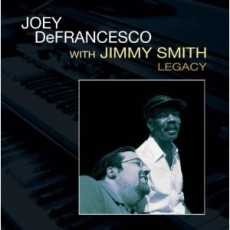
DeFrancesco’s career as a leader began with his first recordings on Columbia, and later with Muse, Big Mo, and HighNote. He listened to and learned from Jimmy Smith, ultimately paying homage with his 1999 release “The Champ”. In 2000 he recorded the album “Incredible!” with Jimmy and finished “Legacy” shortly before Smith’s passing in 2005. He has also paid tribute to Don Patterson with “Tribute to Don Patterson: The Philadelphia Connection” released in 2004.
Jazz organist, trumpeter and vocalist Joey DeFrancesco, who has been selected by the Down Beat Critics and Readers Poll as the top jazz organist every year since 2003 and who consistently played an average of 200 nights a year on the road with various musicians, transitioned on August 25, 2022 at the age of 51.
Put A Dose In Your Pocket
More Posts: hammond organ,keyboard,saxophone,trumpet,vocal
Daily Dose Of Jazz…
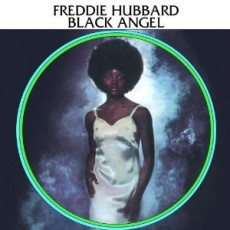
Frederick Dewayne Hubbard was born on April 7, 1938 in Indianapolis, Indiana and started playing the mellophone and trumpet in his school band at Arsenal Technical High School. Upon the recommendation of one-time Stan Kenton sideman, trumpeter Lee Katzman, he began studies at the Arthur Jordan Conservatory of music. During his teens he played with Wes and Monk Montgomery, bassist Larry Ridley and James Spaulding.
1958 saw a 20-year old Hubbard in New York working with the likes of Philly Joe Jones, Sonny Rollins, Slide Hampton, Eric Dolphy, J. J. Johnson and Quincy Jones. Three years later in ’61 he recorded his debut as a leader, Open Sesame with Tina Brooks, McCoy Tyner, Sam Jones and Clifford Jarvis. That same year he replaced Lee Morgan in Art Blakey’s Jazz Messengers and for the next five years played and recorded on a succession of albums. Leaving Blakey in 1966 he formed the first of several small groups with among others Kenny Baron and Louis Hayes.
Throughout his hard bop and post bop career he recorded profusely for Blue Note, Atlantic, CTI, Columbia and a host of subsidiaries and smaller labels playing with the likes of Ornette Coleman, John Coltrane, Wayne Shorter, Eric Dolphy, Don Cherry, Herbie Hancock, Oliver Nelson, Stanley Turrentine, George Benson, Richard Wyands, Eric Gale, Ron Carter, Jack DeJonette, Dexter Gordon, Curtis Fuller and the list goes on.
Freddie Hubbard, NEA Jazz Master, had an unmistakable and influential tone that greatly contributed to new perspectives for modern jazz and bebop. He passed away from a heart attack on December 29, 2008.
More Posts: cornet,flugelhorn,french horn,mellophone,trumpet

Daily Dose Of Jazz…
Horace Tapscott was born Horace Elva Tapscott in Houston, Texas, the son of a jazz musician mother on April 6, 1934. When he turned nine his family moved first to Fresno, California, eventually settling in Los Angeles. Reaching maturity at a critical time in the history of L.A. jazz, he was privy to the like of Dexter Gordon, Art Tatum and Coleman Hawkins who were playing the Central Avenue clubs in the late ‘40s.
In 1961 Horace formed the Pan Afrikan Peoples Arkestra, also known as P.A.P.A., or The Ark in 1961 and led the ensemble that included at one time or another Arthur Blythe, Stanley Crouch, Butch Morris, Wilbur Morris, David Murray and Jimmy Woods through the 1990s. In 1968 he composed and arranged saxophonist Sonny Criss’ critically acclaimed “The Birth of the New Cool”. He followed this with a decade long performance of his own works, a succession of recordings for the Nimbus label and a growing reputation and flourishing creativity that eventually leading to the recognition he deserved.
His powerful and percussive approach to playing coupled with a highly individual bop-tinged style with avant-garde leanings became somewhat of an inspiration to a new generation of L.A. based free jazz players. Horace Tapscott and his work are the subjects of the UCLA Horace Tapscott Jazz Collection. The composer and pianist passed away of lung cancer on February 27, 1999 in Los Angeles, California.
More Posts: piano
Daily Dose Of Jazz…
Marian McPartland was born Margaret Marian Turner on March 20, 1920 in Windsor, England. A musical prodigy from the time she could sit at a piano at age three, she pursued classical studies on piano and violin at the Guildhall School of Music and Drama in London. However, much to the dismay of her family, she developed a love for American jazz and musicians such as Duke Ellington, Fats Waller, Teddy Wilson, and Mary Lou Williams among many others.
By 1938, despite her family’s efforts to keep her at Guildhall, Marian left to join Billy Mayerl’s Claviers, a four-piano vaudeville act, performing under the stage name of Marian Page. The group toured throughout Europe during WWII entertaining Allied troops where she met and performed with Jimmy McPartland, and later married, moving to the United States.
1944 saw the McPartlands in New York with Marian forming her own trio and enjoying an 8-year engagement at the Hickory House bringing drummer Joe Morello into the fold. After many years of recording for labels such as Capitol, Savoy, Argo, Sesac, Time, and Dot, in 1969 she founded her own record label, Halcyon Records, before having a long association with the Concord Jazz label.
Marian launched a weekly radio program that featured recordings and interviews with guests in 1964 on WBAI-FM in New York City. This series paved the way for the NPR program Marian McPartland’s Piano Jazz that began on June 4, 1978 and is the longest-running cultural program on NPR as well as being one of the longest-running jazz programs ever produced on public radio.
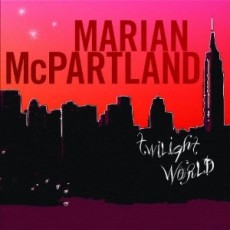
A master at adapting to her guest’s musical styles and having a well-known affinity for beautiful and harmonically rich ballads, McPartland also has recorded many tunes of her own. Her compositions include “Ambiance”, “There’ll Be Other Times”, “With You In Mind”, “Twilight World”, and “In the Days of Our Love”.
Marian a participated in 60 years of jazz evolution, was awarded a Trustees’ Lifetime Achievement Award Grammy for her work as an educator, writer, and host of Piano Jazz, and was appointed Officer of the Order of the British Empire (OBE) in 2010. Pianist and composer Marian McPartland passed away on August 20, 2013 of natural causes at her home in Port Washington, New York. She was 95 years old.
More Posts: piano