

Daily Dose Of Jazz…
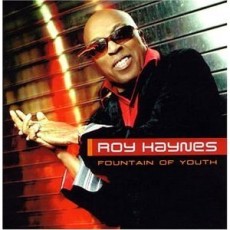
Roy Owen Haynes was born March 13, 1925 in the Roxbury section of Boston, Massachusetts and made his professional debut at the age of seventeen in his native Boston. He began his full time professional career in 1945. From 1947 to 1949 he worked with Lester Young, and from 1949 to 1952 was a member of Charlie Parker’s quintet. He recorded at the time with Bud Powell, Wardell Gray and Stan Getz.
In 1953 Roy toured with Sarah Vaughan for the next five years and then went on to work with more experimental musicians, like John Coltrane, Eric Dolphy, Andrew Hill and Chick Corea.
Haynes extracted the rhythmic qualities from melodies and created unique new drum and cymbal patterns in an idiosyncratic, now instantly recognizable style. Rather than using cymbals strictly for effect, Haynes brought them to the forefront of his unique rhythmic approach. He also established a distinctively crisp and rapid-fire sound on the snare; this was the inspiration for his nickname, “Snap Crackle”.
Over the course of his 60+ career of hard swinging since 1944, Roy is among the most recorded drummers in jazz playing in a wide range of styles ranging from swing and bebop to jazz-fusion and avant-garde. He has recorded or performed with Gary Burton, Miles Davis, Dizzy Gillespie, Christian McBride, Jackie McLean, Pat Metheny, Thelonious Monk, Gerry Mulligan, Art Pepper, Sonny Rollins, Horace Tapscott and many, many others.
As a bandleader Haynes has also led his own groups, some performing under the name Hip Ensemble and his most recent recordings as a leader are “Fountain of Youth” and “Whereas”, both of which have garnered Gammy nominations. In 2010, the National Academy of Recording Arts and Sciences bestowed upon him a Grammy Lifetime Achievement Award. Drummer, percussionist and bandleader Roy Haynes continues to record and perform worldwide.
More Posts: composer,drums,percussion
Daily Dose Of Jazz…
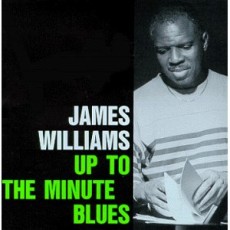
James Williams was born on March 8, 1951 in Memphis, Tennessee and grew up listening to the sounds of Ray Charles, Stevie Wonder, Marvin Gaye and King Curtis. He started playing piano at age 13 and hometown hero Phineas Newborn was his primary influences of jazz piano. He served as organist at the Eastern Star Baptist Church for six years early in his career. He went on to matriculate through Memphis State University with fellow piano students Mulgrew Miller and Donald Brown. It was here that he began playing jazz.
After graduating he immersed himself in the city’s jazz community, performing with Frank Strozier, Jamil Nasser, George Coleman, Harold Mabern, Jr., and other local greats. In 1973 he became a faculty member at the Berklee College of Music, played with Alan Dawson’s group alongside visiting musicians such as Milt Jackson, Art Farmer and Sonny Stitt. His first album as a leader came in 1977 and the next year he joined Art Blakey’s Jazz Messengers, remaining there for four years.
In the early 1980s in Boston he played with Thad Jones, Joe Henderson, Clark Terry, Chet Baker and Benny Carter but by 1984 James was in New York City gigging with Dizzy Gillespie, Freddie Hubbard and Kenny Burrell, Ray Brown, Tony Williams, Elvin Jones and Art Farmer, to name a few.
He would form his own group, the “Intensive Care Unit”, with Christian McBride, Billy Pierce and Tony Reedus. It was during this period in 1984 that he penned and recorded one of his most famous jazz compositions on the Sunnyside label is “Alter Ego”.
By 1999 he was Director of Jazz Studies at William Paterson University, where he remained until his death of liver cancer on July 20, 2004, age 53.
More Posts: piano
Daily Dose Of Jazz…
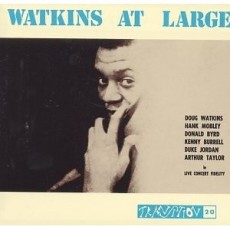
Douglas Watkins was born on March 2, 1934 in Detroit Michigan. After gaining experience and a reputation as one of many very talented jazzmen on the local Detroit scene, Watkins began touring with James Moody in 1953 followed by a stint with the Barry Harris Trio. In 1954 he settled in New York City and was an original member of the Jazz Messengers from 1955 – 56.
Doug went on to spend a year with Horace Silver and then freelanced with a who’s who list of the hard boppers such as Art Farmer, Kenny Burrell, Phil Woods and Hank Mobley. In 1956 at just 21 years old he was a sideman on Sonny Rollins’ “Saxophone Colossus” alongside Max Roach and Tommy Flanagan, showcasing examples of his fine work on Blue 7 and St. Thomas.
In 1958 Watkins joined Donald Byrd for a European tour, taking up extended residence at Le Chat Qui Peche, a jazz club on Paris’ Left Bank. Along with Byrd, tenor saxophonist Bobby Jaspar, pianist Walter Davis, Jr. and drummer Art Taylor, Watkins made two albums with Byrd during this period, one recorded in the club and another at a formal concert featuring Byrd’s quintet. In 1961 he joined Charles Mingus’ group when Mingus temporarily ventured onto the piano stool, producing such gems as “Oh Yeah!!!” and “Tonight At Noon”.
Doug was known for his superb walking tone and distinct phrasing that was right on the beat, forming an organic, indivisible relationship with his instrument as he swayed with it in perfect time. Throughout his short but prolific career Watkins produced only two sessions as a leader but became the bassist of choice when his cousin by marriage, Paul Chambers was unavailable. He appeared on over 350 recordings working with Red Garland, Yusef Lateef, Philly Joe Jones, Bill Hardman, Gene Ammons and Lee Morgan just to name a few giants.
The hard bop jazz bassist Doug Watkins died in a head-on automobile crash on February 5, 1962 when he fell asleep behind the wheel while driving from Arizona to San Francisco to play a gig with Philly Joe Jones. He was just 27 years old but his legacy as a superb musician, unselfish and enabling ensemble player and a bassist-walker with few peers remains today.
More Posts: bass
Daily Dose Of Jazz…
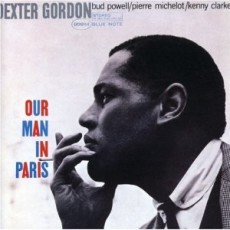
Dexter Gordon was born in Los Angeles on February 27, 1923 to a doctor who counted Duke Ellington and Lionel Hampton among his patients. He played clarinet from the age of 13, before switching to saxophone, initially alto then tenor at 15. While still at school, he was playing in bands with such contemporaries as Chico Hamilton and Buddy Collette.
By 1940 he was on the road with Lionel Hampton playing alongside Illinois Jacquet and Marshall Royal. In 1943 he made his first recordings under his own name with Nat Cole and Harry Edison. During the next two years he was featured in the Louis Armstrong and Fletcher Henderson bands before joining Billy Eckstine. In 1945, Gordon left the Eckstine band and was resident in New York performing and recording with Charlie Parker as well as recording under his own name. Dexter was a virtuoso particularly famous for his titanic saxophone duels with fellow tenor Wardell Gray, that were a popular live attraction and that were documented in several albums between 1947 and 1952.
In 1960 he signed with Blue Note Records, a collaboration that produced some of his highly regarded recordings such as “Doin’ Alright”, “Go”, “Dexter Calling”, and a “Swinging Affair”. After that he spent 15 years in Europe, mostly in Paris and Copenhagen, where he played regularly with fellow expatriate jazzmen such as Bud Powell, Benn Webster Freddie Hubbard, Kenny Drew, Bobby Hutcherson and others. He occasionally returned to Blue Note creating such masterpieces as “Our Man In Paris”, “One Flight Up” and “Getting’ Around”.
His stature of 6’6” earned him the nicknames of “Long Tall Dexter” and “Sophisticated Giant” and he is one of the most influential and iconic figures in Jazz and is largely credited for establishing the classic, modern sound and stylistic concept for the saxophone in general, and the tenor in particular. His studio and live performance career were both extensive and multifaceted; spanning over 50 years in recorded jazz history. Dexter Gordon passed away on April 25, 1990 in Philadelphia, Pennsylvania.
More Posts: saxophone
Daily Dose Of Jazz…
Samuel David “Dave” Bailey was born on February 22, 1926 in Portsmouth, Virginia. He studied drumming in New York City at the Music Center Conservatory following his stint in the Air Force in World War II.
Dave played with Herbie Jones from 1951-53, and later with Johnny Hodges, Charles Mingus, Lou Donaldson, Curtis Fuller, Billy Taylor, Art Farmer, Ben Webster, and Horace Silver. Between 1954 and 1968 he played on several recording sessions led by Gerry Mulligan, and during the 60s he also played with Clark Terry, Kenny Dorham, Lee Konitz, Cal Tjader, Roger Kellaway and Bob Brookmeyer.
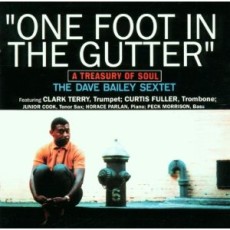
In 1957 and 1958 he performed at the Newport Jazz Festival and appeared in the documentary “Jazz on a Summer’s Day”. He recorded and released “One Foot In The Gutter” in 1960 on the Spanish label Lonehill Jazz. He followed up that recording with another “Gutter” release of the recording “Two Feet In The Gutter”. Although he is not commonly credited for his role in helping popularize the bossa nova in the ’60s, Bailey learned the rhythm while touring South America in 1959 and helped many American drummers master the sound.
A solid swing and bop drummer, Dave retired from music in 1969 and became a flight instructor. From 1973 he worked in music education in New York and among other pursuits, he served as executive director of The Jazzmobile in New York City.
More Posts: drums